If I rifle is seen hanging over a fireplace in the first act, then it should be fired by the third.*

1.
A couple weeks ago I was at Temporary Main Library (former council chambers, former Palo Alto Cultural Center auditorium) on my laptop and found a review of a book that I wanted to read and went to librarian to learn it was not available to us; I was confusing JSTOR with EBSCO — I had used EBSCO to get access to articles by Adam Johnson (about Palo Alto Police using teens as snipers) and the George Packer piece that is like a preview of “The Unwinding”, from New Yorker, I had already read it in successive sittings at Menlo Park library, hard copy, back issue.
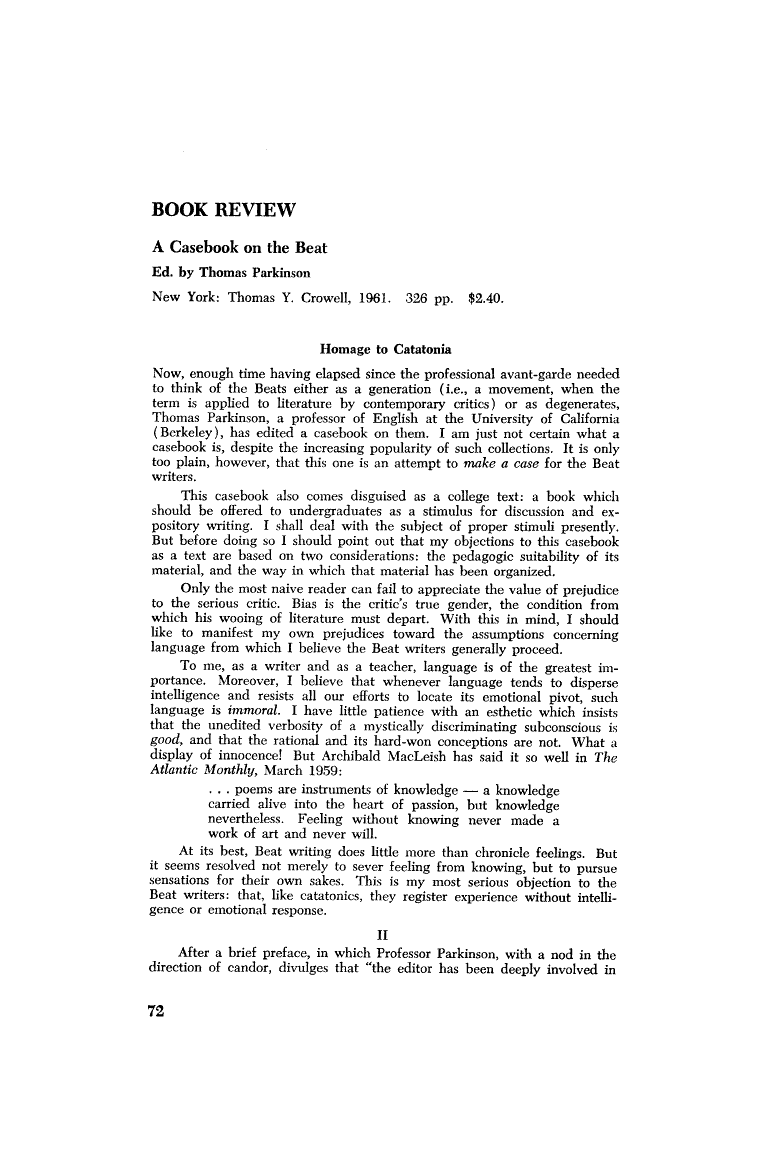
A couple days later I had a hunch and indeed found “A Casebook on the BEAT” edited by Thomas Parkinson, 1961, Crowell Publishing New York, paper — my copy says I bought in somewhere in last year or so for $7.50, it’s out of print.
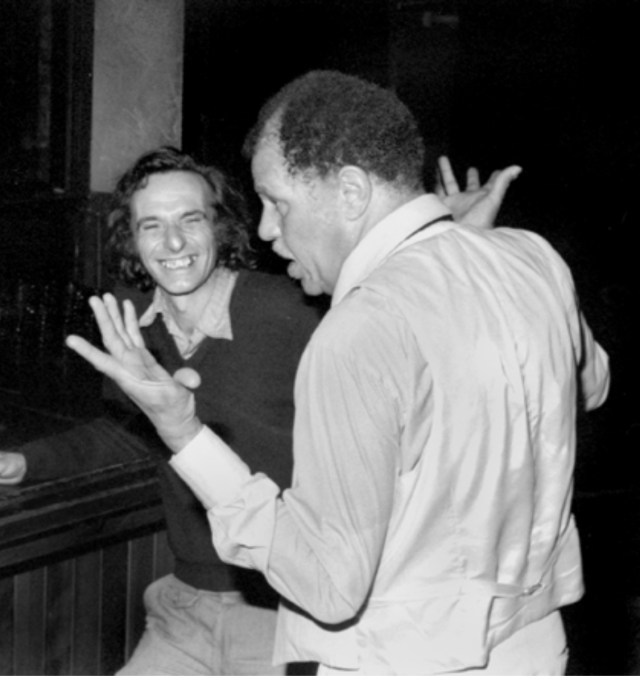
Jack 1981 with Dexter Gordon by Brian McMillen
I had attended Jack Hirshman’s birthday event at City Lights a few weeks prior and was sussing around about that. I also wrote something that is saved in Word not searchable called “The Jack Story”. If you search Hirschman and Dartmouth you will find that the college has a box about the radical poet and former San Francisco laureate, which includes his correspondence at that time with Thomas Parkinson.
Jack Hirschman (b.1933), poet and social activist. Contains a collection of 19 letters between poets Jack Hirschman and Thomas Parkinson. Also includes a few Hirschman poems in typescript and 2 postcards. The letters discuss their writing, teaching and publishing efforts.
Parkinson, besides editing this cool anthology, is famous for having been the victim of a crazed former student who attacked he and his teaching assitant with a sawed-off shotgun. The assistant died, Parkinson was disfigured but carried on. The assailant was a right-wing nut-job who wanted to kill Communists, it was reported.
edit to add, moments later: maybe it’s just odd to put my Jack Hirschman “Jack Story” here, hidden under Tom Parkinson post, but here she blows:
2.
The Jack Story: Part 1
Amber Tamblin had the best line, about finding Jack’s teeth and putting them in a rattle for cry-baby politicians. Later, when I was tracking down this Parkinson guy, I found two references to his assistant, or his student, one as Stephen and one as Amber Dean – is it just a coincidence or did Amber’s parents also know the martyred scholar? There’s a nother coincidence in that if you type Parkinson and 1961 into the search-injun you find a story about the fabled Dartmouth teams of the day – with the nation’s longest win-streak – and a fullback named, yep, Tom Parkinson. As of 2001 he was a PhD in EDUC – a professor – in Pennsylvania. Maybe he was also one of Jack’s students.
I am tempted to send Dartmouth the three pieces of ephemera or texts with which I absconded last night, thereby increasing their cache by some sixteen percent. The Jack Hirschman collection at Rauner is apparently one box of 19 documents, most of which are some letters between the poet-professor-birthday- boy and a Tom Parkinson, plus a couple of typewritten poem (“W.C. Fields”). I don’t quite get it. Are these things he left behind in a desk? Did Dartmouth say “You don’t belong here….Go, West young man,,,but hey, whatcha workin on, handsome?” I am tempted to ask Jack about Dartmouth and this box – I asked him or queried once before, almost exactly two years ago. First he said no then said – apparently warming, to something I said, maybe about Don Cherry – that we could “yammer”. Or maybe I should call Dartmouth and ask them what’s in their box – maybe they could just make copies and send them along. They did something like this for Alden Van Buskirk. (I think they sometimes say “we are supposed to charge you five bucks a sheet but never do”…).
On the other hand, Jack has supposedly written 100,000 poems so it’s probably not like he’s gonna say “My W.C. Fields opus? I always wondered what I thought about him, that day, in 1961”.
The three items I am contemplating giving to dear old Dart-MoM are:
i. A broadsheet, handed out to the first 75 of us friends of Jack, last night, December 11, 2013, at City Lights in San Francisco. It is a poem about baseball, printed and published by Sore Dove Press. There is also a signed edition of 12, and an actual baseball (you can perhaps buy, you capitalist, singular). The poem says something about Ted Williams and his “wrist” – and why do I think of homosexuals when I hear the word “wrist”? It also references “Prince Hal” who I checked is Hal Newhouser, who led the league in wins four straight times in the fifties, and was a Tiger – maybe he was Ted Williams’ nemesis. I’m sure the poem is about more than just Hal trying or not trying to brain Ted,, although come to think of it, it would have saved him the indignity of his people trying to freeze his brain so many years later. Maybe I will merely or merrily Xerox or X-OX or X-X-O-O the doc or doxy it and send it to Hanover. Perhaps I will edita to show or showoff what else I have learned from said broadside. (In “the jack story part 2 or part 3”?)
ii. About 85 percent of the way through the event at City Lights, at approximately 8:30 p.m. I shuffled eight feet to my left and stole from the cork board on a staffroom the flyer for the event, which features a relatively recent picture of JH and a list of the main participants (saves me from having to search-injun their exact names – Bucky Sininster or is he Buck. E. Sininster of Last Gasp told an anecdote about being grasped (not gasped, and certainly not groped) by someone after his bit at an event and then realizing later than that terror was being inflicted by Jack himself – “there weren’t any search-injuns in those days” Buck said, sincerely — likewise I was surprised that the young lady I had espied from across the room was Ms. Tamblin – old habits die hard. I didn’t meet her but I did find myself later in the evening standing next to her mom Bonnie Murphy (maybe) and praised her performance at the event. She called her instrument a talking stick (maybe) – it was a two-string guitar-like device – she sang a version of a poem Amber had written about Jack. I didn’t get around to asking her if she had recorded any of her songs. She was introduced by her own daughter as a singer-songwriter. Maybe Ethan and Joel would have ended up with a better movie starting with her and not Dave Van Ronk. The current poet Laureate of Sf had a poem that was more like a story about the various hats he might wear, in reference to the hat (literal) that Jack wears. Matt Gonzalez the artist and former politician read a couple of his short favorites from the JH collection. The one photo I shot (on my even stupider cell phone) was of the guy I thought stole the show, as compared to steal this book, Neeli Chardowski. He did a couple different imitations of Jack answering the phone (“Hi. This is Jack. I was named poet laureate. How are you?”) He told an anecdote about drinking with Charles Bukowski, who refers to himself in the third person as Charles Bukowski and they decide to drop in on Jh maybe when he was a teacher at UCLA and living in LA but were rebuffed and the barfly dude says “he just committed literary suicide”. I laughed three or four times over the course of the 90 minute or so presentation but turned my head to avoid laughing on the person seated directly below me. Anyways, maybe Dartmouth or Rauner would like the flyer, or future scholars of the beat generation or communism in academia or poetry or education or history of baseball or the sawed-off shotgun will. This whole riff kinda sorta proves that indeed pen is mightier than saw-off-shotgun.
Actually some are calling it movie of the year – this is a week or so after Jack’s to do – and I may go see it today, somewhat desperate for a revelation, lost soul that I yammer. And my new temporary main reading list is: Amir Aczel “the Mystery of the Aleph”, Peter O. Whitmer and Bruce WanWynngarden “Aquarius Revisited” – does not mention Jack but my copy is inscribed To Mark Something Inscrutable Timothy Leary, and my apologies to Jack for the digression and being such an inane-dropper.
iii. A cute little chapbook which is also an advertisement for a longer treatment, a biography of JH written in Italy (but hopefully also in English) by Alessandra Bava. I will ex-squirt one for you right here:
It has 10 little poems, more like haikus, as opposed to his longer pieces, called “arcanes” (and what I don’t know about the work of Jack Hirschman would fill volumes):
the
poem’s
guts
are
everywhere
the
people
struggle
I have a fourth piece of “tote” but probably not worth sending to Dartmouth:
On the back of a business card of a banker who cashed two checks for me earlier that day – something that, sad to admit, silly capitalist – actually jazzed me up enough to bother going into the City, whch seems to be getting farther away every day – I jotted down what I thought was my assignment from the great professor. “Benny Hollinger corresp Rattray?”
When I greeted Jack and reminded him who I was (“I’m Mark. From the Alden Van Buskirk event”) he asked me if I knew anything about something he was asked about or thinking about in the follow up, or here we are two years later. And maybe I am blending this with my short conversation with Matt about this, but I think someone is wondering about if anything more is written about AVB or “Lami” or something similar from that era. I surely got the name wrong. Maybe I was just in shock to be there or nervous – but it did occur to me: the guy is 80 and 80 times sharper than I am. But at the very least it probably leaves open the door to my ringing him and finally getting to yammer. This is probably not important but I just checked and noticed that the suffix in his landline number adds up to 13 and 13. I don’t know but it could be. Somewhere I said something lame and it passing about “let’s do this again in 20 years”.
And amazingly, I just happened to pull from the fairly large mound of books I have procured in the last year or two or so but never quite digested: “A Casebook on the BEAT” edited by Thomas Parkinson (Thomas Y. Crowell Company, New York, 1961 –second printing, paperback – I seemed to have scored this somewhere for $7.50 in today’s dollars Cover design by Orest Neimanis, looks like grafitto reading “B.G.”. I was bothering the librarian at Palo Alto’s “temporary-main” about whether she could print out for me a review of such book from JSTOR, momentarily confusing that with EBSCO, or maybe I jsut needed someone with whom to speak. It’s not in our system – she said I could get it from Mountain View library – and I was tempted to boogie down there. But I have a vague sense that maybe I did have that in my stash. And when I went through the stacks I pulled about 13 other books that if I have energy enough and time I can weave together little gleanings into something like my own story. Mostly on the beats but also on jazz, maybe Indians. Pekar, they should build a monument to him here.

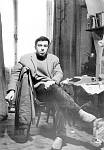
Harold Norse in Paris, 1961 (Beat Hotel)
I just want to get this out of my system.
The search engines gave me some clues about the murder of a young student and the assault on Professor Parkinson, in 1961. A deranged former student of his claimed that some higher being asked him to use a sawed off shotgun on someone or group with whom he differed on an interpretation of economics. A guy walks into the English department at Cal and shoots the face off of a professor and murders his student assistant. Kind of a Lee Harvey Oswald type. They said he was influenced by McCarthyism. Parkinson continued on until 1990, according to his obituary in the New York Times. He turned the other cheek, literally.
My thread of research or mucking around includes Ginsburg, John Wieners, Lew Welch, who apparently was a track star for Palo Alto High, Leonard Feathers on jazz although that is an outlier here, — I still get Kenneth Patchen and Kenneth Roxreth confused – I did notice that approaching Columbus from east on down Green there was a street sign for 000 Kenneth XXXXX Way. Gotta go with Roxreth, Bob.

Mirja from Finland, Beat Hotel rm 32
Diane DiPrima was there, gave a short speech and got a hug from Jack. Apparently University of Louisville has her papers. (measured in yards).
I spoke to Ferlinghetti, as the group was crossing Broadway and Columbus, the long count crosswalk meters, and reminded him what tiny role I may have one day, according to me, had in all this: he asked if my Van Buskirk event was in Hanover and I said no here in the city, at “Bookshelves and Books” (although I may have botched the name) “in Duboce (triangle)” Although I botched the name to “de-botch” and a lady walking with LF—probably not Nancy Peters – laughed at my witticism and said that it sounded like I was deliberately playing on “debauchery” which would be appropriate this night (as opposed to other Ferlinghetti 30,000 Nights) and I said no I’m just a hick from Palo Alto.
Matt introduced me to “Elizabeth” and added that we had had lunch with Jonathan Richman once and I said “I wanted some quality time with him but he brought along this weird little guy…at least he left his guitar at home” which is probably not very funny, nor much of a compliment to Matt.
The pros and cons of the beat movement – with 39 pieces of beat writing – Kerouac, Ginsberg, and others. – not quite a subhead on the Parkinson book – on the spine it just says “BEAT”.
Rubric’s cube.
There are two characters in the ending credits to “Sullivan’s Travels” named Capital and Labor – are they the ones who call McCrea and Lake “amateurs”, in the boxcar? How lami, my friend.
I’m so confused. I’m so confused. And conflated.
State popcorn.
“Can’t get lobotomy” margin note to this copy of Parkinson BEAT, pg. 8, excerpt on “Howl” also underlines “occupational therapy/ pingpong & amnesia” (it is in the neatest script one could imagine….)
Who distributed Supercommunist pamphlets in Union Square, taking leave of talking leaves?
Which reminds me of the digression from Pinky and Peter to prizewinning next generation novelist, the fabulous Kushners racing across the desert flat, and Cuba. Throwers of flame, which is not Hal Newhauser more like Ryne Duren or Steve Dalkowski, or am I just making this thing up interrobang?!
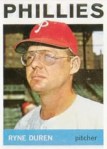
There was a major leaguer killed by a beanball, although I forget his name, and he probably was not a Red.
I am now too warm in my black Arhoolie hoodie. Field holler not quite a howl but not simply simper either. From simper to sniper. From blasé to blast. Blast from the past.**
Cool Café 12/12/2013 12:35:01 PM Thank you, cashier. (I tipped her 1.04 on 3.96 cup of joe, somewhat joltin’, and she stopped the line to make mine immediately although I am still here at 2:05. And I could risk ditching the backpack in the cubbyhole and running upstairs to peak at the pomo Japanese print – “Terremoto”?? or I could run to front of museum and lock in locker with a borrowed quarter which is just a prop or key or as the buddists say the raft can be jettisoned. Or the Jetsons would say, I drone on.
Strange now to think of you. I do remember seeing some weird guy selling propaganda at Caffe Trieste in the late eighties.
I had a joke that doesn’t really belong here or anywhere about thinking that I was having a bad year until hearing that a Dartmouth classmate of mine named Scott S. lost $600 million in the stock market – it’s not schaudenfreude per se: he or his firm held a 40 percent stake in a company nobody’s heard of whose IPO value shrank from $2.4 Billion to about $1B. Makes me wonder about the difference f=MA between being hit in the face with a shotgun, hit in the forehead with a champagne cork popping and the stopping force as described second hand on talk shows by New Yorker writer Malcolm Gladwell, who probably has not spoken at City Lights of David the Jew’s slingshot versus Goliath the pituitary case and Philistine, back in the day. Bucky told a story about our Jack breaking up a bar room brawl, at Specs.
Here’s your freewheelin jack, lady.
3. Apparently I am the only person who thinks of Rachel Kushner and Alden Van Buskirk in the same breath:
Talking back to interview between Rachel Kushner and Sasha Frere Jones, while sitting for 26 minutes at Café Zoe, in the second day of the fiftieth year of my life, drinking the last drops of a slightly bitter cappuccino, after eating a fairly satisfying bagel, on a table slightly too close to the wall to type confortably, and I should get my eyes checked this year; working title “Another roadburn attraction”
The narrator, “Reno,” resists a fixed identity. We discover hardly any biographical particulars about her. She is nameless, and we know almost nothing about her childhood. Are Reno and the anonymous so-called China-girl images in film leaders that Reno poses for supposed to play off of each other, or is that too pat?
I shy away from plot structure that depends on the characters behaving in ways that are going to eventually be explained by their childhood, or by some recent trauma or event. People are incredibly complicated. Who knows why they are the way they are?
Who else but me would wonder how to tie in Colin Kaepernick, on the strength that the Reno grad quarterback was being discussed on radio as I drove over here to the Café? I also immediately thought of Faulkner’s The Sound and The Fury, Kesey’s One Flew Over the Cucko’s Nest and Tom Robbins Even Cowgirls Get the Blues.
It’s both a knowing and a self-effacing statement to say “who knows why people are the way they are?” as opposed to saying well for whatever reason I seem to be able to see nuance in people and things and then describe it.
My narrator feels like a real person to me, I felt close to her, and I had to, in order to write the book, but in a certain sense she shares something with the China girl on a film leader. Although we are with her for most of the novel, we never learn her name. Twice, she’s referred to as Reno, and so reviewers have latched onto this. She’s nameless like a China girl, and, like a face on film leader, she leaves no trace of her identity. And of course for me I think of the David Bowie song, which I probably never thought about what it actually is about, beyond the refrain, “little china girl” or whatever. I actually thought the photo looked somewhat Caucasian and not Chinese to me; I knew it wasn’t Rachel. Who looks more half-Jewish, from other photos I’ve seen – plus I’ve met her parents. The photo looks like Zoe Dechaanel or Astra Taylor or something. I was trying to drag the photo onto a blank page and was surprised to find this much of the interview here, waiting for me to much it up.
I also noticed my own name in some of the remarks about the text, about the “marks” made by the flame-throwing motorcycles racing across the desert, that the narrator wants to photograph as land-art.
My narrator, who speaks in the first person, is not intent on thinking about her past. To relate to her, a reader doesn’t need to know much about her childhood beyond a few key details (she was a tomboy who rode motorcycles, is from a small Western town, is working class but educated). Early in the novel, the narrator recounts how she was hired to be a China girl. She got a job in a film lab on the Bowery, and the technicians needed photographs of a woman’s face in order to process film so that the flesh tones were consistent and looked appropriately like skin (white skin, that is—flesh calibrations in the movie industry have always been aimed at Caucasian skin). Around the time I started working on this novel, I had become interested in the China girl you see on old film leaders (up through the nineteen-eighties). She holds up a Kodak color bar, or a photograph of her is placed next to a Kodak color bar. I knew these women were mostly secretaries in the film labs, which seemed to me to be central to their allure. The idea that they are just random women asked to pose, and not professional models, makes them mysterious. They are “real” people who come to function as archetypes; they are anonymous-real. There is no way to find out who they are and no reason to, either. The idea of a girl posing on film seems to encapsulate something about how women are treated, and how they think of themselves: women are often judging themselves, and being judged, according to standards of beauty and femininity. Archetypes of what women look like are basically inescapable: women either conform to them, refuse to conform to them, or set them. They don’t ever escape completely from the realm of standards.
We also think of Cindy Sherman, and I guess Judy Chicago and Barbara Krueger. And Madonna, Gwen Stefani and Lady Gaga. I wonder if RK thought of herself as beautiful consistently throughout her life or went through self-conscious phases during her teen years, like everyone else. Her picture is in Time Magazine year in pictures and top ten books. The phrase “film leaders” is interesting in that in conjures the machers of the industry before the technical element of the medium per se. I think in typography they talk of “leading” pronouncing with short e “ledding” to describe the space between the lines. I think in terms of conforming I glimpsed some text about RK that said she is in the mainstream now but still stands apart or somesuch.
Reno begins the book moving east, racing a bike, trying to complete a project. Then she shifts and begins to slow down and watch, like a passive observer, or like a camera, witnessing conflicts where she only intermittently takes sides. How did you think about Reno’s agency as you wrote this?
And in terms of the triple level of story-telling, the bike-racer, the art scene and the Italian politics, I always immediately think of Errol Morris Fast Cheap and Out of Control, about mole rats, lion tamers and robotics. It seems everything I do, in the tapping keyboards realm is claiming to be influenced by FCOC and Shields “reality hunger”.
It’s true that she’s much more strong and active in the long opening scene, when she goes to the salt flats alone. She knows the landscape and she knows motorcycles, so it’s a world where she’s comfortable. In the art scene in downtown New York, she’s an outsider, not yet an initiate. And, in my humble opinion, she’s also clever: clever people know that you don’t learn by inserting yourself. If you are inspired by the world, and open to it, it is sometimes essential to utilize your own innocence, your own lack of an ability to interpret or judge others, in order to read them properly.
I was also thinking about Bruce Beasley the Dartmouth elder-statesmen sculptor, who is about the exact same generation as Peter and Pinky, and his early interests in hot rods. And it’s kind of a red herring, but I was tripping on the James Franco interview with Charlie Rose I saw most of last night, and his obsession with Faulkner, or should I say making kinda weak adaptations of works like As I Lay Dying and SF. Somewhere earlier in my interior monologue I was telling someone, some imagined listener or reader that my standardized test scores got me into the school but I was about three wrong answers from starting out in remedial English, was in the middle of the curve with the English 5 Milton Paradise lost SAT AN crowd, which is actually a Donald Sutherland meme, filtered thru Animal House. And again, although I don’t think I made the connection or asked them, but I think Peter and Alden were somewhat contemporaneous with, is it Kevin Miller? who wrote Animal House. The same era at least. And I did think of the fey guitar player, I bought my love a flower or whatever, the one who Belushi or Bluto smashes his guitar and says “sorry” apropos of Llewyn Davis. And when did the word “kumbaya” start to get used as a slag on sensitive people or artsy types or policial correctness. Which trips me to wanting to ask back to Gladwell, “David and Goliath” about the history of the term “big fish in a small pond”. Poor Rachel, left on the corner, blocks behind as my mind put, put putters on, on this little scooter.
And the Basquiat movie, I should probably see again – was that made by Scnabel? Would not have meant that much to me at the time, the filmmaker.
In regard to agency, I was determined not to have the narrator ride off into the horizon in a blaze of triumph at the end. The plotline where the main character overcomes a weakness and acts with new empowerment is a form of narrative compression I usually find cheap and don’t much relate to. In any case, to have all the agency can be tragic. I love the end of the 1969 movie “Downhill Racer,” where Robert Redford gets the gold medal and yet winning seems like this empty question mark. I wanted my narrator to arrive at some kind of open moment, a blank, in whiteness—figuratively and actually—in snow, at the bottom of Mont Blanc, a setting that for me has a poetic resonance (Wordsworth, Shelley), and a personal resonance, too (an entire childhood spend skiing alone, dealing with cold, blizzards, high winds). I have learned a lot waiting for people who don’t show. It’s about what you do in that situation: I mean, what you do next.
Well, okay, Downhill Racer, a ski movie, Rachel, surely you know that your parents met because of not just a poet, but a great four-event skier – I have been meaning to scoop the blogosphere on the “RK” + Dartmouth meme – if you try it now it is just me. And to tie it in to Alden van Buskirk and Lami, and his initial buzz was about his skiing – but maybe that is a little esoteric and parochial.
And I’m glad when you say V figuratively and actually you avoid saying “literally”…
An entire childhood spent skiing alone? That is so Walker Pierce meets Robert Puttnam by way of Bruno Bettelheim meets yes Alden Van Buskirk – but oh so not Cuban. And beckett or course.
There is an implicit struggle between Reno and the men in the novel, who seem like a Pantone book of misogynists, from the First World War-era Futurist Lonzi and his reduction of women to “pocket cunts” to Ronnie and Sandro, neither of whom seem to accept women as entirely formed people. Is that a fair account of what goes on in the book?
Gosh, I don’t know. I’m interested in men and women both. The book is about both, as well as, among other things, technology, speed, and violence. War, factories, machines—these are traditionally male realms. But I don’t think I meant to “say” anything explicit about gender conflicts—instead, I simply wrote interactions between men and women in a way that felt like life. And anyhow, maybe I empathize with Lonzi. The concept of the “pocket cunt” is mean, sure, but it suggests that he’s alienated from sex and intimacy and from women in a sad way. He can’t enjoy their company, but the operative term there is enjoy: he can’t enjoy. He’s talking about men in war, and what they’ll put in their rucksacks. (Probably, these Italian boys would like to put their mothers in the rucksack, but they won’t fit, will they?) Anyhow, war in the twentieth century is filled with horrific acts toward women. I try to show ugliness, but with compassion for the people who commit ugly acts.
Who are the flamethrowers? The novel is named after them, but they appear only at the end of the book.
The flamethrowers referred to in the book are a division of élite shock troops, the Italian arditi in the First World War. The term “flamethrower” can refer to either the mechanism that shoots out liquid fire (it’s essentially a tank, a hose, and a nozzle / gun), or to the person whose job it is to carry this tank and to set ablaze land, structures, and enemies. Flamethrowers have been used by many armies in many wars, including by American marines in Korea and Vietnam. They cause horrific deaths and are thus a serious public-relations liability. The U.S. military apparently phased them out in 1978.
As T. P. Valera explains to his son Sandro, the First World War-era Italian flamethrowers were an abject lot who were shown no mercy if caught by the enemy. They were on foot, and their gear was horribly cumbersome. They had to wear something on the level of an asbestos burka with goggles and gauntlet gloves, and they carried a huge set of twin tanks on their back. Sometimes they died by accidental torching. Young Sandro idolizes them, and then learns all this and is forced to demote his love to pity. I won’t deny that the flamethrower’s burden could come to have some kind of allegorical meaning, but it’s fairly open ended. Sometimes all of life ends up in military metaphors for me.
We see a protest in Rome and the 1977 blackout in New York, but the book seems ambivalent about social resistance. How were you thinking about social movements and groups of people acting in concert as you wrote?
I’m very interested in the idea of a large group of people who come together quite suddenly, but not illogically, for reasons that could not have been anticipated. The blackout in New York in July of 1977 and the movement in Italy that year are both “events” that could be seen as occurring without leaders and heroes, and it was interesting to me that they were contemporaneous, if fundamentally different. In Italy, autonomist meant acting on one’s own, but the movement known as Autonomia was people acting independently but also in concert, coöperating not because they were being ordered to by a charismatic leader but because they were suddenly guided by basic personal ideas and drives. For instance, if I want to stay with my friends and not go to work I’ll do that; if I need to get to work and don’t have bus fair I’ll just pay what I have, or pay nothing, and so forth. When an entire country gets to this point they’re at a moment of real disruption. The looting during the New York City blackout of 1977 was also a moment of disruption, but it was somewhat random: the electricity went out. And the disruption only lasted that night and into the next day.
I’m interested in the lost potential of Italy’s Movement of ’77, as it was called. It’s come up again and again, with Occupy, the movements in the Arab world, and the anti-austerity protests in Greece, Spain, and Portugal. As I wrote, present-day reality was refracting through the storyline in an almost unavoidable way. Many of my friends were either acting in the political realm or theorizing that realm, or both. The world and its questions, and our question (of what is to be done), are ceaseless. Writing a novel is a way of synthesizing what presses in.
Toward the end of the book, Sandro talks about a tribe in Brazil, where his father’s tire empire harvests their rubber. The tribe believes in putting stones in their pockets to “weight” their souls, to keep the soul from lifting up and away. Reno has a quality of floating above what she witnesses, above her own experience of being handed from man to man. Is trying to keep the spirit connected to the earth a strand of the book or a passing reference?
The idea of individuals in tribes who weight their bodies with stones in order to keep their souls from escaping is so moving to me, but not just for the native’s individual fear, the craziness and yet utter reasonableness of it. It also moves me on account of my own distance from the need for such a thing. The “native” can do it for us, at a remove of superstition and primitive behavior, so that we can pretend to be wholly and effortlessly constituted. As long as someone else somewhere else, of a different culture, living in a different version of this same world, is stepping calmly on hot coals, I don’t have to.
In terms of your question of this relating to the narrator, she does not suffer from the same kind of malaise that afflicts Sandro. She isn’t spliced or separated from meaning in quite the same way. Very often, love gets stoked when there is evidence of some kind of psychic or spiritual dilemma or trauma in the love object that the beholder is not equipped to understand. Happier people tend to be drawn to darker ones. Maybe you could say that Sandro’s complexity is attractive to Reno because it’s opaque to her, which was why it became necessary that he speak for himself, just once, before the novel ends. The kind of spiritual poverty from which Sandro suffers is a strand of the novel, in the sense that it is my attempt to understand why some people feel too incomplete to let themselves be loved.
Valera the elder is not a huge presence in the book compared to his son, but he lives at a fascinating moment. He founds a motorcycle factory just as the Futurists are coming up with a completely dystopian theory based on machines. Who does he represent to you? Most readers will feel him as background, with the semi-romance between Sandro and Reno (and Autonomia) in the foreground.
The book opens with Valera, and he was the first character that I wrote. As a child living in Alexandria, Egypt, he has his mind blown by an early (eighteen-eighties) model of motorcycle, a German thing made by Hildebrand & Wolfmüller. (I saw one in the Guggenheim motorcycle show, a crowd-drawing exhibition that was an affront to the art world, but I could not help but adore it, regardless of the question of whether motorcycles belong in an art context.) Later, in Rome, Valera encounters a little avant-garde gang, decides he wants a part in it, stands up and is summoned, then leads. He’s a Futurist who splits off from that milieu and movement to use a fascination with speed, machines, and violence to build actual machines and make a profit from war. What he does is a literalizing, perhaps, of certain ideas of the Futurists. In reality, the Futurists never forged a relationship with industry and design in Italy, which is curious. Why? They had no sense of the factory, the worker—they shied away from all that, eventually becoming the aesthetic wing of Mussolini’s government.
I never even considered not having a Futurist in this novel. Italy, bikes, speed, factory politics, the twentieth-century avant-garde—hopefully without sounding too pretentious, these are important realms for this book. The figure of an early-twentieth-century Italian idealizing speed, celebrating violence, going and getting pummelled on the battlefield, then reforming himself as a successful industrialist is key to my interests, and to the novel. The book could not exist without him.
What do you think of Laura Miller’s recent Salon piece, which posits that this novel may “scare male critics”?
I’ve heard about this discussion. And it’s probably important in that it touches upon a series of issues that are still not entirely resolved—I mean, obviously they are not resolved, or this discussion would not be taking place. But I think I have already addressed some of these issues in the way I best know how: in my fiction. What I have to say, most meaningfully, is there in my novel, if anyone should want to find that and hold it up to the light for examination. Questions of women and their place, their role, their agency, and their force, rage, timidity, and so forth are a big part of this book. And as it happens, the novel I’m writing right now is even more specifically concerned with the voices of women. It’s about women and contemporary America, race, prison, and various enveloping present-day cruelties. And as with this recent gender controversy, my only real authority on these major issues will take form in the novel itself.
Photograph of Rachel Kushner by Ann Summa/The New York Times/Redux. Photograph of China girl courtesy R. Hall/Northwest Chicago Film Society.
I will try to swede in a picture of her from Time or at least link to the leading book site. I’d like to read “the Flamethrowers” wtweat. were there world enough and time
4. Most of us would say that the Beats are done, and the timeline would be 1957 thru 1961 or something — this Parkinson book like an epitaph — but for whatever reason I am compelled to place this little Rocky Braat link here and not three posts below with the other India movie memes. the movie is “blood brothers” was reviewed in the times I saw a good chunk of it on PBS last night.
5, or should I say Johnny Five? Llewyn Davis is not the cat — ok, I’ll go all in and post my random notes on the circa 1961 Coen Brothers movie. I am also toting but not toking the Bob Dylan 2004 “Chronicle” (I stole from Terry) and its parts about The Gaslight, but really what should be noted here is Elijah Wald, who I first heard about from Hilda Mendez at Arhoolie.
dave van ronk book
Outside “inside llewyn davis”
At a peet’s in redwood city
Parking receipt: EXP 3:17 p.m. Jan 02, 2014
a. I’m not current? Is that a nautical term?
b. The cat is named Ulysses.
c. Roland Turner, santaria from new Orleans. One day you will find a big bowl of shit and wonder how did your life turn into a big bowl of shit. And I will be 1,000 miles away laughing my ass off.
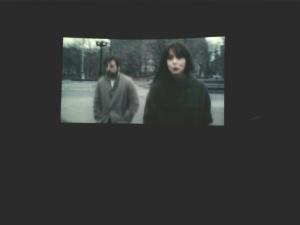
Inside “Inside Llewyn Davis”
d. response to: hey mr. Turner, does that stick fit all the way up your ass or would part of it stick out?
e. Johnny Five and his poetry.
f. Young bob played by Ben Pike.
g. One of the music credits is a Bob Dylan performance.
h.. The end credit is a Dave Von Ronk performance. (edit to add, a month or more later: but closing song of Penn and Teller movie “Tim’s Vermeer” is Bob Dylan “When I Paint My Masterpiece”)
i. Elijah Wald is thanked in the credit. Steve read it is Elijah Wood.
j. Jason Colton is thanked in the credits: is he P.M. for Mumford and Sons? Marc Mumford contributes music to the score. Is he Timlin, as in Timlin and Davis, as in the one who jumped from the George Washington Bridge, not the Brooklyn Bridge.
k. Inside Llewyn Davis is the name of his solo record.
l. You want me to exist? (as opposed to continuing to try to be an artist).
m. I have a lot to look forward to. I put in all my hours and then one day they bring my food to me and I don’t have to get up to shit.
n. Your uncle Llewyn is a bad man. “I know” the nephew replies?
o. Are you Hugh Davis’ son? (Maybe he is not. His mother is Italian. He does not look Welsh) Oh, you are are you?
P. Art Milgrum is real name of Art Cody.
Cf Ramblin Jack Elliot? Started to say puh,puh, puh, P.
q. Four micks and gramma moses
R. Poppy the manager at Gas Light may have impregnated the carey Mulligan character. Yes, he R.
S. the body of the film may have been a dream or nightmare triggered after being knocked out or punched in the alley. In the next scene, or second scene, back at the Gorfein’s house, he has not scars or bruises on his face. Or it’s a flashback. As compared to S/Z.
T. Fred Harvey’s Oasis diner as in coffee or tea? Or H?
U. Where’s his scrotum? When mrs. Gorfein realizes that Llewyn has brought back the wrong cat.
V. the songs are almost like stage directions of a play in that they add detail to the characters or advance the plot??
W. llewyn and the girl walking thru the village looks like joan and bob on the cover of his album, steve noticed.
X. akron is where he may have a 2-year-old child.
Y. he met the abortion doctor at the gaslight, at the hoots. He has played there 400 times. Playing for the basket or half the basket.
Z. he likes their sweaters. Sarcastic response to Poppy asking if he likes the harmony singers. He starts to heckle the next singer when he realizes that Poppy might be the father of the abortive fetus. Aren’t they called Irish wool or something?
aa. Gate of Horn in Chicago, where Mr. Grossman is an artist manager and runs the venue.
ab. Legacy Records where Mr. Novikoff handles LD.
ac. When he is informed he cannot work as Merchant Marine (AFof L) he says “why, because I am a communist?” and the clerk mutters something like “Mennonite”?
ad. He pays $178 in union dues but then needs another $80 to replace his license (union card?) mates master and pilot’s license? Is that a classical reference to seagoing ways of Ullyses and Odyseseus et al?
a.e.. Gurfein is an anthropolgist and has trophies in the form of folk objects on his walls. Does he see LD as an artifact?
a.f. the wife makes mousaka and tabouli.
a.g. the two successive couples who visit the gorfein’s look the same: greenwong and x. There’s an early music musician and piano teacher, earlier than Harry James, “on the beat”.
a.h. LD is actually from Woodside Avenue station which I guess is near Rockaway? On of the other five bureaus not manhattan. Or at least that is where his sister lives and his dad, hugh davis, is in a nursing home.
a.i.. There is a trophy case outside his room at the nursing home, Hugh Davis. Vitrine?
a.j.. relationship between the beats ie poetry and folk revival — where is Howl in all this?
Where is jazz?
a.k.. types of transportation: subway, trains, cabs, rides in cars, ships
a.l.. sea men pun on semen
a.m.. he’s always losing track of things: his guitar, the cat, the license, his sperm, cigarettes. His coat. Or Novikoff’s coat.
a.n.. Novelty song “Please Mr. Kennedy” about not wanting to be shot into space. He signed away potential royalties for $200 cash. At Columbia Records.
As the John Glenn Singers.
a.o.. Llewyn has the cat. Llewyn is the cat. I’m not a cat.
(versus Schoednger’s Cat in A Serious Man)
42. I feel more like a castaway on planet earth than a pilot of this ship. (I will leave that as 42 in deference to Douglas Adams meaning of live the universe and everything – n.b. Coen’s or Oscar Isaac or Llewyn Davis didn’t say that – I did; reminds me also of Mark Twain Life on the River)
a.q.. The trains came by at such a time that it was difficult for him to hear the full details relayed second hand about his recording session.
a.r. the novelty version of quack quack quack Old McDonald heard while driving thru the snow flurries, on 70 East out of Chicago back to New York with the guy who hadn’t slept when they may have hit the cat. I thought he could easily drift off and end it all right there.
a. s.. I started thinking about the Weekly calling me a “former concert the promoter” and wanted to write GS to refer him to my list of former clients. Which I guess makes me a former concert promoter and former artist manager? And then I had a mental list of quasi clients in visual arts: Rob Syrett, Thai Bui, Terry Acebo Davis, Bruce Beasley, Greg Brown, Matt Gonzalez, Sam Yates, the lady who used my photos for her New York diptych.
a.t.. He says he was tired. More tired than can be remedied by a good night’s sleep.
a.u. Fixing to die rag or blues.
a.v.. He does a beautiful song about King Henry and Queen Jane but then Murry Abraham character says he doesn’t hear any money in the work. About opening his right side and the flower and the branch. Again, inside the singer or the writer.
a.w.. gaslight the Hitchcock movie or play about mind games and murder?
a.x. not as surreal as barton fink or hudsucker proxy, or a serious man. Pretty straightforward artist sketch and evocation of a time and place, 1961 greenwich village folk scene.
a.y.. compare to the jeff bridges movie loosely based on Stephen bruton. “Crazy heart”?
a.z. I thought of Alexis Harte, Martin Sexton, Dar Williams, Richard Shindell, Etienne De Rocher, Glenn Hartman, David Jacobs Strain, Box Set, Jamie Stewart.
a.a.a. Is Llewyn Davis a Jewish character? Is Oscar Issac a Jewish character? Is that a real name? He is a Julliard trained music turned actor?
a.a.b. Soundtrack on Nonesuch Records. I think they can fit on KFOG radio.
a.a.c. heroin use by John Goodman character. Passing out in a rest room, of Fred Harvey. And foaming from the mouth.
a.a.d. Songs about leaving or dying or hanging or flying.
a.a.e. If it sounds like you’ve heard it before and will never get old it’s a folk song.
a.a.f. Was the Gaslight in 1961 an actual place?
a.a.g. the club owner says the rent is too high.
a.a.h. LD says he hates folk music, the night he is heckling viciously.
a.a.i. show us your panties, he heckles. (I read in somebody else’s review and comments that the two ladies, gorfein’s wife and the wife of the guy who beats him up are deliberately confusing to us, remind us of each other. Beat vs. beat up, which I guess does reference back to Parkinson, sadly enough
a.a.j. one hit can fix you forever in your business, or you can overdose on drugs and die, different kind of hit.
a.a.k. what is a timeline of the settings for Coen Brothers films? Serious Man is later than ILD while Barton Fink is earlier. Big Lebowski is latest.
a.a.l. The movie is well-crafted like a folk song but not a bigger production like a rock song or a movie trying harder to tell a story or shock or move the viewer? Sparse?
a.a.m.. LD at end of his two-song performance says “that’s what I got” which is a pun on use of “got” as “beget” like in bible to speak of children. The songs are his children. Also think of “Sublime” “what I got” They are not really beats either. Somewhere along the way I was trying to imagine Palo Alto during this era and found my way to a reference to a sophomore at Cal studying linguistics but posted out here his collection of songs and I thought someone should make a movie about how or why people are still writing folk music as opposed to merely auditioning for the network talent show.
I figured out later that outline style that I was taught in the fourth grade probably has z.a after z and not a.a. if you are counting to 60 or so with letters. whatever.
6. WHO’S AFRAID OF HELEN SUNG? They don’t belong here at all but I am tempted to mention Helen Sung, the piano player and her cousin Joyce Yu-Jean Lee, a conceptual artist/minimalist/teacher who crosses Marina Abramovic with Robert Irwin/ James Turrell or something. I was or am fantasizing about a collaboration between the cuzzez just or jsut cuz wherein Joyce choreographs a dance on Helen: it has no melody per se, only a rhythm; gongs, mock-gamelon, pots and pans (in the Dartmouth circa 1970 sense of making fun of Don Cherry’s class) and beer bottles, a type of cage dance, if you will. Or, to be scene and forgotten, ephemeral, diaphonous, but not a vitrine like Hugh Davis. This is a weird preview for the Concord Records artist to appear next month at Bach Dancing Douglas Beach House in or near Half Moon Bay, and a cd coming out on my birthday, Jan. 28 — which will be one of my gifts to myself if they’ve ordered it at Rasputins. Or at least my gift to self that day is trip to Rasputin’s with $30 in hand to buy Helen Sung and ILD soundtrack; the journey is the reward. I actually apropos of this tried to find a pop-up space kinda sorta for Joyce’s work.
7. Jan. 20 New Yorker article on Theaster Gates in Chicago, South Side, where I was born again.
8. Article in San Mateo Daily News about a 34-year old off duty cop who steals a $2,000 trumpet from a local lounge lizard in a Millbrae hotel and then throws it out the window. Said piece is recovered, repaired for $250, plays fine, but the musician moves to Colorado, and is offered another $500 in restitution. The cop serves six months doing service not time (at karaoke bars, collecting tips — just kidding, and sorry for the “No Exit” reference, or the ACT version at least) and is forbidden from carrying his axe. THIS MACHINE DIGS CLAMS, his customized nightstick says.
9. This is a footnote (*) of above and not just chapter 9 in my new beat casebook but the rifle quote as preface is supposedly Stanislawski quoting Chekhov, in Coosje van Bruggen’s 1990 catalog about John Baldessari (p. 97) at MOCA LA and MOMA SF (speaking of ‘SF MOMA’ and not just Amber’s mama above, who I kinda flirted with or at least confronted, an a room in an alley above Spec’s); the footnote (on p. 127) explains that Chekhov used firearms in many of his plays including The Seagull (1896), Uncle Vanya (1899), The Three Sisters (as opposed to Helen Sung, Joyce Lee and Juliet Lee who are cousins — 1901) and The Cherry Orchard (and Don the trumpet player was Chocktaw not Chekhov 1904). “Baldessari is especially interested in these stories or anecdotes that have become common knowledge, are appreciated because of their point, but in time have lost their original source, although, partly because my specs are sort of failing me, here on the cusp of my 50th birthday — which I share, the Jan. 28 part at least, but not the actual year, with Claes Oldenburg and Jackson Pollock, as well as a set of twins who got into Stanford on the strength of their novelty act on Chuck Barris gong show – they were the Auction Twins — from Wyoming — I mis-read footnote 23 for footnote 25 and started to think that Coosje or John were referncing Bruce Glaser “Questions to Stella and Judd” in Gregory Battcock, “Minimalism” 1968. Dig?
10. PBS 2.5 hour thingy on Salinger I watched two-thirdsly and taped the remainder, with David Shields and others. Is this the same thing that I saw previews for in the art houses, i.e. will have theatrical distro?
11. This probably could go above but Anita Felicelli a columnist in Palo Alto Weekly has an article on Llewyn Davis that has about 2,300 readers — compare here: 0 so far, LITERALLY — and her use of the word “deadbeat” which makes me want to respond in various ways. Condensed version of all above plus link plus Steve Jenkins / Herman Anthony Zen Chunn rif and more: Maybe Llewyn is Dylan or Dylan is a composite like what we were once taught about Shakespeare. And was Van Ronk literally air-brushed out of the album cover or just someone’s metaphor? edita re anita (1/224/14) she actually closed comments on her column, I hope not just because I freaked her out with my chekhov/parkinson riff; but I actually drew this as felicelli: closing comments, doesn’t like dissent :: llewyn: maybe giving up, doesn’t like meeting suits in alleys, which is a supreme compliment to the movie, if true. I didn’t like the movie or didn’t get the movie but it made me afraid to speak up. I was meaning to re-post with a longer version of Steve Jenkins: Zen Chunn :: Dylan:Van Ronk et al. She did say she has read Kushner which is great and I’d be surprised and impressed if she read the 10,000 words above to get there!! And I’m up to 4 readers from 0, while she is at 2,500. Oh, yeah. She also posted on a separate social media app that the Coen Brothers fans have to chill out or something. (Whereas I first talked about her indirectly and then addressed her directly via the media, assuming she would edit out the parts that didn’t fit, as she saw fit. I hope to address her more directly some day. At least I signed my name). Good luck, mazel and namaste to Anita Felicelli, and Steve. I looked up “deadbeat” in my Webster’s 9th, and it came into the language around 1890s or so, first as a technical term as in no oscillation or no pulse and then as in non-responsive or failure to comply and now I presume almost exclusively regarding men who don’t pay child support for their children, which I don’t think applies to Llewyn. But “dead” to me also connotes “the Grateful Dead” and “beat” the “beat poets” et al which is why I noted her use. How does “folk scare”, beat poetry, jazz, “the sixties”, “free speech” all tie together? And I think Coens being from MN implies they are more interested in Dylan than Van Ronk, but go about it via this surrogate or bank-shot. Also, I went to Rasputin’s to buy the soundtrack but they were out and I settled for $3.95 promo of Eddie Vedder singing songs from “Into the Wild” as a tip of the white acrylic dingus to Jerry Hannan who wrote and sang backing and some guitars on “Society” we are agreed to a greed or whatever. Also, I was digging recently Austin City Limits with fun. and Dawes and some of their self-referential lyrics on the same topics: I miss my mom and dad for this, DAWES LYRIC TK.
Posted by Mark Weiss, a resident of another community,
on Jan 22, 2014 at 1:26 pm
11. This probably could go above but Anita Felicelli a columnist in Palo Alto Weekly has an article on Llewyn Davis that has about 2,300 readers — compare here: 0 so far, LITERALLY 27 — and her use of the word “deadbeat” which makes me want to respond in various ways. Condensed version of all above plus link plus Steve Jenkins / Herman Anthony Zen Chunn rif and more: Maybe Llewyn is Dylan or Dylan is a composite like what we were once taught about Shakespeare. And was Van Ronk literally air-brushed out of the album cover or just someone’s metaphor?
from “plastic alto” blog if you don’t mind me fishing for your readers, which conjures the Picasso image of a cat with fish in mouth which I seem to recall is about fascism: New Beat Casebook. Here’s the link
Web Link
(I meant “cat seizing bird” from 1939 which I had to look up the next day, yesterday. Maybe I can swede in the image, which I have as a postcard bought for two zuzim at DeYoung)
I am putting the movie like a vitrine outside Hugh Davis’ room in context of a lot of other 1961 stuff: the Beats, Eisenhower’s “military-industrial-complex” speech, Jerry and Bob forming their first jug band here a few years later, “Howl” no so long before that, — Palo Alto had a beat named Lew Welch a track star at Paly, but no jazz to speak of until Monk played here in 1968 — but Joan Baez was of course here — and this gruesome — it sounds more like “Miller’s Crossing” than ILD — reference to Prof P getting a shotgun blast to face, worse than what befell literally LD.
Also, do you read or know Peninsula Parlour Lisen Stromberg of Palo Alto?
Report Objectionable Content
Posted by Anita Felicelli, a Palo Alto Online blogger,
on Jan 22, 2014 at 1:43 pm
Anita Felicelli is a registered user.
Hello Mark. I don’t know Lisen Stromberg and have never attended Peninsula Parlour, though I am vaguely aware of it and it is the kind of thing I would probably like if I had more time. I had some trouble following all the associations in your blog post so I can’t comment substantively on it, but just wanted to remark that I LOVE The Flamethrowers, which you discuss there. It was one of my favorite books of 2013 – simply phenomenal. Thanks for reading this blog.
And its about half the posters used their name, like 6 of 12; and then it’s back online for comments although you have to officially register at PAW which I’ve never done, although I’ve posted more that 100 times, 99 per cent of time under my own name. I am resistant but at least its better than the papers that restrict comments to people who join particular social media groups, which I resist, and detest. (when I wrote “resist/detest” for the assonance I thought of the Frank Capra movie last night at Stanford Theatre and the fly-boys wordplay about “distinguished/disgusting” or some-such, not to wander). John Barton who I spent a few minutes with at his chataqua agreed with me or brought it up that he doesn’t like the troll friendly nature of PA Weekly comments section. I guess I say “use your own name” but don’t register. They can still track us more or less by our ISP or whatever.
12. Likewise Richard Sherman belongs elsewhere or merits his own entry here but I left voice mail for Greg Frazier of Daily News about his Sherman post and said he was not the Messiah but a very naughty boy I mean he lived in my building and I saw him pose patiently with a ton of kids on the field after the Stanford-Notre Dame game and maybe have photo evidence in my cloud. The Cohen Brothers (Steve and Eric) were with me and will back me up on this. Also wondering about a song parody using Richard Sherman songwriter and the baller.
13. Woke up imagining emails to Adam Johnson asking permission to derive a joke press release about Palo Alto police offering riflery to local youth — you know for kids — like a PAL thingy, and maybe subtle recruiting tool –more effective than tasing them for not heeding the “dismount zone” — is it “tasing” or “tasering”? — and reminds me of interviewing Dartmouth Olympian biathlete Glen Eberle in 1984 about his trip to Sarajevo and that I took a p.e. class from John Morton on biathlon and when I was told that the class was upstairs at old Alumni Gym and maybe “in the tower” I imagined us lying on our backs and shooting upwards towards a target literally in the smoke stacks or something. We were prone.
14. Not sure it belongs but I snapped a crappy photo on stupid or very stupid cell phone of movie marquee in Menlo Park Guild of “Philomena” and “Rocky Horror Picture Show” one about lady looking for her son from 50 years ago and the other about fertility industry, which according to recent Harper’s Index is now a $4 Billion industry.
15. Lawrence Ferlinghetti:
Rebels, Hipsters, and Visionaries, Bay Area Poets and Artists, 1950’s and 60’s
Firehouse North Gallery, Berkeley, CA
January 10 – February 22, 2014
George Krevsky with Jack Hirschman at Firehouse North Gallery (the photo didn’t transfer)
An exhibition of work from poets and artists, who were part of a golden era of artistic expression, where the visionary art of Robert Duncan, Kenneth Rexroth, George Herms and Wallace Berman overlaps the ‘Beat Era’ with Ginsberg, Meltzer, and McClure to the revolutionary art of Jack Hirschman, Lawrence Ferlinghetti and beyond.
Featured Artists: Ariel, Wallace Berman, Robert Duncan, Lawrence Ferlinghetti, George Herms, Madeline Gleason, Jack Hirschman, Lawrence Jordan, Patricia Jordan, Les Kerr, Gui Mayo, Michael McClure, David Meltzer, Ed Moses, Charles Plymell, and Kenneth Rexroth.
Click here to view the exhibition
it’s actually curated by a team of Karen Shull and Sue Steel I think were the names, and there are a bunch of satellite events, on Shattuck at Delaware in Berkeley, probably worth the drive
(I missed the opening for that, but just got the newsletter from Krevsky Gallery. Not sure if I’d have the guts to ask Hirschman about Tom Parkinson, since it is such a brutal story — him being shot in the face, and losing his assistant like that — although he did carry on and keep working for many years, the incident does not really define him. When I met Hirschman, in setting up the Alden Van Buskirk event, he reluctantly agreed that I could ask him about those days at Dartmouth, yet I haven’t followed up. To the extent that this “new beat casebook” is also a weird tribute to “Inside Llewyn Davis” the 2013 Coen Brothers film about 1961 and the nexus of expression/dissent, it is a little odd that I fixate on the gun violence: Llewyn:punched and kicked :: Parkinson: shot in face…)
16. Terry bought me a gift of a small David Gilhooly work from Smith Anderson, that features a grawlix. I had been riffing on grawlix (#@&^) after posting on Palo Alto Weekly website about the proposal to build at 27 University, and took a detour into an oblique Ai Weiwei reference (about “harmony” and “river crabs”, or so I thought). I can swede in the Gilhooly here later. The bumper sticker I wrote about previously is dust in the wind. Which reminds that the Harper’s Magazine that is overdue from me back to Palo Alto library, for article on erased are or non-art art, had a riff about Ezra Pound being credited with “Everything is New” but he was actually translating some ancient Chinese wisdom which said something about tree shoots (so to speak). I can fill in more factually later.
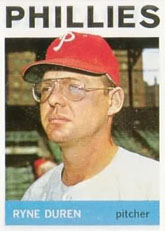
17. or ** from above on baseball, and I’m not sure if adding detail just makes this a bigger mess, but: in 1920 in a Major League baseball game, Indians shortstop Ray Chapman, 29, was struck by a pitch and killed by Carl Mays, accidentally, of the Washington Senators. See more here. I had a picture of a 1958 Hal Newhauser card that I deleted from my really stupid cell phone but added the gratuitous Ryne Duren art because three months later I was blogging about baseball per se.
weird jstor thingy:
journal article on parkinson
hard to find:
edit to add five years later, or
18
prompted by Anita Felicelli review in today’s Pink and other random or chaotic muses — and AF’s lively thread of trolls and kibbutzim — I am still tracking so to speak Lew Welch plus I begged Lisa Mezzacappa into something called Sussman Cant Sleep SF based on Jimi Hendrix machine gun and dialogue from A SeriousbMan. Help me save me










 Plastic Alto with Mark Weiss