Is it the Spit on My Chin That Makes Them Nervous, Or Rocking Out?

The obvious flaw in her memoir is that it is not true that my posts both mention her by name and criticize Walls. There were two posts, one that described the class, flatteringly favorably and mentioned the teacher by name and a separate post, six weeks later that described the work by Walls but barely referenced the class and did not mention the teacher at all. Certainly her 500-word argument does not give any textual evidence to back up her claims. So to the extent that it is not provably true — it is actually false — and seems to be pejorative — she says I am old and out of it and my writing she claims sucks, is a “rant” is “angry” apparently does not depict the work I am claiming to comment on, I’m lost or fumbling in the dark, intellectually, critically, by her estimation –and I’m paraphrasing obviously, despite the 26 objections I could get to in a close -reading — is it slanderous and libelous?  I would say it is at least fair to ask. To ask her, or her editor (the blog-leader, a teacher at San Francisco State), or her Dean or even if needs be a court.

It is not true her statement that I did not need the credit. I paid the same fees to register as everyone else so I would expect the same in the exchange as anyone else, even if I already have a degree. But to the extent her recollection of the experience of teaching me is so negative and seemingly biased, I wonder if she was able to keep such bias out of her grading process. Were my grades indicative of my work, or did she mark me down accordingly? (I actually never learned my grade; she had said towards the end of the quarter that I may have been mathematically eliminated from passing, based on certain tasks I never turned in or completed; I did continue the course and turned in a few more papers and the in-class final exam, and by my standards did decent work).

I said to her in an email, after I discovered her memoir, which she later apparently had taken down, that I thought the subject of blogging per se was a red herring, that perhaps her problem with me was something more fundamental, like a discomfort with having such an experienced writer or person in her class. She basically stone-walled me, and here I am 5,000 words later, still processing it.

Obviously I could write a more direct demand letter to her or her dean.

But I could lead twenty lives before I’d come up with anything (and this is like comic relief in the classic sense) as poetic as this old Archers of Loaf chestnut)

Yes it’s the spit on his chin that makes us nervous
Yes it’s the spit on our chins that makes us numb
It’s the high price from the crowd that’s gathering
Cutting off the false communication

Song is called “Fabricoh” I have no idea other than it rocks and probably still reverberates

Girlfriend and her co-worker finish their drink and co-worker is about to leave and I ask her her relatively objective and sage wisdom on all this: short of reading from the teacher’s memoir or my response she suggests the breach of privacy is the salient point, the identifying me by my (middle) age(dness), the invasiveness. I suggest that “Middle age starts when you stop riding horses or painting or writing” or “rocking out”:

edit to add, next day, at Coupa, after some coffee and New Saw salad:

obviously not where I started, but this is turning into a paean to Eric Bachmann and Archers of Loaf, an influential indie band of the nineties who were a huge influence on my work as Earthwise Productions and Cubberley Sessions/Palo Alto Soundcheck; I had heard the band, thanks to the good luck of having a cluster of friends in Chapel Hill/Carrboro/Old 86 before even conceiving of going all in, bare-back, as The Underground’s guy in the 650. Which reminds me — I was thinking about this while smearing an expensive faux French milled soap –with water — on my sagging middle-aged flesh — in the shower — this a.m., not three hours ago, that there was some kind of rumor, not inconsistent with something L.B. Jones said in his “Ordinary Money” that maybe the C.IA. had recruited some believably hip people to tour the circuit of former high school auditoriums and American Legion Halls (ironic that) to figure out whether indeed there was a revolution brewing in these people creating expression not obviously valuable to the powers that be, in this case large corporate kiratsu like Sony, Warners et al — the major labels. Flash forward twenty years and I am standing in line at Wells Fargo bank and there is a standard with a picture of a mixed race woman (not Esperanza Spalding) with big hair and and electric guitar — there’s a tv commercial that says even if your idea of a start-up is becoming the next Esperanza Spalding-meets-Crooked-Fingers we can loan you money. Some people said–as I was saying– maybe AOL were actually government spooks. If so, fooled me. Fooled me twice, shame on me. Search-injuning my phrasing and reference to above title, “spit” “chin” leads me to two pretty contemporary and much better written paeans to AOL in venerable Pitchfork, pertaining to reissues of Vee Vee and All the Nations Airports. Terry and I did catch AOL reunion tour at GAMH recently, although I did not say hi to EB. Compared to a couple years ago when I called the bar phone at Bottom of the Hill to get Eric on phone post-hit and apologize for not making his show, and he calls me “sir.” The Pitchfork twines reference either Bachmanmisms that would apply here, about self-effacement and not being heard, you can suss out for yourselfs. (still thinking about whether audience here is large enough to use plural or singular, split the difference with “yourselfs”. Also, meant to say that the “search” also suggests looking at “split” for “spit” as in commercial releases shared with other bands; plus I think of “spine” for “spit” and that I thought of trying to contact AOL while on that tour, in PDX after SF and a piece of public art that that looks like a giant pin (see “Web in Front” — and I share a birthday with Claes Oldenburg). 

Rambling on: made not to self to post, elsewhere that if this whole blog-thing is a memoir of work done twenty to ten years ago in the under crowd , which was overcrowded then sunk to bottom of ocean like Atlantis, or replaced by Finney-esque “pods”, pods with Pandora (ironic), that it is a cross between Danny Goldberg’s “Bumping Into Geniuses” and Adrienne Rich “Fact of a Doorframe.” 

phone rings

Posted in Uncategorized | Leave a comment

Wild Cohenolas

Charles Cohen, Steven Cohen and Eric Cohen, aka The Wild Cohen-Nolas, Garden District, St. Patrick's Day, NOLA, March 17, 2014

Charles “Snooks” Cohen, Eric “Big Chief” Cohen and Steven “Jacques-Imo” Cohen, aka The Wild Cohen-Nolas, Garden District, St. Patrick’s Day, NOLA, March 17, 2014

What do you call a tribe of wild Swedish, Jewish, Irish, black Indians?
Wild Cohenolas?
Wild Cohen-Olafs?
Wild Cohen-NOLAS?
Wild Cohen-NOKAS?
Flogging Mohel-ies
Poincare Vieux Carre conjectures?
Seeking Prime (or corned beef) on the Zeta Landscape (Garden District)?
Hey Poincare a-Way?
actually makes me want to produce a set of songs that merge Multiplication Rock with Funky Meters, as if Dr. John had an Erdos number….
The Reimann Night Trippers
De Who Dat Irrationals?

I mean, The Riemann Sumpin’ Sumpins

The Wild Tcohenoupitoulas (that one was forced)

The Not-Non-Funky Wild  Ignorabimuses (Ig-nore ABBA Muses)

The Artists formerly Known or Not Knowable as  H_{\aleph_2}.

I think I’m sticking with Not Non-Funky Ignore ABBA Muses, cause it has a recursive Swedish strain, a double-negative, the Hebrew word for “DAD” and just a touch of metaphysics. Make it not non funky!

edit to add, this just in, from fabulous Maple Leaf Bar:

craw

who dat at maple leaf bar baby?

who dat at maple leaf bar baby?


edit to add: under possible Cohen-inspired band names, either puns on name or math-heritage

Where Y’at, Mu? (Dr. John has a song, “Where Y’at, Mule?”)

Posted in ethniceities, music, where yat | Tagged | Leave a comment

To Foothill, Fondly

“To Foothill, Fondly” is a working title to a “Plastic Alto (wordpress, or markweiss86.wordpress)” post on which I am ruminating. (which sounds like I’m lifting my leg on a physical post; 5,000 words-worth like after a very long night at the pub, or we’ve kept Frida cooped up all day, although she is female so that doesn’t quite work either;)

Foothill in this case if Foothill College, a local and nationally-regarded community educational asset, from which I have taken several clusters of  courses over the last couple decades, since graduating from my actual Alma Mater. “Fondly” meaning, roughly speaking, with care, affection, regard, of a positive nature. (Which reminds me, as I sit here with MY NEW COMPUTER, at Peet’s Coffee in Palo Alto, on University –different University — Foothill is on El Monte — but continuing a “learning” theme, semantically, yet subtly– that yesterday I worked on this from my desk — kitchen table — at my home office — one br apartment — I glossed actual meanings — etymology, comparative uses — from my trusty Webster’s Ninth, yet here I am traveling bare-back, and without my typical book-bag, well, there’s always NOW the search-injuns…)

Since the subject is at least indirectly or secondarily prurience — obscenity, morality, “morals” compared to “ethics”, and I am being slightly provocative — for a guy with close to no readers sitting by himself in the corner of a cafe on a warm quasi-spring Sunday early afternoon — I should add that “To Foothill, Fondly” is a revision of the previous thought: “Fondled at Foothill”. If I said that, and I am trying not to, at least not in the headline, I am speaking metaphorically, of course. I would mean intellectual “fondling”, which I would guess, until continued rumination modifies, means to be touched but in an inappropriate way. Let me be clear: I was never actually physically abused or sexually abused in a physical way by any person, not by staff, or fellow students nor by strangers stalking the open and somewhat remote campus. I’m just toying with the phrase, and the pun on fondness with fondle. Fondly v. fondle. (Fondle can still have a non-pejorative sense, but it seems it is more often nowadays used as a pejorative). A previous idea I had was something about “College Try” a version of “the old college try” which Websters notes has something to do with “zeal”. And I am trying to distinguish “zeal” from “over-eagerness”. I also have something in my notes, on my stupid cell phone (i.e., not a smart-phone) “why we fig” wherein I was contemplating how to reference “why we fight” with the fig left in Milton’s “Paradise Lost” which I read and wrote about in Chauncey Loomis’ English 5 class (the same class, I believe, made legendary by the Donald Sutherland character in Harold Ramis’ “Animal House” — SAT AN — although I was a generation later — although come tot hunk of it (“to think”> tot hink> tot hunk thanks to supersmart NEW COMPUTER). STET — I thought on that while riding an intellectual horse of a completely different color: I was writing about Palo Alto’s “Photo Release” form, which I took as a overly broad waiver of Constitutional Rights, 1 and 4 I think. Maybe 1 in 5. I do mull words a lot, which probably pisses of the anti-Semantics.

I shot the bamboo but I did not kill the deputy

I shot the bamboo but I did not kill the deputy

Somewhere I am getting to a letter, perhaps to Dean of said school, perhaps to “(Moses Waxes) Hot (in Anger For)” Teacher (which is from Exodus, which reminds me this is my stop, nearing — and I am also via Webster my Webster trying to discern “anger” from, say dissidence ) perhaps here, open letter, to the billions of non-readers of Plastic Alto, wherein whirring I describe, hopefully emulating L. Brandeis more than R. Firefly, speak plainly man, the argument: is this defamation? is this libel? Is this slander? Is this age discrimination? Beyond just being ludicrous and a faulty memoir and bad reporting.

Here is the allegedly offensive passage (again, distinct from my overall experience which I had thought of as worthwhile). I may be doing a “close reading” of below, line by line or word by word and overall:

My most pressing concern about blogs, however, has to do with the question of audience and voice. Benson and Reyman note that many students “reported that online writing is more like talking to a ‘best friend’ than talking to a public audience” (20). This point touches upon an experience I had a couple of years ago with a student who was an avid blogger. This startling experience effectually discouraged me from exploring blogs as a pedagogical tool until now. This student was a middle-aged man from Palo Alto, a political activist who maintained a blog to express his views of politics, literature, music, art, and other interests. He was taking my English 1B class because he was interested in the class theme of “Inequality and the American Dream,” but not because he needed credit for the class. As the class read Jeannette Walls’ memoir The Glass Castle  –usually a popular book with students–, this student became enraged by what he saw as the immoral and fabricated story told by Walls, and he posted a rant on his blog about the memoir. The rant was not based on close textual analysis, but rather on the student’s speculations about Walls’ psychological condition, none of which could be corroborated by evidence in the text itself. Something about this text deeply irked the student, and he used his blog as a forum to air his many grievances.

While under other circumstances I would not be concerned with a students’ writing on his own blog, the fact that this post discussed me by name and revealed details of my course to the general public made me distinctly uncomfortable. I had a tense discussion with this student after reading the blog post (which he had voluntarily shared with me), and although he seemed to understand my concerns, he professed that he could write whatever he wanted on his own blog, and he would not delete this post. This experience exposed me to the murky and sometimes unclear boundaries between public and private writing, and between academic and personal viewpoints. It also showed me what might happen when a student discusses academic material in the informal space of the blogosphere, a space that this student used to express his views in an angry, unfiltered, and unrestrained way. So, as I keep this week’s readings about blogging in mind and prepare to assign a course blog in my own classes, I wonder how we as instructors should address those students who might use their writing on a class blog to create unruly, even angry posts based on speculation rather than textual analysis. How do we strike a balance between creativity and freedom on the one hand, and adherence to academic conventions and propriety on the other? How do we keep freedom of self-expression from devolving into uncritical ranting? I hope our discussion in class can shed light on these questions.

(notwithstanding copyright rules and mores about lifting, in this case, exactly 482 words–I had tried to re-blog previously, but the other bloggers disabled that feature. I am also not mentioning by name the teacher, although I am conceivably arguing that her post might defame me even without mentioning me by name, because I am easily identifiable — and had mentioned her in my comments — add to the list above the advisability of a teacher revealing in blog the content of a student’s work, as she did. At least get your facts right, lady. And saying “I did not intend for you to see the post, I intended to make it private or restricted or password protected” is like saying “I didn’t know the gun was loaded”.

There’s also correspondence between self and teacher, which I will keep as deep background, for now. And the actual coursework, as distinct from the blog posts, which are searchable below, or I’ll link to as necessary.

In some ways I would rather be writing about New Orleans (“Hey PA_ A-Way”, a play on Meters song “Hey Pocky A-Way”, about the lack of a cultural clave here in Palo Alto, or the effect of the corporate monoculture here, especially all the 1s and 0s types — compared to my 1 and 4 or 1 and 5 — and something I was thinking about  Turing: Are we becoming more like machines as we strive to create a machine more like us? ).

I want to at least, with trusty W9 in hand (that’s a book, not a tax form or weapon), revisit the various etymologies from yesterday (literally, from Saturday, March 15, 2014, although my English I am trying to keep hovering around 1986 and W9 not the corrupted evolving Tenth or Eleventh or whatNOT.)

Angry Young Men, British, 1950s. Kingsly Amis et al

“Look Back in Anger” 1956 or so

middle age vs. Middle Ages

full-fledged (“To Foothill, Fondly full-fledged”???)

critical

indiscrete vs. indiscreet (as in teacher was indiscreet if not illegal in revealing publicly what her student wrote privately and indiscrete in lumping the classwork with the blogwork in her faulty memoir)

(edita, from after the Fabricoh riffs, but I am adding it here: 1)Chuck Palahniuk, in his 2007 book of the same name, suggests that “Rant” is onomatopoeic, that the word sounds like “vomit” the act; great!

It’s also true that 2)  my K thru 4 elementary school is called Foothill, in Saratoga, Calif, about 15 miles south of Palo Alto, if that somehow features in my contempt for Wall’s childhood stories themselves, and I’m somehow projecting an overreaction on the junior college years later, I doubt).

edita

from Charles Isherwood long review in Feb. 2012 i.e. simultaneous to Foothill class in New York Times, Broadway revival of John Osborn’s 1956 play: The economic malaise smothering the globe today, leaving a generation of young men gloomy over their diminished prospects, might seem a viable occasion for another bruising few ro

edita-anita (edita, part two, an hour later, after a break to read sports section, Sporting Green):

I hope to see the documentary film “Anita” by Freida Mock about Anita Hill — news of which I surfeited to (surfed to) after reading Times ($15/month) about “Tim’s Vermeer” which plays tonight at 6:15 in nearby Menlo Park Guild, trumping “Casablanca/Indemnity” here on Uni — for the record: I remember catching bits of the Anita Hill / Clarence Thomas hearing while touring North Carolina in 1991, and that I believed her but not him. Not sure how snugly this graph fits up here in Plastic Alto 2014 “to foothill fondly full-fledged” et al. Link.

Her memoir, noted in passing in Times:

Regarding Walls, I had argued that it was below par relative to two other texts in the 2011 course (itself a first-time offering): Steinbeck, “Tortilla Flat” and Boyle, “Tortilla Curtain”. Maybe I was just tiring of the course, but I argued that among its other flaws, I questioned it’s use of too personal detail, and the author’s alleged sexual misadventures, as relevant or not relevant. In fact-checking all the above, I searched “jeannette walls” and “fondle” to see how frequently other critics raised this point. I was certainly not shocked or offended by the passages, just questioning their necessity. That it provoked such a remembrance from the instructor, I am surprised, and disappointed that she took such liberties with her version of our experience. It seems that the passage or post has been deleted from blog, Teaching Writing in a Digital Age, not just having the reblog feature disabled. I would have argued for (and still may) not that it be taken down, just that I be given a fair chance to respond, which is the nature of the internet or blogging, as I see it. And although this exercise is “To Foothill…” I note the blog is headquartered at SF State.

Or maybe I was disturbed by Walls claiming that her brother Brian was fondled by their grandmother.

New York Times about a year ago on recent Walls:

Weird, Weissian and web-like digression to factoid/footnote: searching “paradise lost” and “fig leaf” reminds that Dartmouth’s David Scott Kastan — who I don’t recall actually studying with, although that might have been difficult to avoid — edits a version of Milton and has notes on the fig leaf thing. The tree with the leafs distinct from their fruit-bearing cousins; in parts of India (“Indian” which always gets my red blood boiling and waxing hot); and like “targes” shields from “Amazonia” which is loaded in this age. It did say, shields, right? No, “shield” singular, in 2005 edition from a Hackett Press of Indianapolis (!), “fig” highlighted on line 1101.

Moses waxing hot: I’d say, superficially, since my stop was a whiles back, save for another day other than Exodus 32:19 or so in King James but I would want to compare Robert Alter on the topic, balancing my Webster Ninth fundamentalism (weird as it is) with my Alter alterations. His “anger” waxes hot, sometimes it is his “wrath”. Compared to my contempt for Walls. This is a hot mess, even for a self-labeled “draft”; the last 1,000 or so words (and 20 or so ideas) just falling out like dirt from the ball of roots of a garden plant, messy. Which reminds me of Nellie McKay talking to Ian MacKaye in Austin SXSW 2009 and then saying she is “mucking” it up. Or am I making it up? How can I make it up to you?

The snake me beguiled and I did eat, Eve say, or Jeannette or whoever. (it’s actually “serpent” who does the “me-beguiling” trick..n.b.) line 162 or so.

edita 3: I guess I could return to this some day and put about 10 or fewer footnotes in the actual rip from TWIDA and then refute or rebut in short little essays her usage or implications or call out the assertions of truth that are not provable, and where she is wrong, or I am wronged.  (distinct from demand letter or “dear dean” — in our recent correspondence, it quickly went sour and she declared an impasse).

edit to add, next day:

This point (touches upon)1 an experience I had (a couple of years ago)2 with a student who was an (avid blogger)3. This (startling experience)4 (effectually discouraged me)5 from exploring blogs as a (pedagogical)5 tool until now. (This student was a middle-aged man from Palo Alto)6, (a political activist)7 who (maintained a blog)8 to express his (views of)9 (politics, literature, music, art, and other interests)10. He was taking my English 1B class because he was interested in the class theme of “Inequality and the American Dream,” (but not because he needed credit for the class)11. As the class read Jeannette Walls’ memoir The Glass Castle  –(usually a popular book with students)12–, this student (became enraged)13 by what he saw as the (immoral)14 and (fabricated)15 story told by Walls, and he (posted a rant )16(on his blog)17 about the memoir. The (rant)17 was not based on (close textual analysis)18, but (rather)19 on the (student’s speculations)20 about (Walls’ psychological condition)21, (none of which could be corroborated by evidence in the text itself)22. (Something about this text)23 (deeply irked)24 the student, and (he used his blog)25 as a forum to air his (many grievances)26.

While under (other circumstances)27 I would not be concerned with a students’ writing on his own blog, the fact that this post discussed me by name and revealed details of my course to the general public made me distinctly uncomfortable. I had a tense discussion with this student after reading the blog post (which he had voluntarily shared with me), and although he seemed to understand my concerns, he professed that he could write whatever he wanted on his own blog, and he would not delete this post. This experience exposed me to the murky and sometimes unclear boundaries between public and private writing, and between academic and personal viewpoints. It also showed me what might happen when a student discusses academic material in the informal space of the blogosphere, a space that this student used to express his views in an angry, unfiltered, and unrestrained way. So, as I keep this week’s readings about blogging in mind and prepare to assign a course blog in my own classes, I wonder how we as instructors should address those students who might use their writing on a class blog to create unruly, even angry posts based on speculation rather than textual analysis. How do we strike a balance between creativity and freedom on the one hand, and adherence to academic conventions and propriety on the other? How do we keep freedom of self-expression from devolving into uncritical ranting? I hope our discussion in class can shed light on these questions.

 Well, ok, I have to stop at 26 or so comments, in order, and not prioritized, because my girlfriend called just as I started getting into this and it is now — a couple days later — St. Patrick’s Day — and we have some corned beef to rant at, I mean eat. Like the serpent beguiling Eve and the Apple. But I will have to get back at my thoughts before I forget those 26 reactions, which would be a lot better if I prioritized them. At (22) I started thinking of Rosanne Rosannadanna, a Gilda Radner (not Rant-ner) character on the original SNL who would start a news commentary and they would stop to correct her and she would say “never mind”. When the teacher claimed in her post that I said things in my post “none of which could be corroborated by the text itself”. Huh? None of what I said came from reading the text itself? As distinct from what I actually said in my so-called “rant”, that I recommend people could stop at page 144 of 288 — she was not claiming that I was quoting from parts of the book I claimed not to have read, or that I was making up, the parts about when flying elephants perhaps Dumbo come to life and escape from Anaheim and chasing them down in the Arizona desert, traumatized her, young semi-fictional future MSNBC gossip columnist and spokesperson for the world’s dispossessed, I did not claim in my post that perhaps what actually happened was it was not her uncle in the front room with dagger but a flying elephant come to life and escaped from Disneyland; she does not accuse me of being on acid just of perhaps quoting from the wrong text entirely — oh, are we still on Walls? I thought we were back on Boyle and his magic coyotes? Nevermind. But actually my point was to question (is that allowed, ? question mark, questions Mark) her credibility, how do we know this actually happened — it is marked “memoir” or non fiction, and she is claiming therefore to not be fabricating or embellishing or using what Twain would call ‘stretchers’ (but of course he did this in a preface to a work of fiction), so why would I claim that the things she may be making up — specifically about whether her brother was sexually assaulted by her grandmother — had to be supported by other things in the text? I was suggesting some editing, elision –do we really have to accuse grandma of this? If it did happen, why should we care? But do we really have to hear about it? I was certainly not arguing that Walls’ work would be improved if she added more details,  like a foreshadowing in a previous chapter (“I had started to notice my little brother’s quaint habit of not pulling up his snuggies all the way, exposing his four year old butt crack, like in those old suntan lotion ads,  and worried that someday, before he became a cop, that people, perhaps even our own family, might take too strong an interest in both his physical appearance, and his trusting non-Rex-like nature, here in Arizona, before we got to West Virgina” — NOT). But none of which could be corroborated by evidence in the text itself)22 would be as if I would be eating my own hand, as Shakespeare would say, and thank god for that.

This student was a middle-aged man from Palo Alto)6, (a political activist)7 who (maintained a blog)8 to express his (views of)9 (politics, literature, music, art, and other interests)10 So to the extent that Terry does come home with a co-worker and they have poured me wine but are otherwise content to rehash their events of the day and leave me be with my debauchery (writing, not roaming the streets in a green hat and bumping into people and burping and getting rid of snakes — shit, I’m getting riffs on snakes — which reminds that Jeremy Postaer, the famous art director — WHEN I WORKED AND ASPIRED FOR ONGOING WORK AS A PROFESSIONAL WRITER, YES WRITER, PART OF MY EXPERIENCE BROUGHT TO BEAR IN WINTER, 2012 TWO YEARS AGO, IN THE REMEDIAL ENGLISH COURSE AT THE LOCAL JUNIOR COLLEGE, IS BEING A PROFESSIONAL WRITER, HELLO?!-showed me a doodle from his idea book — this was before there were blogs — the notebook, as I recall, was comprised of thin sheets of paper bound together closely between two thicker pieces of paper, or card-board, a special type of paper, perhaps bound by spiral thin metal — that was a pictogram of my name, a  “W”, and eyeball and two snakes hissing, and I recall at least once trying to claim my last name was Two Snakes, again this was a couple years after reading and writing on Milton at an Ivy League college but well before starting a blog.  Any hoo, my problem, not that I am angry, at the git-go of her memoir is (6) her reference to me as “middle aged”. Or actually, a middle-aged man and (7)”political activist” (I will get to the 8, 9 10 in a minute). So my first question, as I ponder all this, and wonder about issues and terms like libel, slander, defamation is, is it fair comment for teacher to write about me and refer to me as “middle aged” “political activist”? Strictly speaking I guess it is fair comment and not an assertion of fact, nor a provably true statement that she cannot prove — the basic test for libel, I recall from both undergraduate studies of journalism, professional experience and recent reviewing of such based on Anthony Lewis’s book about Sullivan v. New York Times (“Make No Law”), but is it accurate enough? I would say, and do say, for instance, and its that time of year, when I pay taxes I call myself, and my accountant reminds me, when he pre-prepares my dossier, “concert promoter and arts administrator”.  More specifically, my trades are concert promoter and artist manager, in the music business; since 1994 and ongoing, as an “ongoing concern” as they say, I am the sole proprietor of an entity called Earthwise Productions, that has produced about 300 concerts or so over the years and has managed (or I have) about 20 acts or acts — I sometimes say that I had a business to consumer model then added or emphasized a business-to-business model, so my basic trade is like a marketing executive or entrepreneur who uses his marketing and communications training to help the arts or artists (and in fact in recent years, although I have curtailed most of my work in music per se I have added at least one visual arts client– I am or was like his agent –actually a lot of this stuff you can find reference to here, at the blog, “Plastic Alto”, which maybe started perhaps to generate leads for my business. I mean, yes I do put a lot of energy into local politics and ran for office, for Palo Alto City Council twice, in 2009 and 2012, but I would say it is more accurate to say I am a small business owner or arts professional than “political activist”. I have been called an “activist” before — the then-Mayor of Palo Alto Yiaway Yeh, at a public hearing, — I was being interviewed by council for potential membership on the planning commission, he said “You are an activist — will you be able to work on a commission?” the context was that relative to some other candidates, my tactics and profile, writing letters, speaking at meetings, was of a dissident or someone speaking up — I did not take it as a slur (but in fact downplayed it and said my training was journalism which entails and requires a certain amount of listening and processing information, as compared to speaking out). But I would say in a classroom environment, a writing lab, it is more accurate to say I am a business person who writes or wants to learn to write better, interested in continuing education AND  DABBLES IN LOCAL POLITICS than to say that is my primary occupation. I would question her usage of middle aged political activist is rather contrived to make me sound like an extreme rara avis rare bird and meant to belittle and dismiss my opinions rather than the more obvious point that as someone who had completed his formal education and achieved a b.a. (in English, no less) and had numerous life experiences (in arts and communications and rhetoric-related fields) that I should be given benefit of the doubt not increased skepticism to the extent that I have novel ideas or approach the task at hand from a different perspective. It is not untrue to call me a “political activist” but truly more accurate and appropriate for the discussion to think of me as something more mainstream, like my actual job title (even if that is a pretty obscure career, and that I am a small fish in those realms — there is a revenue stream and set of establish tactics for making money, in music and art, as compared to being a “activist” which sounds like, who knows? It sounds pejorative. Not to mention that my background also includes professional experiences at two daily newspapers, several ad agencies and pr firms et cetera. It would be more true for the teacher to have said “My class of winter 2012 was interesting because in the mix was a former professional journalism and advertising writer who wanted to hone his political skills and bring a literary perspective to local politics, and he brought a lot of life experiences to his views of the texts, their authors and the topics we explore, in ‘inequality and Americana'”. Or just call me the old weird guy, whatever, if that fits your purpose. But not in print!

The 8-9-10 is that by close-reading here her note the distinction between what my blog actually is and how she describes it. I say “your source for jazz, rock art and local politics” compared to her procrustean and twisted “politics literature music and art”.  Point of fact I do discuss authors: Alden van Buskirk, Allen Ginsberg, Jack Hirschman, Sylvia Brownrigg, Wallace Stegner, Dao Strom, Rachel Kushner, but I guess I am slightly less-conscious of it; nonetheless it should augment my credentials in Foothill’s English 1B, the fact of my blog or my actual experience.

There’s the issue of whether it is appropriate at all or legal for a teacher to discuss her student’s work in a public forum, even a blog. Is it discriminatory, a type of age-discrimination, for her to reveal my age or call me “middle aged”? If Southwest Airlines calls their flight attendants “middle aged” and then dismisses them, they get sued big time. How is this different? (I do feel “dismissed” in a sense). Why does she start with the term “middle aged”?

The obvious flaw in her memoir is that it is not true that my posts both mention her by name and criticize Walls. There were two posts, one that described the class, flatteringly favorably and mentioned the teacher by name and a separate post, six weeks later that described the work by Walls but barely referenced the class and did not mention the teacher at all. Certainly her 500-word argument does not give any textual evidence to back up her claims. So to the extent that it is not provably true — it is actually false — and seems to be pejorative — she says I am old and out of it and my writing she claims sucks, is a “rant” is “angry” apparently does not depict the work I am claiming to comment on, I’m lost or fumbling in the dark, intellectually, critically, by her estimation –and I’m paraphrasing obviously, despite the 26 objections I could get to in a close -reading — is it slanderous and libelous?  I would say it is at least fair to ask. To ask her, or her editor (the blog-leader, a teacher at San Francisco State), or her Dean or even if needs be a court.

It is not true her statement that I did not need the credit. I paid the same fees to register as everyone else so I would expect the same in the exchange as anyone else, even if I already have a degree. But to the extent her recollection of the experience of teaching me is so negative and seemingly biased, I wonder if she was able to keep such bias out of her grading process. Were my grades indicative of my work, or did she mark me down accordingly? (I actually never learned my grade; she had said towards the end of the quarter that I may have been mathematically eliminated from passing, based on certain tasks I never turned in or completed; I did continue the course and turned in a few more papers and the in-class final exam, and by my standards did decent work).

I said to her in an email, after I discovered her memoir, which she later apparently had taken down, that I thought the subject of blogging per se was a red herring, that perhaps her problem with me was something more fundamental, like a discomfort with having such an experienced writer or person in her class. She basically stone-walled me, and here I am 5,000 words later, still processing it.

Obviously I could write a more direct demand letter to her or her dean.

But I could lead twenty lives before I’d come up with anything (and this is like comic relief in the classic sense) as poetic as this old Archers of Loaf chestnut)

Yes it’s the spit on his chin that makes us nervous
Yes it’s the spit on our chins that makes us numb
It’s the high price from the crowd that’s gathering
Cutting off the false communication

Song is called “Fabricoh” I have no idea other than it rocks and probably still reverberates

Girlfriend and her co-worker finish their drink and co-worker is about to leave and I ask her her relatively objective and sage wisdom on all this: short of reading from the teacher’s memoir or my response she suggests the breach of privacy is the salient point, the identifying me by my (middle) age(dness), the invasiveness. I suggest that “Middle age starts when you stop riding horses or painting or writing” or “rocking out”:

Posted in media, Plato's Republic, words | Tagged , , , | Leave a comment

Zion I and I and I (and Steve…and Peggy)

Or: Mind Over Matter, indeed

Mostly pictorial depiction of the excitement of consolidating two Public Storage Spaces to one, saving about $200 per month, and what to do with all that stuff?

Partial setlist, Zion I at Kappa Sig Parking lot, presented by SCON, via Soundhound, captured by Steve

Partial setlist, Zion I at Kappa Sig Parking lot, presented by SCON, via Soundhound, captured by Steve

When I was selling off the first load of about twenty boxes of cd’s and one of the last remaining record stores, Diego the clerk was tripping out over my having an early Zion I record. He suggested that I take it back from the sell pile and deal it myself on one of the trendy and newfangled online markets. He thought I could get $200 for this perhaps rare or out of print title (“they got screwed by their label”, he suggested). Well he checked it a minute later and yeah maybe someone would have paid me $20 online versus this store will offer it to lucky old school drop by customer for about $12 or so — they gave me $1 or maybe $2, which was par for the course or in actuality well above par.

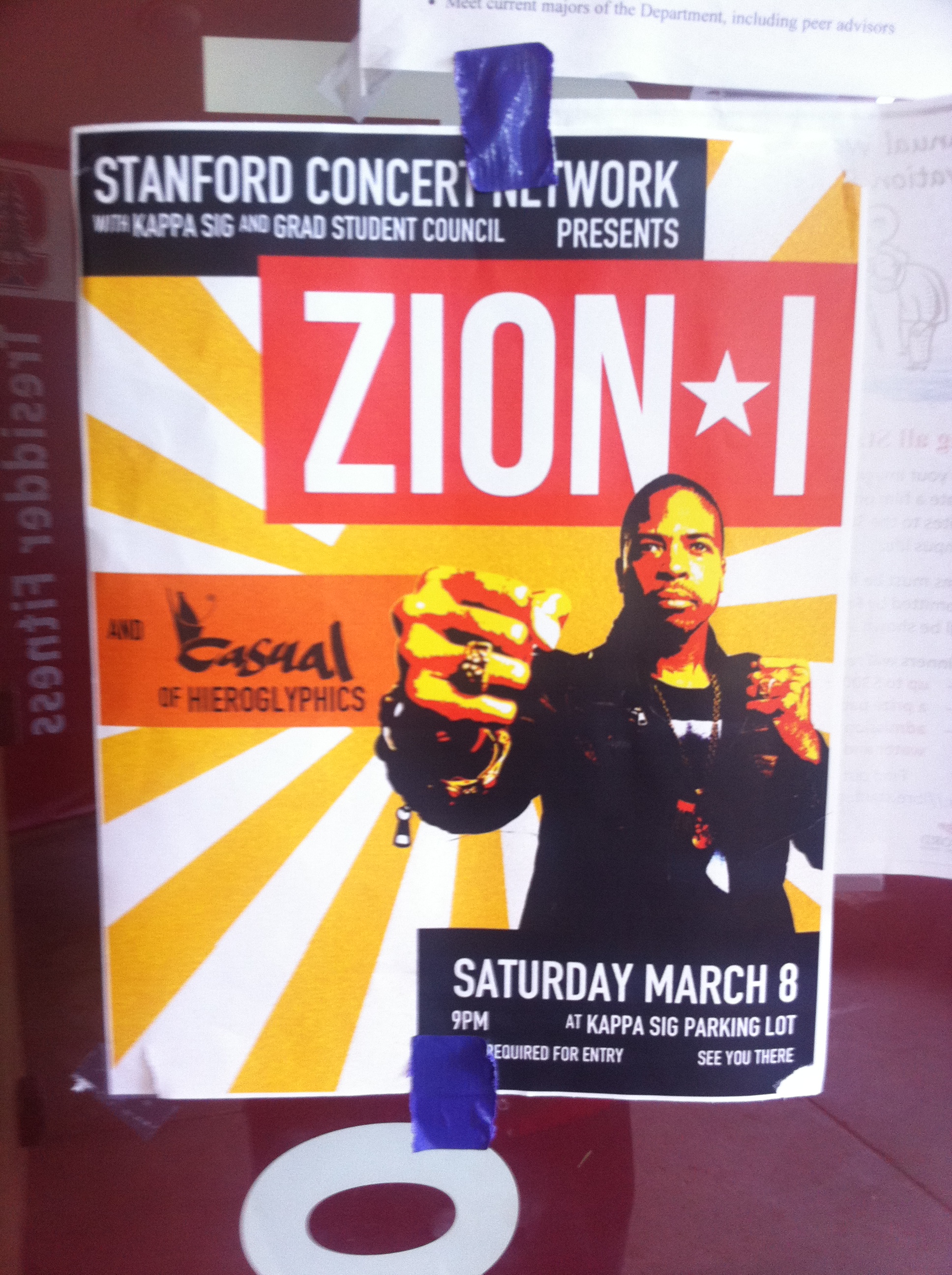
But I thought it weird or synchronicity or sign of there actually being a Higher Power that at the Stanford CoHo a day or so later, there was a Zion I flyer about a show coming up. I reminded Steve that night that the thumping noise he was hearing was not the Nobel Prize winner celebrating with his wife but the concert he could not miss nearby. So Steve peeped it out and even captured via Soundhound this partial set list:
MORE TO COME, FO SURE

HIT EM
BIRDS EYE VIEW
SILLY PUDDY

(well, that could have been what he heard from the unit above….)

And the end of the day, or the week, I had sold off about 1000 cd’s, 200 books for a grand total of about $200 plus a small bookcase I took in trade, and two more cd’s, of the Fleshtones, because I had bought a recent book on them, and Vince Guaraldi “Peanuts” because of my recent jazz ponderings. I also donated another 100 cd’s to Friends of Palo Alto library and about 50 books. (I kinda wish I had bypassed the whole record store experience and donated everything, but I needed that extra bookcase for my additional “new” cc’s.

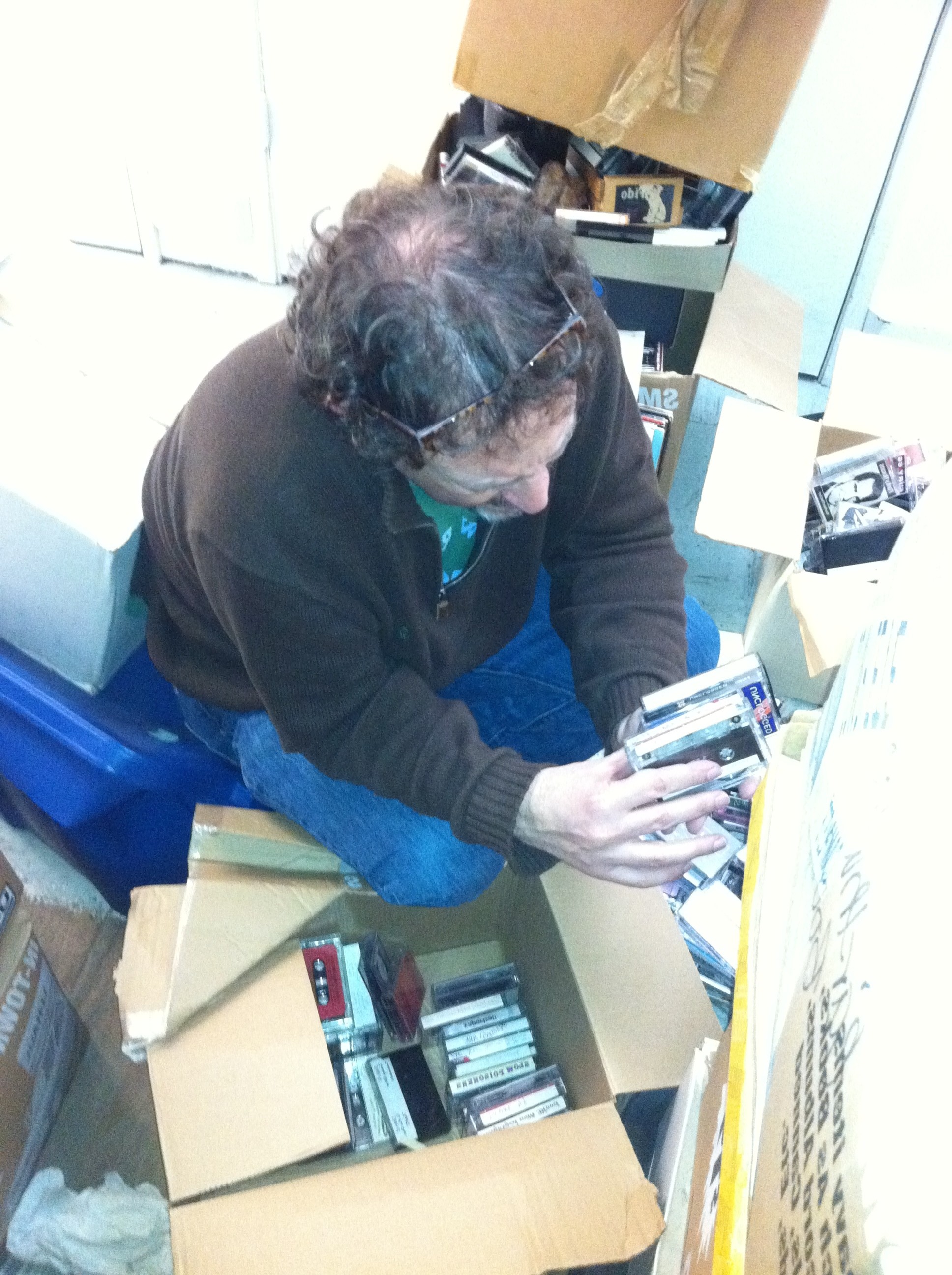
One of the bittersweet experiences was recycling about 200 tape cassettes of bands I had encountered during the heyday of Earthwise’s Cubberley Sessions and Palo Alto Soundcheck, 1994-2000, which I had dutifully kept alphabetized, boxed and stored, for 14 years, which cost me about $500 to $1,000 pro-rated, but I felt some kind of obligation to these bands and artists many of whom I met personally and knew or know. Steve caught this snapshot of me saying goodbye to each, one by one.

Saying au revoir to mediated versions of great bands and artists like Vaportrail, Laughingstock, Engorged with Blood and 200 of their cohorts, from back in the day, prospective performers at the Cubberley Sessions

Saying au revoir to mediated versions of great bands and artists like Vaportrail, Laughingstock, Engorged with Blood and 200 of their cohorts, from back in the day, prospective performers at the Cubberley Sessions

Steve also shot these photos of the hip hop concert which literally brought the music to his doorstep and further inside:
zionistanford

ziondemanmorezionposter

This is the poster I noticed, first at CoHo:
zionposter

If this is an odyssey in the classical sense, it is fairly pedestrian, back and forth from storage spaces to my apartment, to the record store, more emotionally than physically draining (especially since Steve Cohen did more than his share of the literal “heavy-lifting”, he a former member of both the 175 and 200 Pound Bench Press club, at Gunn High, and a prospective discount member of Muscle Beach), because it really was hard to say “good bye” to a lot of this good music. We did enjoy the excellent service we got at PS Storage by Peggy Madden, who is from Deerborn, Michigan and a former Ford employee before going full-Cali more than a few years back, she said. We also got excellent service from her co-workers James, Margaret and Shawn. (They asked me to do a review for social media but I draw the line here at WordPress — I received no compensation for my efforts other than this smile:

PeggyPS

).

That photo is part of the text, in the parenthesis, followed by a close parens, although it does look like the emoticon for a smile. Funny how that works out. 🙂 :p

Here’s a couple snapshots boxes of cd’s followed by two of the workers at the store. I won’t use her name here, but I was intrigued by the book buyer who said she is working on her novel; I mentioned to her Daniyal Mueenuddin, In Other Rooms, Other Wonders, and also asked her if she had read Louise Erdrich.

Silly pudding:

Describing Animals and other demo tapes I dutifully stored for 15 or more years; I kept all the cover letters, press photos and one-sheets.

Describing Animals and other demo tapes I dutifully stored for 15 or more years; I kept all the cover letters, press photos and one-sheets.


My stuff about to get me stiffed more or less at last-man-standing retailer; I wish I had just taken it all to the library, to donate, for their monthly bazaar.

My stuff about to get me stiffed more or less at last-man-standing retailer; I wish I had just taken it all to the library, to donate, for their monthly bazaar.


William Hooker, one dollar, Beth Lisick 25 cents; so it goes

William Hooker, one dollar, Beth Lisick 25 cents; so it goes


God bless Kelsi Arnold, of San Jose -- temped to see if that number still works

God bless Kelsi Arnold, of San Jose — temped to see if that number still works


I saved for years and now have parted with numerous back issues of Pollstar rosters, current versions of which are probably still pretty useful to managers and promoters

I saved for years and now have parted with numerous back issues of Pollstar rosters, current versions of which are probably still pretty useful to managers and promoters


I played a large scale version of Rock, Rot or Rule

I played a large scale version of Rock, Rot or Rule


This guy chatted me up while scanning the barcodes of my cds; he had an interesting notion of remixing a 1970s jazz piano dude I like

This guy chatted me up while scanning the barcodes of my cds; he had an interesting notion of remixing a 1970s jazz piano dude I like


Posted in music, sex, words | Tagged , , | Leave a comment

To Blog or to Rant: Some Questions about Audience and Voice in Student Blog Posts

Open letter to Jordana Finnegan, PhD and writing instructor at Foothill College: I’m sorry that I was such a burden to you. At the very least you should know that I respect you fifty times more that I respect Walls.
I’d certainly be willing to edit any of this that you think is incorrect or unfair. I also think you are confusing texts I turned in to you, that were private, with comments I posted on this blog regarding Walls. Mark Weiss

Posted in Uncategorized | Leave a comment

On corporate hardwire to the home

I posted this on the Palo Alto Weekly comments board, the lone dissenter among a dozen or more zealot-regulars salivating for the corporate-pseudo-donation of fiber ring (faster internet to the homes):
Posted by Mark Weiss , a resident of Another Palo Alto neighborhood
3 minutes ago
What else can we do to make ourselves more useful to their agenda? Please!

I am probably over-due to update my Ludditte and pro-Democracy rant. I started to post something slightly longer (and more smarmy) with references to Anthony Burgess (“A Clockwork Orange” “queer as a clockwork orange” the Locovic or whatever Technique, pun on corporate name in instant case compared with slang “droogs”), Allen Ginsberg (“Moloch” – cannot tell if I use that line too much or not enough, plus “what Phoenix smashed and ate their brains?”) George Orwell, Aldous Huxley, Philip K. Dick (caught exactly 13 minutes of “Minority Report” or captured it and viewed: reminded of Planning Commissioner M. Alcheck stating that he admired the futuristic cars in that movie, for traffic control), McChesney (“Dollar-ocracy” on Moyers, on tape, may view again), Jeff Clements (“corporations are not people” i.e. fighting “citizens united”), Jerry Mander (four arguments, absence of the sacred), George Packer (The Unwinding; also Nancy Packer “fifo” riff), Abraham Lincoln (Gettysburg address– see below, excerpt). Also, new David Eggers book.

I am phasing out posting on PAW site. Trying to channel the energy to other places. Wanted to post a pro- Kevin Skelly message but found they had limited the comments, after 100, to registered users, plus they delete a lot of stuff. Almost split the difference with “maybe we can contract this corporation to issue us a driverless car to run the school district” a little obscure, under fiber thread.
I will have to look it up whether what I posted is too simply “troll”. No room for dissent on the net.

See also: click thru to Palo Alto Hacker day and database databases (sic).
To Solve Everything Click here, by Evgene Morozov — have read quickly should try again and learn to spell his name. Evgeny, that is. (Not to be confused with Eugene S. Robinson rookie card). Also, the title is “save everything” not “solve”. Techno-solutionism, his neologism. Actually, he uses “solutionism”, my bad.

Am off to Frank Capra Science films, for whatever that adds to the equation. After five or six nights of Capra at the Pack, I think now of “capra-esque” as a back-handed compliment, thanks to David Thomson.
Here is link to Weekly on what was this topic:

we here highly resolve that these dead shall not have died in vain—that this nation, under God, shall have a new birth of freedom—and that government of the people, by the people, for the people, shall not perish from the earth.


Abraham Lincoln, 1863 at Gettysburg

Basically I am bemoaning how much of the public space is devoted to corporate public relations agenda, plus still questioning the role of the proliferation of computing. How soon until all dissent is deleted?
also: Kurt Vonnegutt, “Player Piano” from about 1960

edit to add, a few minutes later, after checking back to see when my post makes me like the famous martyr struck by arrows, after re-reading Paul Losch and someone else offering a link to said Corporate’s own propaganda, I quote, re-naming as
STEAMROLLING OF LOCAL GOVERNANCE PROCESSES
Streamline local government processes. Finally, cities and counties can take a look at some of their existing government processes and think about how to streamline and standardize them. For example, building a fiber network can require a lot of construction permits. By establishing a standard permitting process and publishing it for potential providers to see, localities can clearly indicate to network providers that they’re ready for a major infrastructure project. These providers can play a role, too — if they decide to build fiber in an area, they can share their building plans with localities ahead of time, and determine a rolling timeline of permit requests, to save localities from being inundated with thousands of permits at once.

George Packer, in May, 2013 The New Yorker plugging Evgeny Morozov. The article is called CHANGE THE WORLD: How Silicon Valley is Applying its Mindset to Local Government or something like that.

This all reminds me of the scene in the Matrix where the character is offered the chance, via a blue pill, to forget that he is part of the resistance and join the matrix, which is basically all of human race save a few dissenters, being happily hooked up to the system, used as pure power source and lifeblood to the actual players, in this case a network of machines. As in, how much in flat cash, as opposed to a small (on order of ten million dollars) in kind donation by a large (on order of 100 billion, i.e. at least 500 times greater entity — we are a tick on their mastiff back) for each of us to renounce citizen ship in the human race in exchange for being just one more asset? How much in cash would each of you take, today, to renounce membership in the human race and open society to become forever merely the property of a corporate entity? And what is Feudalism in a post-Democratic completely wired corporate dollarocracy? It is not a stupor with arteries coming out of our necks to lubricate the machine but how far from that are we?

“Building a fiber network requires a lot of construction permits” to me reads as “Building a ‘dollarocracy’ or whatever we call this requires a lot of people taking the blue pill…why don’t we just put it in the water?” I mean too bad these guys didn’t get here ahead of Columbus and instead of merely spreading chicken pox they might have re-wired our brains by technologies…Gives new meaning to “rape and pill-age”. Maybe they will invent a time machine and actually go do that. (Although Steven Hawking says if time machines will someday be invented we would already by overwhelmed by tourists from the future).

Here is a brief excerpt from Packer; the article is like a preview for “The Unwinding” which is much longer, not didactic, and describes interrelated phenomena in various cases and parts of the country:
Technology can be an answer to incompetence and inefficiency. But it has little to say about larger issues of justice and fairness, unless you think that political problems are bugs that can be fixed by engineering rather than fundamental conflicts of interest and value. Evgeny Morozov, in his new book “To Save Everything, Click Here,” calls this belief “solutionism.”

edit to add, days later:

Posted by Mark Weiss, a resident of Barron Park
0 minutes ago
Government is a “we” not a “they”.

Jeff Hoel is a citizen.

Google is a corporation seeking to maximize, in their every act, their profits, power and sphere of influence. They are not a philanthropy or our friend.

Read my blog, “Plastic Alto: Corporate Hardwire to the Home”, for more of my qualms about this but simply put I do not think we should spend any tax dollars or staff time on this contest or stunt.
(see link in my previous post)

When FTTP is right for Palo Alto, we should budget for it ourselves.

Posted in media, Plato's Republic | Tagged , , , | Leave a comment

Matt Haimovitz at CBGB [credit: Harry DiOrio]

Hi. I wrote a long essay on the history of jazz in Palo Alto and included Matt Haimovitz as a footnote, sparked to do such because Ropeadope had included on its blog a link to an item on Matt in the Cincy newspaper and a nice photo. Which subsequently disappeared from my wordpress blog so I thought to re-capture it here.
Coinkydinky, I caught Benjamin Simon and PACO doing a tribute to late Beethoven the other night at Stanford — all of which to my mind begs the question: why is there no proper concert hall in Palo Alto. It would have been great to entice Matt into the debate about getting The Varsity Theatre back on line as a performance venue.

So, and yeah, this is Matt at CBGB I know.
Mark Weiss
also interviewed Matt by phone for KZSU and in-studio jam with Kraky and SoCalled.

Posted in ethniceities, jazz, media, music | Tagged | Leave a comment

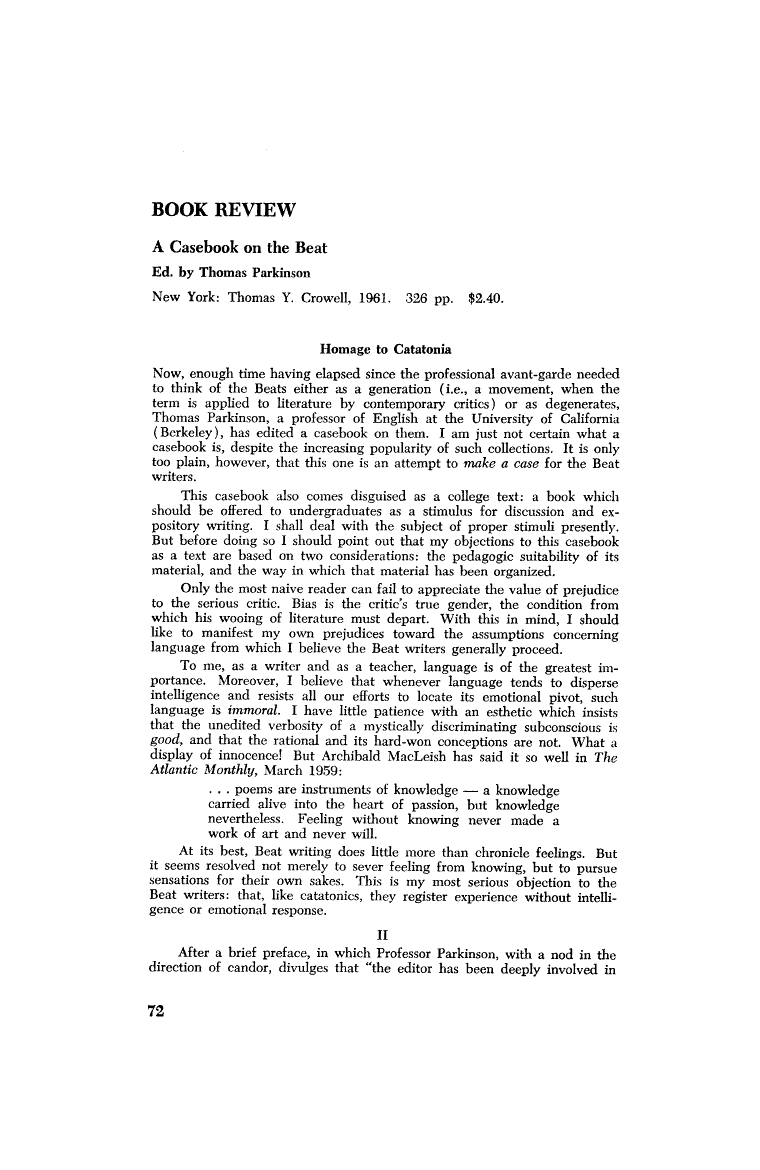
A Casebook on the BEAT by Thomas Parkinson casebook

If I rifle is seen hanging over a fireplace in the first act, then it should be fired by the third.*

93CC53BB-39A7-49F1-A41F-BE00ADF30E47.jpeg

1.

A couple weeks ago I was at Temporary Main Library (former council chambers, former Palo Alto Cultural Center auditorium) on my laptop and found a review of a book that I wanted to read and went to librarian to learn it was not available to us; I was confusing JSTOR with EBSCO — I had used EBSCO to get access to articles by Adam Johnson (about Palo Alto Police using teens as snipers) and the George Packer piece that is like a preview of “The Unwinding”, from New Yorker, I had already read it in successive sittings at Menlo Park library, hard copy, back issue.

A couple days later I had a hunch and indeed found “A Casebook on the BEAT” edited by Thomas Parkinson, 1961, Crowell Publishing New York, paper — my copy says I bought in somewhere in last year or so for $7.50, it’s out of print.
C6BDD861-3FD3-4A6E-AC68-E6711CA437D1

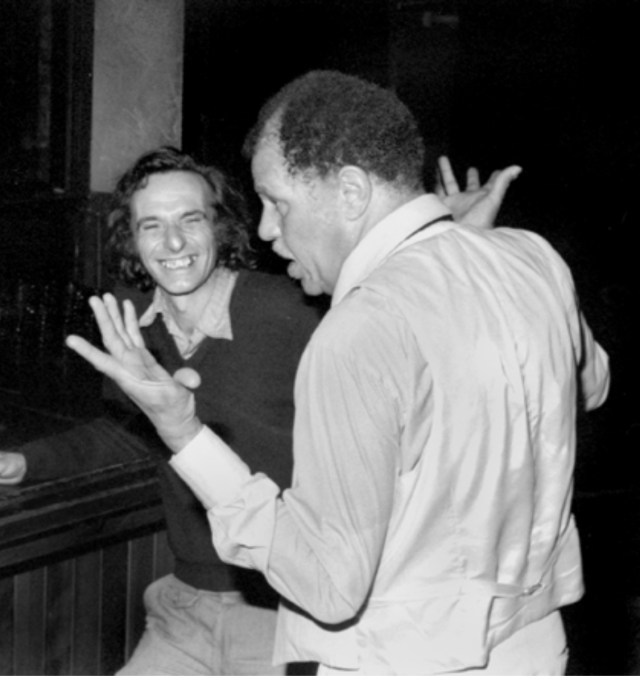
Jack 1981 with Dexter Gordon by Brian McMillen

I had attended Jack Hirshman’s birthday event at City Lights a few weeks prior and was sussing around about that. I also wrote something that is saved in Word not searchable called “The Jack Story”. If you search Hirschman and Dartmouth you will find that the college has a box about the radical poet and former San Francisco laureate, which includes his correspondence at that time with Thomas Parkinson.
Jack Hirschman (b.1933), poet and social activist. Contains a collection of 19 letters between poets Jack Hirschman and Thomas Parkinson. Also includes a few Hirschman poems in typescript and 2 postcards. The letters discuss their writing, teaching and publishing efforts.
Parkinson, besides editing this cool anthology, is famous for having been the victim of a crazed former student who attacked he and his teaching assitant with a sawed-off shotgun. The assistant died, Parkinson was disfigured but carried on. The assailant was a right-wing nut-job who wanted to kill Communists, it was reported.

edit to add, moments later: maybe it’s just odd to put my Jack Hirschman “Jack Story” here, hidden under Tom Parkinson post, but here she blows:

2.
The Jack Story: Part 1

Amber Tamblin had the best line, about finding Jack’s teeth and putting them in a rattle for cry-baby politicians. Later, when I was tracking down this Parkinson guy, I found two references to his assistant, or his student, one as Stephen and one as Amber Dean – is it just a coincidence or did Amber’s parents also know the martyred scholar? There’s a nother coincidence in that if you type Parkinson and 1961 into the search-injun you find a story about the fabled Dartmouth teams of the day – with the nation’s longest win-streak – and a fullback named, yep, Tom Parkinson. As of 2001 he was a PhD in EDUC – a professor – in Pennsylvania. Maybe he was also one of Jack’s students.

I am tempted to send Dartmouth the three pieces of ephemera or texts with which I absconded last night, thereby increasing their cache by some sixteen percent. The Jack Hirschman collection at Rauner is apparently one box of 19 documents, most of which are some letters between the poet-professor-birthday- boy and a Tom Parkinson, plus a couple of typewritten poem (“W.C. Fields”). I don’t quite get it. Are these things he left behind in a desk? Did Dartmouth say “You don’t belong here….Go, West young man,,,but hey, whatcha workin on, handsome?” I am tempted to ask Jack about Dartmouth and this box – I asked him or queried once before, almost exactly two years ago. First he said no then said – apparently warming, to something I said, maybe about Don Cherry – that we could “yammer”. Or maybe I should call Dartmouth and ask them what’s in their box – maybe they could just make copies and send them along. They did something like this for Alden Van Buskirk. (I think they sometimes say “we are supposed to charge you five bucks a sheet but never do”…).

On the other hand, Jack has supposedly written 100,000 poems so it’s probably not like he’s gonna say “My W.C. Fields opus? I always wondered what I thought about him, that day, in 1961”.

The three items I am contemplating giving to dear old Dart-MoM are:

i. A broadsheet, handed out to the first 75 of us friends of Jack, last night, December 11, 2013, at City Lights in San Francisco. It is a poem about baseball, printed and published by Sore Dove Press. There is also a signed edition of 12, and an actual baseball (you can perhaps buy, you capitalist, singular). The poem says something about Ted Williams and his “wrist” – and why do I think of homosexuals when I hear the word “wrist”? It also references “Prince Hal” who I checked is Hal Newhouser, who led the league in wins four straight times in the fifties, and was a Tiger – maybe he was Ted Williams’ nemesis. I’m sure the poem is about more than just Hal trying or not trying to brain Ted,, although come to think of it, it would have saved him the indignity of his people trying to freeze his brain so many years later. Maybe I will merely or merrily Xerox or X-OX or X-X-O-O the doc or doxy it and send it to Hanover. Perhaps I will edita to show or showoff what else I have learned from said broadside. (In “the jack story part 2 or part 3”?)

ii. About 85 percent of the way through the event at City Lights, at approximately 8:30 p.m. I shuffled eight feet to my left and stole from the cork board on a staffroom the flyer for the event, which features a relatively recent picture of JH and a list of the main participants (saves me from having to search-injun their exact names – Bucky Sininster or is he Buck. E. Sininster of Last Gasp told an anecdote about being grasped (not gasped, and certainly not groped) by someone after his bit at an event and then realizing later than that terror was being inflicted by Jack himself – “there weren’t any search-injuns in those days” Buck said, sincerely — likewise I was surprised that the young lady I had espied from across the room was Ms. Tamblin – old habits die hard. I didn’t meet her but I did find myself later in the evening standing next to her mom Bonnie Murphy (maybe) and praised her performance at the event. She called her instrument a talking stick (maybe) – it was a two-string guitar-like device – she sang a version of a poem Amber had written about Jack. I didn’t get around to asking her if she had recorded any of her songs. She was introduced by her own daughter as a singer-songwriter. Maybe Ethan and Joel would have ended up with a better movie starting with her and not Dave Van Ronk. The current poet Laureate of Sf had a poem that was more like a story about the various hats he might wear, in reference to the hat (literal) that Jack wears. Matt Gonzalez the artist and former politician read a couple of his short favorites from the JH collection. The one photo I shot (on my even stupider cell phone) was of the guy I thought stole the show, as compared to steal this book, Neeli Chardowski. He did a couple different imitations of Jack answering the phone (“Hi. This is Jack. I was named poet laureate. How are you?”) He told an anecdote about drinking with Charles Bukowski, who refers to himself in the third person as Charles Bukowski and they decide to drop in on Jh maybe when he was a teacher at UCLA and living in LA but were rebuffed and the barfly dude says “he just committed literary suicide”. I laughed three or four times over the course of the 90 minute or so presentation but turned my head to avoid laughing on the person seated directly below me. Anyways, maybe Dartmouth or Rauner would like the flyer, or future scholars of the beat generation or communism in academia or poetry or education or history of baseball or the sawed-off shotgun will. This whole riff kinda sorta proves that indeed pen is mightier than saw-off-shotgun.

Actually some are calling it movie of the year – this is a week or so after Jack’s to do – and I may go see it today, somewhat desperate for a revelation, lost soul that I yammer. And my new temporary main reading list is: Amir Aczel “the Mystery of the Aleph”, Peter O. Whitmer and Bruce WanWynngarden “Aquarius Revisited” – does not mention Jack but my copy is inscribed To Mark Something Inscrutable Timothy Leary, and my apologies to Jack for the digression and being such an inane-dropper.

iii. A cute little chapbook which is also an advertisement for a longer treatment, a biography of JH written in Italy (but hopefully also in English) by Alessandra Bava. I will ex-squirt one for you right here:

It has 10 little poems, more like haikus, as opposed to his longer pieces, called “arcanes” (and what I don’t know about the work of Jack Hirschman would fill volumes):

the

poem’s
guts
are
everywhere
the
people
struggle

I have a fourth piece of “tote” but probably not worth sending to Dartmouth:
On the back of a business card of a banker who cashed two checks for me earlier that day – something that, sad to admit, silly capitalist – actually jazzed me up enough to bother going into the City, whch seems to be getting farther away every day – I jotted down what I thought was my assignment from the great professor. “Benny Hollinger corresp Rattray?”

When I greeted Jack and reminded him who I was (“I’m Mark. From the Alden Van Buskirk event”) he asked me if I knew anything about something he was asked about or thinking about in the follow up, or here we are two years later. And maybe I am blending this with my short conversation with Matt about this, but I think someone is wondering about if anything more is written about AVB or “Lami” or something similar from that era. I surely got the name wrong. Maybe I was just in shock to be there or nervous – but it did occur to me: the guy is 80 and 80 times sharper than I am. But at the very least it probably leaves open the door to my ringing him and finally getting to yammer. This is probably not important but I just checked and noticed that the suffix in his landline number adds up to 13 and 13. I don’t know but it could be. Somewhere I said something lame and it passing about “let’s do this again in 20 years”.

And amazingly, I just happened to pull from the fairly large mound of books I have procured in the last year or two or so but never quite digested: “A Casebook on the BEAT” edited by Thomas Parkinson (Thomas Y. Crowell Company, New York, 1961 –second printing, paperback – I seemed to have scored this somewhere for $7.50 in today’s dollars Cover design by Orest Neimanis, looks like grafitto reading “B.G.”. I was bothering the librarian at Palo Alto’s “temporary-main” about whether she could print out for me a review of such book from JSTOR, momentarily confusing that with EBSCO, or maybe I jsut needed someone with whom to speak. It’s not in our system – she said I could get it from Mountain View library – and I was tempted to boogie down there. But I have a vague sense that maybe I did have that in my stash. And when I went through the stacks I pulled about 13 other books that if I have energy enough and time I can weave together little gleanings into something like my own story. Mostly on the beats but also on jazz, maybe Indians. Pekar, they should build a monument to him here.

Harold Norse  in Paris, 1961 (Beat Hotel)

Harold Norse in Paris, 1961 (Beat Hotel)

I just want to get this out of my system.

The search engines gave me some clues about the murder of a young student and the assault on Professor Parkinson, in 1961. A deranged former student of his claimed that some higher being asked him to use a sawed off shotgun on someone or group with whom he differed on an interpretation of economics. A guy walks into the English department at Cal and shoots the face off of a professor and murders his student assistant. Kind of a Lee Harvey Oswald type. They said he was influenced by McCarthyism. Parkinson continued on until 1990, according to his obituary in the New York Times. He turned the other cheek, literally.

My thread of research or mucking around includes Ginsburg, John Wieners, Lew Welch, who apparently was a track star for Palo Alto High, Leonard Feathers on jazz although that is an outlier here, — I still get Kenneth Patchen and Kenneth Roxreth confused – I did notice that approaching Columbus from east on down Green there was a street sign for 000 Kenneth XXXXX Way. Gotta go with Roxreth, Bob.

Mirja from Finland, Beat Hotel rm 32

Mirja from Finland, Beat Hotel rm 32

Diane DiPrima was there, gave a short speech and got a hug from Jack. Apparently University of Louisville has her papers. (measured in yards).
I spoke to Ferlinghetti, as the group was crossing Broadway and Columbus, the long count crosswalk meters, and reminded him what tiny role I may have one day, according to me, had in all this: he asked if my Van Buskirk event was in Hanover and I said no here in the city, at “Bookshelves and Books” (although I may have botched the name) “in Duboce (triangle)” Although I botched the name to “de-botch” and a lady walking with LF—probably not Nancy Peters – laughed at my witticism and said that it sounded like I was deliberately playing on “debauchery” which would be appropriate this night (as opposed to other Ferlinghetti 30,000 Nights) and I said no I’m just a hick from Palo Alto.

Matt introduced me to “Elizabeth” and added that we had had lunch with Jonathan Richman once and I said “I wanted some quality time with him but he brought along this weird little guy…at least he left his guitar at home” which is probably not very funny, nor much of a compliment to Matt.

The pros and cons of the beat movement – with 39 pieces of beat writing – Kerouac, Ginsberg, and others. – not quite a subhead on the Parkinson book – on the spine it just says “BEAT”.

Rubric’s cube.

There are two characters in the ending credits to “Sullivan’s Travels” named Capital and Labor – are they the ones who call McCrea and Lake “amateurs”, in the boxcar? How lami, my friend.

I’m so confused. I’m so confused. And conflated.

State popcorn.

“Can’t get lobotomy” margin note to this copy of Parkinson BEAT, pg. 8, excerpt on “Howl” also underlines “occupational therapy/ pingpong & amnesia” (it is in the neatest script one could imagine….)

Who distributed Supercommunist pamphlets in Union Square, taking leave of talking leaves?

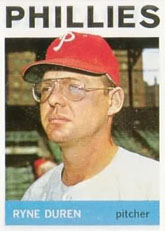
Which reminds me of the digression from Pinky and Peter to prizewinning next generation novelist, the fabulous Kushners racing across the desert flat, and Cuba. Throwers of flame, which is not Hal Newhauser more like Ryne Duren or Steve Dalkowski, or am I just making this thing up interrobang?!
There was a major leaguer killed by a beanball, although I forget his name, and he probably was not a Red.

There was a major leaguer killed by a beanball, although I forget his name, and he probably was not a Red.

I am now too warm in my black Arhoolie hoodie. Field holler not quite a howl but not simply simper either. From simper to sniper. From blasé to blast. Blast from the past.**

Cool Café 12/12/2013 12:35:01 PM Thank you, cashier. (I tipped her 1.04 on 3.96 cup of joe, somewhat joltin’, and she stopped the line to make mine immediately although I am still here at 2:05. And I could risk ditching the backpack in the cubbyhole and running upstairs to peak at the pomo Japanese print – “Terremoto”?? or I could run to front of museum and lock in locker with a borrowed quarter which is just a prop or key or as the buddists say the raft can be jettisoned. Or the Jetsons would say, I drone on.

Strange now to think of you. I do remember seeing some weird guy selling propaganda at Caffe Trieste in the late eighties.

I had a joke that doesn’t really belong here or anywhere about thinking that I was having a bad year until hearing that a Dartmouth classmate of mine named Scott S. lost $600 million in the stock market – it’s not schaudenfreude per se: he or his firm held a 40 percent stake in a company nobody’s heard of whose IPO value shrank from $2.4 Billion to about $1B. Makes me wonder about the difference f=MA between being hit in the face with a shotgun, hit in the forehead with a champagne cork popping and the stopping force as described second hand on talk shows by New Yorker writer Malcolm Gladwell, who probably has not spoken at City Lights of David the Jew’s slingshot versus Goliath the pituitary case and Philistine, back in the day. Bucky told a story about our Jack breaking up a bar room brawl, at Specs.

Here’s your freewheelin jack, lady.

3. Apparently I am the only person who thinks of Rachel Kushner and Alden Van Buskirk in the same breath:

Talking back to interview between Rachel Kushner and Sasha Frere Jones, while sitting for 26 minutes at Café Zoe, in the second day of the fiftieth year of my life, drinking the last drops of a slightly bitter cappuccino, after eating a fairly satisfying bagel, on a table slightly too close to the wall to type confortably, and I should get my eyes checked this year; working title “Another roadburn attraction”
The narrator, “Reno,” resists a fixed identity. We discover hardly any biographical particulars about her. She is nameless, and we know almost nothing about her childhood. Are Reno and the anonymous so-called China-girl images in film leaders that Reno poses for supposed to play off of each other, or is that too pat?
I shy away from plot structure that depends on the characters behaving in ways that are going to eventually be explained by their childhood, or by some recent trauma or event. People are incredibly complicated. Who knows why they are the way they are?
Who else but me would wonder how to tie in Colin Kaepernick, on the strength that the Reno grad quarterback was being discussed on radio as I drove over here to the Café? I also immediately thought of Faulkner’s The Sound and The Fury, Kesey’s One Flew Over the Cucko’s Nest and Tom Robbins Even Cowgirls Get the Blues.
It’s both a knowing and a self-effacing statement to say “who knows why people are the way they are?” as opposed to saying well for whatever reason I seem to be able to see nuance in people and things and then describe it.
My narrator feels like a real person to me, I felt close to her, and I had to, in order to write the book, but in a certain sense she shares something with the China girl on a film leader. Although we are with her for most of the novel, we never learn her name. Twice, she’s referred to as Reno, and so reviewers have latched onto this. She’s nameless like a China girl, and, like a face on film leader, she leaves no trace of her identity. And of course for me I think of the David Bowie song, which I probably never thought about what it actually is about, beyond the refrain, “little china girl” or whatever. I actually thought the photo looked somewhat Caucasian and not Chinese to me; I knew it wasn’t Rachel. Who looks more half-Jewish, from other photos I’ve seen – plus I’ve met her parents. The photo looks like Zoe Dechaanel or Astra Taylor or something. I was trying to drag the photo onto a blank page and was surprised to find this much of the interview here, waiting for me to much it up.

I also noticed my own name in some of the remarks about the text, about the “marks” made by the flame-throwing motorcycles racing across the desert, that the narrator wants to photograph as land-art.
My narrator, who speaks in the first person, is not intent on thinking about her past. To relate to her, a reader doesn’t need to know much about her childhood beyond a few key details (she was a tomboy who rode motorcycles, is from a small Western town, is working class but educated). Early in the novel, the narrator recounts how she was hired to be a China girl. She got a job in a film lab on the Bowery, and the technicians needed photographs of a woman’s face in order to process film so that the flesh tones were consistent and looked appropriately like skin (white skin, that is—flesh calibrations in the movie industry have always been aimed at Caucasian skin). Around the time I started working on this novel, I had become interested in the China girl you see on old film leaders (up through the nineteen-eighties). She holds up a Kodak color bar, or a photograph of her is placed next to a Kodak color bar. I knew these women were mostly secretaries in the film labs, which seemed to me to be central to their allure. The idea that they are just random women asked to pose, and not professional models, makes them mysterious. They are “real” people who come to function as archetypes; they are anonymous-real. There is no way to find out who they are and no reason to, either. The idea of a girl posing on film seems to encapsulate something about how women are treated, and how they think of themselves: women are often judging themselves, and being judged, according to standards of beauty and femininity. Archetypes of what women look like are basically inescapable: women either conform to them, refuse to conform to them, or set them. They don’t ever escape completely from the realm of standards.
We also think of Cindy Sherman, and I guess Judy Chicago and Barbara Krueger. And Madonna, Gwen Stefani and Lady Gaga. I wonder if RK thought of herself as beautiful consistently throughout her life or went through self-conscious phases during her teen years, like everyone else. Her picture is in Time Magazine year in pictures and top ten books. The phrase “film leaders” is interesting in that in conjures the machers of the industry before the technical element of the medium per se. I think in typography they talk of “leading” pronouncing with short e “ledding” to describe the space between the lines. I think in terms of conforming I glimpsed some text about RK that said she is in the mainstream now but still stands apart or somesuch.
Reno begins the book moving east, racing a bike, trying to complete a project. Then she shifts and begins to slow down and watch, like a passive observer, or like a camera, witnessing conflicts where she only intermittently takes sides. How did you think about Reno’s agency as you wrote this?
And in terms of the triple level of story-telling, the bike-racer, the art scene and the Italian politics, I always immediately think of Errol Morris Fast Cheap and Out of Control, about mole rats, lion tamers and robotics. It seems everything I do, in the tapping keyboards realm is claiming to be influenced by FCOC and Shields “reality hunger”.
It’s true that she’s much more strong and active in the long opening scene, when she goes to the salt flats alone. She knows the landscape and she knows motorcycles, so it’s a world where she’s comfortable. In the art scene in downtown New York, she’s an outsider, not yet an initiate. And, in my humble opinion, she’s also clever: clever people know that you don’t learn by inserting yourself. If you are inspired by the world, and open to it, it is sometimes essential to utilize your own innocence, your own lack of an ability to interpret or judge others, in order to read them properly.
I was also thinking about Bruce Beasley the Dartmouth elder-statesmen sculptor, who is about the exact same generation as Peter and Pinky, and his early interests in hot rods. And it’s kind of a red herring, but I was tripping on the James Franco interview with Charlie Rose I saw most of last night, and his obsession with Faulkner, or should I say making kinda weak adaptations of works like As I Lay Dying and SF. Somewhere earlier in my interior monologue I was telling someone, some imagined listener or reader that my standardized test scores got me into the school but I was about three wrong answers from starting out in remedial English, was in the middle of the curve with the English 5 Milton Paradise lost SAT AN crowd, which is actually a Donald Sutherland meme, filtered thru Animal House. And again, although I don’t think I made the connection or asked them, but I think Peter and Alden were somewhat contemporaneous with, is it Kevin Miller? who wrote Animal House. The same era at least. And I did think of the fey guitar player, I bought my love a flower or whatever, the one who Belushi or Bluto smashes his guitar and says “sorry” apropos of Llewyn Davis. And when did the word “kumbaya” start to get used as a slag on sensitive people or artsy types or policial correctness. Which trips me to wanting to ask back to Gladwell, “David and Goliath” about the history of the term “big fish in a small pond”. Poor Rachel, left on the corner, blocks behind as my mind put, put putters on, on this little scooter.

And the Basquiat movie, I should probably see again – was that made by Scnabel? Would not have meant that much to me at the time, the filmmaker.
In regard to agency, I was determined not to have the narrator ride off into the horizon in a blaze of triumph at the end. The plotline where the main character overcomes a weakness and acts with new empowerment is a form of narrative compression I usually find cheap and don’t much relate to. In any case, to have all the agency can be tragic. I love the end of the 1969 movie “Downhill Racer,” where Robert Redford gets the gold medal and yet winning seems like this empty question mark. I wanted my narrator to arrive at some kind of open moment, a blank, in whiteness—figuratively and actually—in snow, at the bottom of Mont Blanc, a setting that for me has a poetic resonance (Wordsworth, Shelley), and a personal resonance, too (an entire childhood spend skiing alone, dealing with cold, blizzards, high winds). I have learned a lot waiting for people who don’t show. It’s about what you do in that situation: I mean, what you do next.

Well, okay, Downhill Racer, a ski movie, Rachel, surely you know that your parents met because of not just a poet, but a great four-event skier – I have been meaning to scoop the blogosphere on the “RK” + Dartmouth meme – if you try it now it is just me. And to tie it in to Alden van Buskirk and Lami, and his initial buzz was about his skiing – but maybe that is a little esoteric and parochial.
And I’m glad when you say V figuratively and actually you avoid saying “literally”…
An entire childhood spent skiing alone? That is so Walker Pierce meets Robert Puttnam by way of Bruno Bettelheim meets yes Alden Van Buskirk – but oh so not Cuban. And beckett or course.
There is an implicit struggle between Reno and the men in the novel, who seem like a Pantone book of misogynists, from the First World War-era Futurist Lonzi and his reduction of women to “pocket cunts” to Ronnie and Sandro, neither of whom seem to accept women as entirely formed people. Is that a fair account of what goes on in the book?
Gosh, I don’t know. I’m interested in men and women both. The book is about both, as well as, among other things, technology, speed, and violence. War, factories, machines—these are traditionally male realms. But I don’t think I meant to “say” anything explicit about gender conflicts—instead, I simply wrote interactions between men and women in a way that felt like life. And anyhow, maybe I empathize with Lonzi. The concept of the “pocket cunt” is mean, sure, but it suggests that he’s alienated from sex and intimacy and from women in a sad way. He can’t enjoy their company, but the operative term there is enjoy: he can’t enjoy. He’s talking about men in war, and what they’ll put in their rucksacks. (Probably, these Italian boys would like to put their mothers in the rucksack, but they won’t fit, will they?) Anyhow, war in the twentieth century is filled with horrific acts toward women. I try to show ugliness, but with compassion for the people who commit ugly acts.
Who are the flamethrowers? The novel is named after them, but they appear only at the end of the book.
The flamethrowers referred to in the book are a division of élite shock troops, the Italian arditi in the First World War. The term “flamethrower” can refer to either the mechanism that shoots out liquid fire (it’s essentially a tank, a hose, and a nozzle / gun), or to the person whose job it is to carry this tank and to set ablaze land, structures, and enemies. Flamethrowers have been used by many armies in many wars, including by American marines in Korea and Vietnam. They cause horrific deaths and are thus a serious public-relations liability. The U.S. military apparently phased them out in 1978.
As T. P. Valera explains to his son Sandro, the First World War-era Italian flamethrowers were an abject lot who were shown no mercy if caught by the enemy. They were on foot, and their gear was horribly cumbersome. They had to wear something on the level of an asbestos burka with goggles and gauntlet gloves, and they carried a huge set of twin tanks on their back. Sometimes they died by accidental torching. Young Sandro idolizes them, and then learns all this and is forced to demote his love to pity. I won’t deny that the flamethrower’s burden could come to have some kind of allegorical meaning, but it’s fairly open ended. Sometimes all of life ends up in military metaphors for me.
We see a protest in Rome and the 1977 blackout in New York, but the book seems ambivalent about social resistance. How were you thinking about social movements and groups of people acting in concert as you wrote?
I’m very interested in the idea of a large group of people who come together quite suddenly, but not illogically, for reasons that could not have been anticipated. The blackout in New York in July of 1977 and the movement in Italy that year are both “events” that could be seen as occurring without leaders and heroes, and it was interesting to me that they were contemporaneous, if fundamentally different. In Italy, autonomist meant acting on one’s own, but the movement known as Autonomia was people acting independently but also in concert, coöperating not because they were being ordered to by a charismatic leader but because they were suddenly guided by basic personal ideas and drives. For instance, if I want to stay with my friends and not go to work I’ll do that; if I need to get to work and don’t have bus fair I’ll just pay what I have, or pay nothing, and so forth. When an entire country gets to this point they’re at a moment of real disruption. The looting during the New York City blackout of 1977 was also a moment of disruption, but it was somewhat random: the electricity went out. And the disruption only lasted that night and into the next day.
I’m interested in the lost potential of Italy’s Movement of ’77, as it was called. It’s come up again and again, with Occupy, the movements in the Arab world, and the anti-austerity protests in Greece, Spain, and Portugal. As I wrote, present-day reality was refracting through the storyline in an almost unavoidable way. Many of my friends were either acting in the political realm or theorizing that realm, or both. The world and its questions, and our question (of what is to be done), are ceaseless. Writing a novel is a way of synthesizing what presses in.
Toward the end of the book, Sandro talks about a tribe in Brazil, where his father’s tire empire harvests their rubber. The tribe believes in putting stones in their pockets to “weight” their souls, to keep the soul from lifting up and away. Reno has a quality of floating above what she witnesses, above her own experience of being handed from man to man. Is trying to keep the spirit connected to the earth a strand of the book or a passing reference?
The idea of individuals in tribes who weight their bodies with stones in order to keep their souls from escaping is so moving to me, but not just for the native’s individual fear, the craziness and yet utter reasonableness of it. It also moves me on account of my own distance from the need for such a thing. The “native” can do it for us, at a remove of superstition and primitive behavior, so that we can pretend to be wholly and effortlessly constituted. As long as someone else somewhere else, of a different culture, living in a different version of this same world, is stepping calmly on hot coals, I don’t have to.
In terms of your question of this relating to the narrator, she does not suffer from the same kind of malaise that afflicts Sandro. She isn’t spliced or separated from meaning in quite the same way. Very often, love gets stoked when there is evidence of some kind of psychic or spiritual dilemma or trauma in the love object that the beholder is not equipped to understand. Happier people tend to be drawn to darker ones. Maybe you could say that Sandro’s complexity is attractive to Reno because it’s opaque to her, which was why it became necessary that he speak for himself, just once, before the novel ends. The kind of spiritual poverty from which Sandro suffers is a strand of the novel, in the sense that it is my attempt to understand why some people feel too incomplete to let themselves be loved.
Valera the elder is not a huge presence in the book compared to his son, but he lives at a fascinating moment. He founds a motorcycle factory just as the Futurists are coming up with a completely dystopian theory based on machines. Who does he represent to you? Most readers will feel him as background, with the semi-romance between Sandro and Reno (and Autonomia) in the foreground.
The book opens with Valera, and he was the first character that I wrote. As a child living in Alexandria, Egypt, he has his mind blown by an early (eighteen-eighties) model of motorcycle, a German thing made by Hildebrand & Wolfmüller. (I saw one in the Guggenheim motorcycle show, a crowd-drawing exhibition that was an affront to the art world, but I could not help but adore it, regardless of the question of whether motorcycles belong in an art context.) Later, in Rome, Valera encounters a little avant-garde gang, decides he wants a part in it, stands up and is summoned, then leads. He’s a Futurist who splits off from that milieu and movement to use a fascination with speed, machines, and violence to build actual machines and make a profit from war. What he does is a literalizing, perhaps, of certain ideas of the Futurists. In reality, the Futurists never forged a relationship with industry and design in Italy, which is curious. Why? They had no sense of the factory, the worker—they shied away from all that, eventually becoming the aesthetic wing of Mussolini’s government.
I never even considered not having a Futurist in this novel. Italy, bikes, speed, factory politics, the twentieth-century avant-garde—hopefully without sounding too pretentious, these are important realms for this book. The figure of an early-twentieth-century Italian idealizing speed, celebrating violence, going and getting pummelled on the battlefield, then reforming himself as a successful industrialist is key to my interests, and to the novel. The book could not exist without him.
What do you think of Laura Miller’s recent Salon piece, which posits that this novel may “scare male critics”?
I’ve heard about this discussion. And it’s probably important in that it touches upon a series of issues that are still not entirely resolved—I mean, obviously they are not resolved, or this discussion would not be taking place. But I think I have already addressed some of these issues in the way I best know how: in my fiction. What I have to say, most meaningfully, is there in my novel, if anyone should want to find that and hold it up to the light for examination. Questions of women and their place, their role, their agency, and their force, rage, timidity, and so forth are a big part of this book. And as it happens, the novel I’m writing right now is even more specifically concerned with the voices of women. It’s about women and contemporary America, race, prison, and various enveloping present-day cruelties. And as with this recent gender controversy, my only real authority on these major issues will take form in the novel itself.
Photograph of Rachel Kushner by Ann Summa/The New York Times/Redux. Photograph of China girl courtesy R. Hall/Northwest Chicago Film Society.

I will try to swede in a picture of her from Time or at least link to the leading book site. I’d like to read “the Flamethrowers” wtweat. were there world enough and time

4. Most of us would say that the Beats are done, and the timeline would be 1957 thru 1961 or something — this Parkinson book like an epitaph — but for whatever reason I am compelled to place this little Rocky Braat link here and not three posts below with the other India movie memes. the movie is “blood brothers” was reviewed in the times I saw a good chunk of it on PBS last night.

5, or should I say Johnny Five? Llewyn Davis is not the cat — ok, I’ll go all in and post my random notes on the circa 1961 Coen Brothers movie. I am also toting but not toking the Bob Dylan 2004 “Chronicle” (I stole from Terry) and its parts about The Gaslight, but really what should be noted here is Elijah Wald, who I first heard about from Hilda Mendez at Arhoolie.

dave van ronk book

Outside “inside llewyn davis”

At a peet’s in redwood city
Parking receipt: EXP 3:17 p.m. Jan 02, 2014

a. I’m not current? Is that a nautical term?

b. The cat is named Ulysses.

c. Roland Turner, santaria from new Orleans. One day you will find a big bowl of shit and wonder how did your life turn into a big bowl of shit. And I will be 1,000 miles away laughing my ass off.
Inside "Inside Llewyn Davis"

Inside “Inside Llewyn Davis”

d. response to: hey mr. Turner, does that stick fit all the way up your ass or would part of it stick out?

e. Johnny Five and his poetry.

f. Young bob played by Ben Pike.

g. One of the music credits is a Bob Dylan performance.

h.. The end credit is a Dave Von Ronk performance. (edit to add, a month or more later: but closing song of Penn and Teller movie “Tim’s Vermeer” is Bob Dylan “When I Paint My Masterpiece”)

i. Elijah Wald is thanked in the credit. Steve read it is Elijah Wood.

j. Jason Colton is thanked in the credits: is he P.M. for Mumford and Sons? Marc Mumford contributes music to the score. Is he Timlin, as in Timlin and Davis, as in the one who jumped from the George Washington Bridge, not the Brooklyn Bridge.

k. Inside Llewyn Davis is the name of his solo record.

l. You want me to exist? (as opposed to continuing to try to be an artist).

m. I have a lot to look forward to. I put in all my hours and then one day they bring my food to me and I don’t have to get up to shit.

n. Your uncle Llewyn is a bad man. “I know” the nephew replies?

o. Are you Hugh Davis’ son? (Maybe he is not. His mother is Italian. He does not look Welsh) Oh, you are are you?

P. Art Milgrum is real name of Art Cody.
Cf Ramblin Jack Elliot? Started to say puh,puh, puh, P.

q. Four micks and gramma moses

R. Poppy the manager at Gas Light may have impregnated the carey Mulligan character. Yes, he R.

S. the body of the film may have been a dream or nightmare triggered after being knocked out or punched in the alley. In the next scene, or second scene, back at the Gorfein’s house, he has not scars or bruises on his face. Or it’s a flashback. As compared to S/Z.

T. Fred Harvey’s Oasis diner as in coffee or tea? Or H?

U. Where’s his scrotum? When mrs. Gorfein realizes that Llewyn has brought back the wrong cat.

V. the songs are almost like stage directions of a play in that they add detail to the characters or advance the plot??

W. llewyn and the girl walking thru the village looks like joan and bob on the cover of his album, steve noticed.

X. akron is where he may have a 2-year-old child.

Y. he met the abortion doctor at the gaslight, at the hoots. He has played there 400 times. Playing for the basket or half the basket.

Z. he likes their sweaters. Sarcastic response to Poppy asking if he likes the harmony singers. He starts to heckle the next singer when he realizes that Poppy might be the father of the abortive fetus. Aren’t they called Irish wool or something?

aa. Gate of Horn in Chicago, where Mr. Grossman is an artist manager and runs the venue.

ab. Legacy Records where Mr. Novikoff handles LD.

ac. When he is informed he cannot work as Merchant Marine (AFof L) he says “why, because I am a communist?” and the clerk mutters something like “Mennonite”?

ad. He pays $178 in union dues but then needs another $80 to replace his license (union card?) mates master and pilot’s license? Is that a classical reference to seagoing ways of Ullyses and Odyseseus et al?

a.e.. Gurfein is an anthropolgist and has trophies in the form of folk objects on his walls. Does he see LD as an artifact?

a.f. the wife makes mousaka and tabouli.

a.g. the two successive couples who visit the gorfein’s look the same: greenwong and x. There’s an early music musician and piano teacher, earlier than Harry James, “on the beat”.

a.h. LD is actually from Woodside Avenue station which I guess is near Rockaway? On of the other five bureaus not manhattan. Or at least that is where his sister lives and his dad, hugh davis, is in a nursing home.

a.i.. There is a trophy case outside his room at the nursing home, Hugh Davis. Vitrine?

a.j.. relationship between the beats ie poetry and folk revival — where is Howl in all this?
Where is jazz?

a.k.. types of transportation: subway, trains, cabs, rides in cars, ships

a.l.. sea men pun on semen

a.m.. he’s always losing track of things: his guitar, the cat, the license, his sperm, cigarettes. His coat. Or Novikoff’s coat.

a.n.. Novelty song “Please Mr. Kennedy” about not wanting to be shot into space. He signed away potential royalties for $200 cash. At Columbia Records.
As the John Glenn Singers.

a.o.. Llewyn has the cat. Llewyn is the cat. I’m not a cat.
(versus Schoednger’s Cat in A Serious Man)

42. I feel more like a castaway on planet earth than a pilot of this ship. (I will leave that as 42 in deference to Douglas Adams meaning of live the universe and everything – n.b. Coen’s or Oscar Isaac or Llewyn Davis didn’t say that – I did; reminds me also of Mark Twain Life on the River)

a.q.. The trains came by at such a time that it was difficult for him to hear the full details relayed second hand about his recording session.

a.r. the novelty version of quack quack quack Old McDonald heard while driving thru the snow flurries, on 70 East out of Chicago back to New York with the guy who hadn’t slept when they may have hit the cat. I thought he could easily drift off and end it all right there.

a. s.. I started thinking about the Weekly calling me a “former concert the promoter” and wanted to write GS to refer him to my list of former clients. Which I guess makes me a former concert promoter and former artist manager? And then I had a mental list of quasi clients in visual arts: Rob Syrett, Thai Bui, Terry Acebo Davis, Bruce Beasley, Greg Brown, Matt Gonzalez, Sam Yates, the lady who used my photos for her New York diptych.

a.t.. He says he was tired. More tired than can be remedied by a good night’s sleep.

a.u. Fixing to die rag or blues.

a.v.. He does a beautiful song about King Henry and Queen Jane but then Murry Abraham character says he doesn’t hear any money in the work. About opening his right side and the flower and the branch. Again, inside the singer or the writer.

a.w.. gaslight the Hitchcock movie or play about mind games and murder?

a.x. not as surreal as barton fink or hudsucker proxy, or a serious man. Pretty straightforward artist sketch and evocation of a time and place, 1961 greenwich village folk scene.

a.y.. compare to the jeff bridges movie loosely based on Stephen bruton. “Crazy heart”?

a.z. I thought of Alexis Harte, Martin Sexton, Dar Williams, Richard Shindell, Etienne De Rocher, Glenn Hartman, David Jacobs Strain, Box Set, Jamie Stewart.

a.a.a. Is Llewyn Davis a Jewish character? Is Oscar Issac a Jewish character? Is that a real name? He is a Julliard trained music turned actor?

a.a.b. Soundtrack on Nonesuch Records. I think they can fit on KFOG radio.

a.a.c. heroin use by John Goodman character. Passing out in a rest room, of Fred Harvey. And foaming from the mouth.

a.a.d. Songs about leaving or dying or hanging or flying.

a.a.e. If it sounds like you’ve heard it before and will never get old it’s a folk song.

a.a.f. Was the Gaslight in 1961 an actual place?
a.a.g. the club owner says the rent is too high.

a.a.h. LD says he hates folk music, the night he is heckling viciously.

a.a.i. show us your panties, he heckles. (I read in somebody else’s review and comments that the two ladies, gorfein’s wife and the wife of the guy who beats him up are deliberately confusing to us, remind us of each other. Beat vs. beat up, which I guess does reference back to Parkinson, sadly enough

a.a.j. one hit can fix you forever in your business, or you can overdose on drugs and die, different kind of hit.

a.a.k. what is a timeline of the settings for Coen Brothers films? Serious Man is later than ILD while Barton Fink is earlier. Big Lebowski is latest.

a.a.l. The movie is well-crafted like a folk song but not a bigger production like a rock song or a movie trying harder to tell a story or shock or move the viewer? Sparse?

a.a.m.. LD at end of his two-song performance says “that’s what I got” which is a pun on use of “got” as “beget” like in bible to speak of children. The songs are his children. Also think of “Sublime” “what I got” They are not really beats either. Somewhere along the way I was trying to imagine Palo Alto during this era and found my way to a reference to a sophomore at Cal studying linguistics but posted out here his collection of songs and I thought someone should make a movie about how or why people are still writing folk music as opposed to merely auditioning for the network talent show.

I figured out later that outline style that I was taught in the fourth grade probably has z.a after z and not a.a. if you are counting to 60 or so with letters. whatever.

6. WHO’S AFRAID OF HELEN SUNG? They don’t belong here at all but I am tempted to mention Helen Sung, the piano player and her cousin Joyce Yu-Jean Lee, a conceptual artist/minimalist/teacher who crosses Marina Abramovic with Robert Irwin/ James Turrell or something. I was or am fantasizing about a collaboration between the cuzzez just or jsut cuz wherein Joyce choreographs a dance on Helen: it has no melody per se, only a rhythm; gongs, mock-gamelon, pots and pans (in the Dartmouth circa 1970 sense of making fun of Don Cherry’s class) and beer bottles, a type of cage dance, if you will. Or, to be scene and forgotten, ephemeral, diaphonous, but not a vitrine like Hugh Davis. This is a weird preview for the Concord Records artist to appear next month at Bach Dancing Douglas Beach House in or near Half Moon Bay, and a cd coming out on my birthday, Jan. 28 — which will be one of my gifts to myself if they’ve ordered it at Rasputins. Or at least my gift to self that day is trip to Rasputin’s with $30 in hand to buy Helen Sung and ILD soundtrack; the journey is the reward. I actually apropos of this tried to find a pop-up space kinda sorta for Joyce’s work.

7. Jan. 20 New Yorker article on Theaster Gates in Chicago, South Side, where I was born again.

8. Article in San Mateo Daily News about a 34-year old off duty cop who steals a $2,000 trumpet from a local lounge lizard in a Millbrae hotel and then throws it out the window. Said piece is recovered, repaired for $250, plays fine, but the musician moves to Colorado, and is offered another $500 in restitution. The cop serves six months doing service not time (at karaoke bars, collecting tips — just kidding, and sorry for the “No Exit” reference, or the ACT version at least) and is forbidden from carrying his axe. THIS MACHINE DIGS CLAMS, his customized nightstick says.

9. This is a footnote (*) of above and not just chapter 9 in my new beat casebook but the rifle quote as preface is supposedly Stanislawski quoting Chekhov, in Coosje van Bruggen’s 1990 catalog about John Baldessari (p. 97) at MOCA LA and MOMA SF (speaking of ‘SF MOMA’ and not just Amber’s mama above, who I kinda flirted with or at least confronted, an a room in an alley above Spec’s); the footnote (on p. 127) explains that Chekhov used firearms in many of his plays including The Seagull (1896), Uncle Vanya (1899), The Three Sisters (as opposed to Helen Sung, Joyce Lee and Juliet Lee who are cousins — 1901) and The Cherry Orchard (and Don the trumpet player was Chocktaw not Chekhov 1904). “Baldessari is especially interested in these stories or anecdotes that have become common knowledge, are appreciated because of their point, but in time have lost their original source, although, partly because my specs are sort of failing me, here on the cusp of my 50th birthday — which I share, the Jan. 28 part at least, but not the actual year, with Claes Oldenburg and Jackson Pollock, as well as a set of twins who got into Stanford on the strength of their novelty act on Chuck Barris gong show – they were the Auction Twins — from Wyoming — I mis-read footnote 23 for footnote 25 and started to think that Coosje or John were referncing Bruce Glaser “Questions to Stella and Judd” in Gregory Battcock, “Minimalism” 1968. Dig?

10. PBS 2.5 hour thingy on Salinger I watched two-thirdsly and taped the remainder, with David Shields and others. Is this the same thing that I saw previews for in the art houses, i.e. will have theatrical distro?

11. This probably could go above but Anita Felicelli a columnist in Palo Alto Weekly has an article on Llewyn Davis that has about 2,300 readers — compare here: 0 so far, LITERALLY — and her use of the word “deadbeat” which makes me want to respond in various ways. Condensed version of all above plus link plus Steve Jenkins / Herman Anthony Zen Chunn rif and more: Maybe Llewyn is Dylan or Dylan is a composite like what we were once taught about Shakespeare. And was Van Ronk literally air-brushed out of the album cover or just someone’s metaphor? edita re anita (1/224/14) she actually closed comments on her column, I hope not just because I freaked her out with my chekhov/parkinson riff; but I actually drew this as felicelli: closing comments, doesn’t like dissent :: llewyn: maybe giving up, doesn’t like meeting suits in alleys, which is a supreme compliment to the movie, if true. I didn’t like the movie or didn’t get the movie but it made me afraid to speak up. I was meaning to re-post with a longer version of Steve Jenkins: Zen Chunn :: Dylan:Van Ronk et al. She did say she has read Kushner which is great and I’d be surprised and impressed if she read the 10,000 words above to get there!! And I’m up to 4 readers from 0, while she is at 2,500. Oh, yeah. She also posted on a separate social media app that the Coen Brothers fans have to chill out or something. (Whereas I first talked about her indirectly and then addressed her directly via the media, assuming she would edit out the parts that didn’t fit, as she saw fit. I hope to address her more directly some day. At least I signed my name). Good luck, mazel and namaste to Anita Felicelli, and Steve. I looked up “deadbeat” in my Webster’s 9th, and it came into the language around 1890s or so, first as a technical term as in no oscillation or no pulse and then as in non-responsive or failure to comply and now I presume almost exclusively regarding men who don’t pay child support for their children, which I don’t think applies to Llewyn. But “dead” to me also connotes “the Grateful Dead” and “beat” the “beat poets” et al which is why I noted her use. How does “folk scare”, beat poetry, jazz, “the sixties”, “free speech” all tie together? And I think Coens being from MN implies they are more interested in Dylan than Van Ronk, but go about it via this surrogate or bank-shot. Also, I went to Rasputin’s to buy the soundtrack but they were out and I settled for $3.95 promo of Eddie Vedder singing songs from “Into the Wild” as a tip of the white acrylic dingus to Jerry Hannan who wrote and sang backing and some guitars on “Society” we are agreed to a greed or whatever. Also, I was digging recently Austin City Limits with fun. and Dawes and some of their self-referential lyrics on the same topics: I miss my mom and dad for this, DAWES LYRIC TK.

Posted by Mark Weiss, a resident of another community,
on Jan 22, 2014 at 1:26 pm
11. This probably could go above but Anita Felicelli a columnist in Palo Alto Weekly has an article on Llewyn Davis that has about 2,300 readers — compare here: 0 so far, LITERALLY 27 — and her use of the word “deadbeat” which makes me want to respond in various ways. Condensed version of all above plus link plus Steve Jenkins / Herman Anthony Zen Chunn rif and more: Maybe Llewyn is Dylan or Dylan is a composite like what we were once taught about Shakespeare. And was Van Ronk literally air-brushed out of the album cover or just someone’s metaphor?

from “plastic alto” blog if you don’t mind me fishing for your readers, which conjures the Picasso image of a cat with fish in mouth which I seem to recall is about fascism: New Beat Casebook. Here’s the link
Web Link
(I meant “cat seizing bird” from 1939 which I had to look up the next day, yesterday. Maybe I can swede in the image, which I have as a postcard bought for two zuzim at DeYoung)

I am putting the movie like a vitrine outside Hugh Davis’ room in context of a lot of other 1961 stuff: the Beats, Eisenhower’s “military-industrial-complex” speech, Jerry and Bob forming their first jug band here a few years later, “Howl” no so long before that, — Palo Alto had a beat named Lew Welch a track star at Paly, but no jazz to speak of until Monk played here in 1968 — but Joan Baez was of course here — and this gruesome — it sounds more like “Miller’s Crossing” than ILD — reference to Prof P getting a shotgun blast to face, worse than what befell literally LD.

Also, do you read or know Peninsula Parlour Lisen Stromberg of Palo Alto?
Report Objectionable Content

Posted by Anita Felicelli, a Palo Alto Online blogger,
on Jan 22, 2014 at 1:43 pm
Anita Felicelli is a registered user.
Hello Mark. I don’t know Lisen Stromberg and have never attended Peninsula Parlour, though I am vaguely aware of it and it is the kind of thing I would probably like if I had more time. I had some trouble following all the associations in your blog post so I can’t comment substantively on it, but just wanted to remark that I LOVE The Flamethrowers, which you discuss there. It was one of my favorite books of 2013 – simply phenomenal. Thanks for reading this blog.

And its about half the posters used their name, like 6 of 12; and then it’s back online for comments although you have to officially register at PAW which I’ve never done, although I’ve posted more that 100 times, 99 per cent of time under my own name. I am resistant but at least its better than the papers that restrict comments to people who join particular social media groups, which I resist, and detest. (when I wrote “resist/detest” for the assonance I thought of the Frank Capra movie last night at Stanford Theatre and the fly-boys wordplay about “distinguished/disgusting” or some-such, not to wander). John Barton who I spent a few minutes with at his chataqua agreed with me or brought it up that he doesn’t like the troll friendly nature of PA Weekly comments section. I guess I say “use your own name” but don’t register. They can still track us more or less by our ISP or whatever.

12. Likewise Richard Sherman belongs elsewhere or merits his own entry here but I left voice mail for Greg Frazier of Daily News about his Sherman post and said he was not the Messiah but a very naughty boy I mean he lived in my building and I saw him pose patiently with a ton of kids on the field after the Stanford-Notre Dame game and maybe have photo evidence in my cloud. The Cohen Brothers (Steve and Eric) were with me and will back me up on this. Also wondering about a song parody using Richard Sherman songwriter and the baller.

13. Woke up imagining emails to Adam Johnson asking permission to derive a joke press release about Palo Alto police offering riflery to local youth — you know for kids — like a PAL thingy, and maybe subtle recruiting tool –more effective than tasing them for not heeding the “dismount zone” — is it “tasing” or “tasering”? — and reminds me of interviewing Dartmouth Olympian biathlete Glen Eberle in 1984 about his trip to Sarajevo and that I took a p.e. class from John Morton on biathlon and when I was told that the class was upstairs at old Alumni Gym and maybe “in the tower” I imagined us lying on our backs and shooting upwards towards a target literally in the smoke stacks or something. We were prone.

14. Not sure it belongs but I snapped a crappy photo on stupid or very stupid cell phone of movie marquee in Menlo Park Guild of “Philomena” and “Rocky Horror Picture Show” one about lady looking for her son from 50 years ago and the other about fertility industry, which according to recent Harper’s Index is now a $4 Billion industry.

15. Lawrence Ferlinghetti:
Rebels, Hipsters, and Visionaries, Bay Area Poets and Artists, 1950’s and 60’s
Firehouse North Gallery, Berkeley, CA
January 10 – February 22, 2014

George Krevsky with Jack Hirschman at Firehouse North Gallery (the photo didn’t transfer)

An exhibition of work from poets and artists, who were part of a golden era of artistic expression, where the visionary art of Robert Duncan, Kenneth Rexroth, George Herms and Wallace Berman overlaps the ‘Beat Era’ with Ginsberg, Meltzer, and McClure to the revolutionary art of Jack Hirschman, Lawrence Ferlinghetti and beyond.

Featured Artists: Ariel, Wallace Berman, Robert Duncan, Lawrence Ferlinghetti, George Herms, Madeline Gleason, Jack Hirschman, Lawrence Jordan, Patricia Jordan, Les Kerr, Gui Mayo, Michael McClure, David Meltzer, Ed Moses, Charles Plymell, and Kenneth Rexroth.

Click here to view the exhibition
it’s actually curated by a team of Karen Shull and Sue Steel I think were the names, and there are a bunch of satellite events, on Shattuck at Delaware in Berkeley, probably worth the drive

(I missed the opening for that, but just got the newsletter from Krevsky Gallery. Not sure if I’d have the guts to ask Hirschman about Tom Parkinson, since it is such a brutal story — him being shot in the face, and losing his assistant like that — although he did carry on and keep working for many years, the incident does not really define him. When I met Hirschman, in setting up the Alden Van Buskirk event, he reluctantly agreed that I could ask him about those days at Dartmouth, yet I haven’t followed up. To the extent that this “new beat casebook” is also a weird tribute to “Inside Llewyn Davis” the 2013 Coen Brothers film about 1961 and the nexus of expression/dissent, it is a little odd that I fixate on the gun violence: Llewyn:punched and kicked :: Parkinson: shot in face…)

16. Terry bought me a gift of a small David Gilhooly work from Smith Anderson, that features a grawlix. I had been riffing on grawlix (#@&^) after posting on Palo Alto Weekly website about the proposal to build at 27 University, and took a detour into an oblique Ai Weiwei reference (about “harmony” and “river crabs”, or so I thought). I can swede in the Gilhooly here later. The bumper sticker I wrote about previously is dust in the wind. Which reminds that the Harper’s Magazine that is overdue from me back to Palo Alto library, for article on erased are or non-art art, had a riff about Ezra Pound being credited with “Everything is New” but he was actually translating some ancient Chinese wisdom which said something about tree shoots (so to speak). I can fill in more factually later.

17. or ** from above on baseball, and I’m not sure if adding detail just makes this a bigger mess, but: in 1920 in a Major League baseball game, Indians shortstop Ray Chapman, 29, was struck by a pitch and killed by Carl Mays, accidentally, of the Washington Senators. See more here. I had a picture of a 1958 Hal Newhauser card that I deleted from my really stupid cell phone but added the gratuitous Ryne Duren art because three months later I was blogging about baseball per se.

weird jstor thingy:
journal article on parkinson

journal article on parkinson

hard to find:

edit to add five years later, or

18

prompted by Anita Felicelli review in today’s Pink and other random or chaotic muses — and AF’s lively thread of trolls and kibbutzim — I am still tracking so to speak Lew Welch plus I begged Lisa Mezzacappa into something called Sussman Cant Sleep SF based on Jimi Hendrix machine gun and dialogue from A SeriousbMan. Help me save me

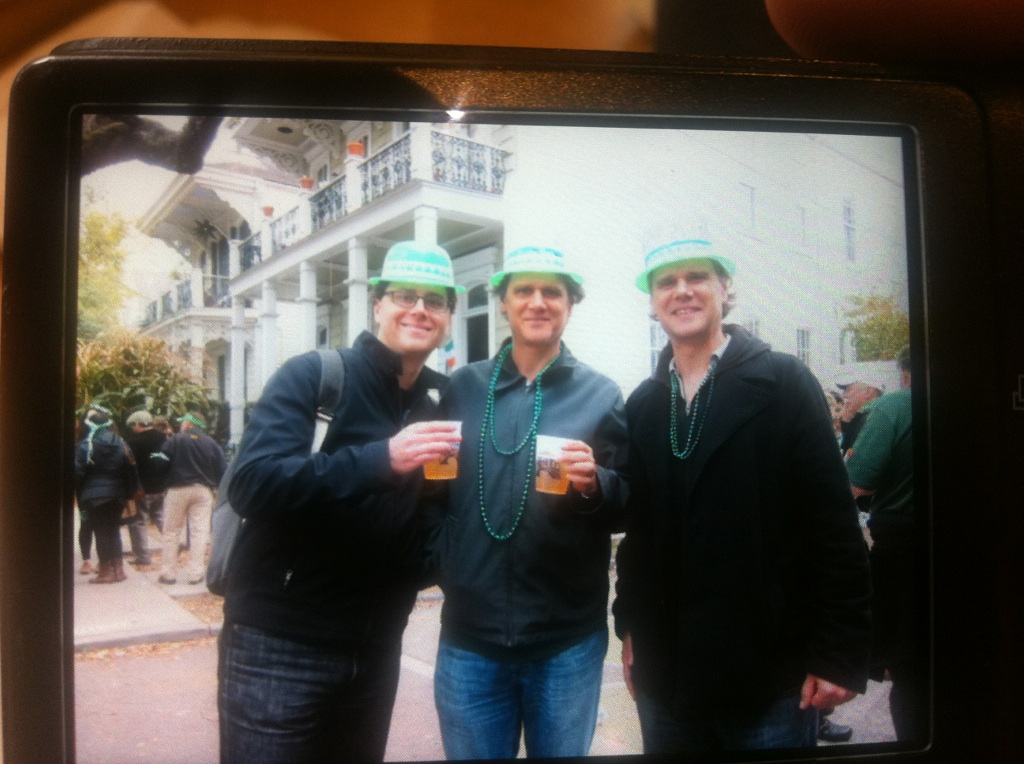
Posted in ethniceities, la la, music, Plato's Republic, sex, sf moma, words | Tagged , , , , , , , , , | Leave a comment

Greetings from Sarah Manning

 
Hi Mark,

Thanks for the note. Hope you’ve been doing well out there in the Bay. Sure, you can repost, although I ask that you take out my contact information (the PO Box address). And if you repost Scott Friedlander’s photo he just needs credit.
Thanks!
Sarah

______________
Sarah Manning
Alto Saxophonist/Composer 
For Concert & Picture
Elflion Intrigues
Twitter:  @artistempathy
On Dec 9, 2013, at 6:26 PM, mark weiss wrote:
mazel tov to you, sarah.
mark weiss
is it okay if I repost this to my “plastic alto” blog?

From: Sarah Manning <sarah@sarahmanningmusic.com>
To: Mark <earwopa@yahoo.com>
Sent: Monday, December 9, 2013 6:59 AM
Subject: Hello from a long lost saxophonist!

New album January 21st on Posi-Tone!

Where I’ve been

San Francisco to NYC and the woods in between…

So. It’s been a very long time since I’ve written.

Neil Young was quoted in the New York Times on 9/19/12 as saying: “For whatever you’re doing, for your creative juices, your geography’s got a hell of a lot to do with it. You really have to be in a good place, and then you have to be either on your way there or on your way from there.”

(see: “Neil Young Comes Clean” by David Carr–ed.)

For me, that’s a place close to NYC but with more trees and owls and things. After 2010’s Dandelion Clock (Posi-Tone), I went through some tumultuous times and my saxophone and I had a few misunderstandings.  I’m happy to say that I’ve now put that behind me, and I’m in the midst of a creative renaissance which I’m celebrating with the release of my fourth album, Harmonious Creature (Posi-Tone 2014) on January 21st.

Featuring Eyvind Kang on viola, Jonathan Goldberger on guitar, Rene Hart on bass and Jerome Jennings on drums, much of the music was written when I was a 2012 Fellow in Composition at the MacDowell Colony. MacDowell was my first experience as an artist receiving the space and time to create without restriction, along with a wonderful roof over my head, delicious food, and inspiring colleagues. MacDowell helped give me the courage to continue at a time when I needed it the most.

As I come out of hibernation, I’d love to hear from you. As the folks who listen to my work, you are such an important part of my life. Thank you for taking the time to hear what I have to say as a musician and as an artist struggling with the philosophical questions that arise on the creative path.

See you soon.

Sarah

Next show January 25th at
I-beam Brooklyn!

Jonathan Goldberger, Rene Hart, Allison Miller
8PM. http://www.ibeambrooklyn.com

Click the photo to read about my MacDowell Colony experience! There was a bear, and coyote, porcupine, salamander and my studio was once used by Aaron Copland! Plus, picnic baskets.
(Photo courtesy of Scott Friedlander)

Over the last year, I’ve also been doing some playing with Zion80, a fascinating Jewish Afrobeat project that took me to Austria in August. It was my first overseas trip, and it was beautiful and thrilling. I also had the opportunity to play with John Zorn during the final night of the band’s residency at The Stone in the East Village  – he helpfully said that we provided the consonants that night, and he provided the vowels.

http://www.zion80.com

Jon Madof Zion80 Jewish Afro Beat – Live at Jazzfestival Saalfelden 2013-08-24

Watch the Video
***** 3 ratings 724 views
Artist Page
Artist Page
Twitter
Twitter
Website
Website
Copyright © 2013 Harmonious Creature, All rights reserved.
Hi there! You are receiving this newsletter because you signed up at a live show, opted in on my website, or asked in person to be on this list. If you’d rather get notified of shows through social media, become a Facebook Fan or follow me on Twitter!

Our mailing address is:

Harmonious Creature

(somewhere back East, but closer to elite Women’s College than cramped nexus of Jazz venues)

Live concerts are the best rehearsals,” (Polish trumpet-player Tomasz) Stanko said. “What better rehearsal is there than just to play? But for me, the studio is a more natural place to play free. There is a special kind of tension in the atmosphere. Your concentration is different. For this recording, I walked into the studio completely empty in order to have a fresh atmosphere and improvised arrangements. And this maybe sounds strange, but the atmosphere in Provence made quite a big difference, especially for the free-improvisation feeling. I didn’t expect this, but it’s true — it changed our sense of freedom.”

Stanko’s journey to this place in his career began almost by accident. He initially studied violin when he was growing up in Krakow. But, he explained, “I didn’t want to play violin. Instinctively I liked trumpet. And I was in the scouts and was the one of the only guys who had contact with music. Everybody decided I had to play the trumpet signals.” (Derk Richardson, 2006)


Posted in jazz, media, this blue marble | Tagged , , , , | Leave a comment

Serendipity farmers

Not for nothing one face, one character, one fact makes much impression on him, and another none.

Ralph Waldo Emerson

Precisely 5:25 Wednesday evening I spied a cluster of flyers on the kiosk near the north corner of Stanford’s Tresidder Student Union announcing a special appearance by a filmmaker; the event was to start at 5:30 p.m. a stones throw away, at the Humanities Center. I had never heard of the director, A-something — as I write this I am still not completely sorted on her name or the name of her film. Her husband, who helped with casting, is Mahmoud (I’ll check the spelling later: oops, Mahmood, Mahmood Farooqui, also sometimes known as M.A. Farooqui, duly noted). His chum from University, Rajit, flew in from Chicago, where he teaches South Asian History at DePaul. Mahmood is a story-teller, a performing artist. Rajit said that Anish Kapoor attended the same university, as he and M. Obviously, I was drawn to the event and stayed long enough to gather this ancillary evidence. A woman taking pictures — another A-something — I have her card — a professional photographer who graduated from SF State — said I could contact about using one of her shots of the filmmaker to illustrate this post. I have to admit that I found A—— attractive — exotic maybe. And indeed any worldly and openminded person would agree that we live in interesting times and the roles of women our changing dramatically all over the world. The lecture/discussion/dinner/screening was sponsored by departments at Stanford studying gender and feminism. I left with a bumber sticker announcing myself as a feminist, along with the business card and flyers, and my mental notes.

The moderator and host, a Ms. Quill who I  believe said she is an administrator and not faculty per se, had all 17 of us in the room introduce ourselves briefly. I explained that I was there serendipitously, live nearby, was on a walk, and was curious. Ms. Quill offered that she liked serendipity — I took that as a welcoming. The vast majority of the group were Stanford affiliates, were familiar with A——‘s film, and were involved in or studying related matters: a grad student writing a dissertation on trance music, her boyfriend a composer and re-mix dj (from Eclipse Nirvana records, distributed in Asia by Sony?) who had worked with the famous composer from “Slumdog Millionaire” soundtrack, an engineering student who’s roommate knew A—–‘s work but he secretly or not-so-secretly harbors a desire to make a film, a Theatre and Performing Arts major or fellow. During the question and answer period, beyond the prompts initiated by Ms. Quill, one got a more nuanced sense of the individuals there, or the group dynamic. (Ms. Quill, soon to be known as Dr. Quill, Phd (abd — which I think means “all but the dissertation”, Jazmin Quill, as I note below, in my “edit to add” is indeed a lecturer but is also, a Resident Fellow, she lives with a group of Students, although she also noted, not to jump around too much in time, and make a gallimaufry of order, once lived near Alma in Palo Alto per se).

I asked the filmmaker if she was aware that Palo Alto, the 60,000 population city that borders and partly surrounds Stanford, had had a couple years ago, maybe in 2010 or 2011, a “suicide cluster”, a group of maybe eight or ten young people, most of them from one specific of the two local public high schools, had killed themselves, many of whom by the same means, by putting themselves in front of the train, many of those at the same intersection, near Alma Street and East Meadow — was she aware of that, as a filmmaker who made a work of narrative film fiction but based on a true story, she had explained, about a situation in India wherein a number of farmers, maybe in 2004 or so, had committed suicide. I was wondering what Anusha and Mahmoud were working on next, what films they might make next, and it occurred, and I shared with the group, perhaps only hinted at, that maybe someone like her would have the qualifications to try to tell our story, here in Palo Alto, of the sadness and loss and confusion about the so-called suicide cluster. She seemed to have the humanity and skill set, having completed a somewhat — at least to my thinking — related film — dealing with suicide — yet she also might have a detachment and distance,  being based faraway, having wandered into Stanford at least and probably Palo Alto somewhat unaware of the problem. I wasn’t offering her a commission or a job – it’s not my place,  I cannot or would no dare, and have no budget — but I was thinking out loud and sort of suggesting, like a prayer.

I don’t believe that we need a film about what happened here, about a suicide cluster, and generally would worry or fear that Hollywood would grab at this and muck up the emotional waters even worse. I would doubt that the families directly affected would want to talk about this publicly or cooperate. Yet I felt so strongly the power and warmth of this filmmaker, maybe she could make sense of this, make art of this, in a poetic and healing or illuminating way (as distinct from what would be profitable, useful to the system, opportunistic).

Anusha seemed to be seize on — maybe that’s too strong a word — another part of my question, my explaining, when I let my mind and my ideas show their hand, to this small crowd — another related point: in contextualizing what happened here – I think she was prompting me — I mentioned that American service people were reportedly 20 times more likely to suicide after returning from the recent wars than to die in combat, that perhaps 100,000 suicides were occurring among veterans compared to 7,000 who died in either Afghanistan or Iraq. When I had a minute of her time at the buffet banquet after the talk that was the part of my comment that she recalled and picked up the thread with.*

But I was thinking — beyond, I have got to see this film — that at the very least it would be interesting for her, having made a film about Indian farmers’ suicide, to write about the Palo Alto suicide cluster. (If she was not seized by the notion of trying to make a film about it, a signficantly more ambitious and rarified response).  Maybe short of that, but beyond this, when I watch her film I can re-read the local news reports of our recent local tragedy and see if I can explain what insight comparing the two experiences might offer.

Somewhere in the course of the evening I also invoked the memory of a film that I thought relevant, about a brilliant former Stanford student who died sadly and too young but was memorialized — literally, in a memoir — by Professor Felstiner and then a local filmmaker read that account and made a beautiful and poetic film based on her life, or his grasp of it, called “This Dust of Words”. I also mentioned to someone that Gus Van Sandt had made a film loosely based on the Columbine shootings called “Elephant” or “Elephant in the Room”. Earlier in the day, a librarian at Paly High had mentioned to me a bit of local lore that had also reminded me of “This Dust of Words” and it’s maker Bill Rose, something about a Beat poet who had attended Paly and had died quite young — perhaps of suicide — but was also, in turns out, however these things actually work, the step-father of a famous rock musician, who took in his stage name a part of his name.

I was actually wandering by the Humanities Center because I wanted to check on the building that is being constructed as a tribute to the painter Nathan Oliveira, the Windhover Center for Reflection, which is named for the recently deceased painter’s major work, a series of very large paintings partly inspired by the Windhover poem — they are painting of birds, or wings, abstracted. I had also seen in the Times the other day a page one story, bylined “Stanford” about the decline in the study of the humanities at our major universities; at Stanford there has been a huge increase in engineering and computer science majors, and a decline in humanities. Many of the 20 or so humanities departments or their classes are significantly under-subscribed.

I broke bread with this group, so to speak; what I actually ate were two or three creamy dishes, one with meat, and some rice. I forgot to try the nan. I ate sparingly, I was too busy gabbing; even Mahmood accused me of a type of culinary “tokenism”. (And indeed, later on, I did run into a friend downtown and grab a bite — literally, it was pizza, I used my hands). If I didn’t partake of the nutritional bounty I felt I was gulping down ideas and inspiration from this group and their stories, and warmth. The thought occurred to me: beyond the surprise happy ending or intermission to my fitness routine — my habitual one-hour walking stretching out to three-and-a-half of walking, sitting, talking, eating, then more walking — what is the possible longterm significance of stumbling onto this set of ideas, and energies? I had a similar thought a year ago when I caught a screening of “Jai Bhim Comrade” by Anand — about the civil rights and music of the daleet, those we used to call “Untouchables.” I caught that film, chatted up the director, went to a follow up event, a luncheon on campus, and gathered contact info from other people who wanted to network or work together to spread word about that film, those issues, that director and all. Beyond the briefest mention in my blog, I barely followed up, on that feeling, that inspiration. Actually, in the case of Anand, I wanted to put him in touch with Les Blank, the Berkeley based filmmaker renowned for his interest in varieties of music; I didn’t realize at the time that Blank was dying of cancer. my account of Anand’s work to him was a type of saying goodbye.

I made some comment that Anusha’s presentation would have certainly been of interest to more than 17 people at Stanford and the Stanford-community, and noted that by 5:30 today there will be about 50,000 people gathered here to watch football, here on The Farm.

I hope I follow up enough with all this to at least see this film.

I am inspired. It’s hard to predict where any of this leads. But I am grateful for at least the fleeting hope. I will update with at least some links.

edit to add, a few minutes later, after finally ordering, and sipping from, my Peet’s medium cappuccino for here with whole milk. Ok, I am not much of a dastango, story teller, like Mahmood Farooqui, or even a scholar, like he — and he is a Rhodes Scholar, he would have been much to modest to mention, even after fifty such standing around a buffet table with paper plates of samosa, nan, aloo ghobi, (creamed spinach), butter chicken (I ate, not sure how the room broke down between vegitarians and flesh-eaters — I presume I was in the minority here, if not somewhat subaltern in multiple ways) — or like Jazmine Quill, PhD, MS, one of Stanford’s top teachers since 2002, although originally a Berkeley b.a, and, according to her bio, albeit gratuitously tangential to this story, her mother is from Oregon; Anusha Rizvi is a journalist turned filmmaker, while her husband, beyond translating and writing on dashtangi, is a performer credited with bringing back this tradition after nearly a 100-year period when it was a lost art; the film is “Peepli Live” shot on location in Delhi or remote parts thereabouts, using mostly untrained actors, and the film had the backing of a noted Indian film star named Aamir Khan; Mahmood mentioned that it had screened at Sundance and that he attended the famous conference and festival. I saw an interesting interview with Mahmood at Business Standard, here. Although I don’t want to let his story eclipse hers — other than I stood back, with him, at the reception, while others were confronting her more directly. I started to mention, but I’m glad I refrained from, my monologues regarding Jim Harbaugh, and my Allen Ginsburg tribute — not sure how monologist in the Western quasi-commercial theatre differs from dastangi — somewhere else recently I was reading about or listening to someone speak about a master storyteller, mining the zeitgeist for material — as distinct from poring over texts or a cachet of documents from 1857.

*”Rajit” search-injuns indicate, could be Rajit Mazumder, of DePaul. Perhaps fatefully, he chimed in after my 100,000 veteran suicide assertion to claim it was “21 per day”, and when I spoke to him about that my quick math suggested that 7,000 per year could be the same figures, that we agreed. He said he was flying back directly, to the Windy City (where I said I was born).

Aamir Khan the movie star and Anusha Rizvi the first-time director and font of a healing life force and spirit that drew me in, fifty yards and three hours off my predetermined course, shared at least one more thing in common: midnight March 13-14 is both of their birthdays, as Pisces, although he is about 13 years ahead of her, in this lifetime. (I get along well with must Pisces, n.b.)

I was also wondering, aloud, interacting, about what it would be like for an American company to try to re-make “Peepli Live” here, as distinct from what Anusha Rizvi and or Mahmood Farooqui would do if engaged here. He said they were actually in residence at U.C. Berkeley and added on trips to Stanford and somewhere in L.A.

This is pretty tangential but Rajit and I also discussed the fact that the Dallas Cowboys new billion dollar football stadium includes a public art collection including a rather prominent Anish Kapoor work. We also discussed football team nicknames like Indians, Cardinal, Big Green, Fighting Illini and Blue Demons. I offered and received perhaps polite laughter for a comment I attributed to Zizek when he spoke here, something about Native Americans liking the fact that “white people are so stupid that they call us Indians.” I name-checked perhaps unnecessarily Astra Taylor, whose “Examined Life” features several notable philosophers.

I also used this line, which is true, twice: “I was once the publicist for another film about farmers in India, a documentary, actually about Ladakh (a Himmalyan kingdom, which was annexed to India in recent times). ‘Ancient Futures: Learning from Ladakh’ made by Helena Norberg-Hodge, of the Ladakh Project and the International Society for Ecology and Culture.” That was 1992, I was actually more like an intern, and my work was more about trying to research a potential socially-conscious corporate sponsor for a pending national broadcast of the film; I also repped ISEC and screened the film, on vhs, at one or two student conferences, working with Steve Gorelick. When I caught up to Anusha Rizvi again I name-checked Vandanna Shiva, a subject or source to Helena’s film, and she identified her by a more current project or NGO.

There was also a significant amount of discussion about the music for the film, an anecdote about tracking down the performer and composer who contributed much of the soundtrack — they heard him in Delhi at an event and then had a friend try to find him in Paris months or a year later — some of the music was composed spontaneously on the set, the remote set, and included sounds make by turning eating utensils into instruments — although they rehearsed it a bit for the actual usable part of the shooting. I asked M something, as a follow up, about the distinction between marketing the film per se and the music or soundtrack per se. The film is described as a satire or comedy.

“Hope this helps some” I recall a Shoshone elder saying to me by phone, circa 1992.

edit to add, again, hours later, after sundown and a few minutes before the big game, nearby:

The couple I mis-identify above might actually be Aks (individual better known in music circles by his label name, Eclipse Nirvana) and Lakshmi Chandrashekar, a Master’s candidate in Religious Studies or Islamic Studies, here on the Farm, but who also has a lovely voice, is evidence by this video collaboration, one of 18 such in Eclipse Nirvana account — and not completely by the way, although Aks said he was unfamiliar with DJ Cheb I Sabbah, an Algerian Berber who has recorded in Bay Area for Six Degrees Records and may have shared an attorney with me, or Don Cherry, I mentioned — and he did say that meanwhile he knows Jai Uttal and perhaps has or will re-mix for him — the photographer Ashima  Yadava actually has a whole portfolio of photos of musicians and bands, including DJ Cheb I Sabbah — got it?):

And I hope this is not too far from the actual music of “Peepli Live” to confuse or confound or insult anyone — namaste

Posted in film, sex, this blue marble, words | Tagged , , , , , , , , , , , , , , , , , | Leave a comment