
(originally a draft of something I was to post on another wordpress site)

self portrait of Vivian Maier, from the Maloof holdings
I thought of Darger in relation to Maier, and found your blog. (Part Time Lion Timer by Gretchen Jacobsen aka Wilhemina Frame, on wordpress)
A difference between Jessica Yu’s film and the work of Maloof/Siskel here is that Yu did not have a vested interest in promoting Darger’s work, does not control the bulk of his catalog. I think in some ways the filmmakers are trying to exoticize Maier by the comparison to Darger (although she is pretty odd already).
And maybe this is an esoteric reaction, but I thought it was interesting (but not in the film) that gallery owner Jim Dempsey (of Corbett and Dempsey, a cool gallery in Chi-town) says he knew Maier, and discussed films with her but actually admits that people joked that there was probably no film in her camera. As in, too bad Vivian didn’t ask these guys to look at her work and represent her. They, for example, arranged for a set of documents relating to Sun Ra be part of the collection at University of Chicago.
That Vivian met or knew some fellow travelers at galleries and film societies shows that she was a different breed that Darger, who didn’t associate with the arts scene at all, or so it seems.
I’m curious to learn more about this case. I liked the film, but it left a sour taste in my mouth, and sussing around cyberspace post-viewing, I’m generating more doubts and cynicisms.
I actually wondered if a little boy in the film, in her work, pressing his nose to a window, could be my brother Richard; you can see him at 1:26 of this trailer. Because roughly 6 percent of my life overlapped with Maier’s in Chicago, I kept looking for familiar views, or my family, or me.
Apropos of this film, which moved me but then got me thinking, I am reading some of the other research, before and after the film. One thing that rankles me: how did Vivian lose control of her archive? (Maloof and others bought the lockers and boxes two years before Maier passed away; meanwhile the people, her former charges, who paid for her last apartment are not interviewed in the film, which gives the impression that some of the others interviewed in the film were her patron at the end. I am particularly interested in a long article in Chicago Magazine by Nora O’Donnell -December, 2010- which pre-dates the film but has some direct quotes exactly like what some said in the film, which makes me think, besides the obvious conflict of interest, also borrowed pretty heavily on someone else’s work.)
It doesn’t surprise me that curators of museums don’t want to touch this stuff, for various reasons. Terry checked and saw a print on sale for $1,800. Seems high (not that I collect photography; I know others would could contextualize this better).
I am getting cynical, but it occurs to me reading Nora O’Donnells’s version of this: why should be believe Maloof at all? What flashed in my mind is “A Simple Plan” the book by (Dartmouth ’87) Scott Smith, about two brothers and a friend finding $4 million in cash and the trouble they have, and the movie that is made of that with Billy Bob Thornton. I also think of “The Old Man and The Sea”: it’s hard to drag your giant catch back to shore without the sharks taking their bites out of you. And I think of Stella Brooks, who I met thru her obituary: Kay Kosty and I drove to Santa Rosa once to meet her niece and rummage thru her archive of letters and documents, and envisioned turning them into a one-woman show or a one-act play (and I don’t recall if Terry Abrahamson consulted this archive for his play about Stella, produced around that time).
Working in the arts is about creating opportunities for artists to convene with the muse and not about what to do with the product of that process, which ultimately, we cannot control.
Digging on, like Frida at the beach, and on the matter of Charlie Siskel being Maloof’s co-producer, and it listing him as being involved with “Bowling for Columbine” (the Michael Moore movie), according to IMDb, he is a “field producer” and one of 15 listed as various types of producer. (And another movie I recently had my qualms about is Penn and Teller’s movie about Vermeer — I am meaning to explicate my issues therein herein: I flashed to that because Jeff Garlin is a producer of this film).
edita: Richard Cahan and Michael Williams in The Times in Nov. 2012 have a lot of info on the last days of VM; it mentions the Gensburgs; I am trying to find or recall if, indeed, the Gensburgs did not participate in the film and why. (And not to be confused with “ginsburgs”).
Someone else said that VM was a mix of Mary Poppins and WeeGee.
And not being a photo buff but not a total philistine, I am reminded of Garry Winogrand, who was probably the first person I ever heard of who shot with a camera like that, and had a show recently posthumously in SFMOMA, reviewed in The Times. I recall seeing all this back in the 1990s however, maybe at Fraenkel Gallery — did it overlap with my friendship with EH, at the time, who worked there?– and especially the show of Cape Kennedy launch, a print of which sold at auction for about $6,000 recently.
edita, later that day:
The plot thickens in that there are two docs about VM: “The Vivian Maier Mystery” which I found via a link from the Goldstein (i.e. not Maloof) collection website. Maybe from the BBC.
Also, pulling selective quotes from an interview with Maloof in Indiewire:
Maloof: I’ll be honest. When this thing first went viral, it’s amazing how easy it is for people to fall in love with her work. I’m not terribly surprised to see when people see this unfold in a larger way, that people are enjoying it. It’s been a lot of positive response for a long time.
I have this general category of dubiousness about things that break via the magic of the internet: is it more about the medium than the message, in a McLuhanesque sense?
And this:
Maloof: Vivian is one of those people that becomes mythical. Nobody has moving footage with dialogue out there. Nobody knows her that well. There’s a lot of room for the imagination to create who she was.
To me, the idea that the filmmaker is aware of her being “mythical” is akin to him admitting that he has a vested interest (due to his control over the catalog) to having that happen. It also reminds me of the line “kill the Indian to save the man” attributed to Richard Henry Pratt, founder of Carlisle College, and also reclaimed by Ward Churchill. In both cases the power structure is trying to extract culture, hence property, hence value, from the person or persons. It also reminds me of something someone said, maybe Jello Biafra, maybe in Maximum RocknRoll, about major labels liking their talent to be on heroin so that they would be malleable or controllable in a Pavlovian sense (but probably apocryphal).
This topic raises a more general question: how much do you need to know about the artist to fully appreciate the work? In the case of a diseased artist, especially who was unknown in her life, the background becomes telescoped to the fore, and is malleable. I don’t know, maybe someone is paying Jim Dempsey to say he met Maier but didn’t recognize her as an artist — which is reminding me that I worked in Green Apple in the late 1980s and don’t recall meeting Margaret Cho there, although Kevin Ryan says I worked with her. And that I worked at Chiat-Day as an intern, and met Jay Chiat, but did not make a list of “anyone who anyone remembers who worked at Chiat-Day” (thanks, Tom, Rich, Garrison, Erin, Katy, Kelly, Stri, Mark, Dave, Mike, Mike…I remember yu!)
Well, shoot, I’ve been working on this almost all day, might as well check out the 5 p.m showing of the film, to address some of this list of questions and concerns (which is also a compliment to the film, to put it in the category of things I’ve paid to see twice, not more than a tenth of the films I’ve seen).
I don’t believe that Jeanne Bertrand was mentioned in the film, that the census showed that at one point Vivian Maier’s father was gone but she lived with her mother and a portrait photographer in New York, before coming to Chicago. A wordpress blogger based in Germany, Claus Cyrny, wrote about the Maier/Bertrand nexus as of March 2011. I am seeing the film a second time in about 90 minutes but am wondering: if the film omits the thread about Bertrand, are they doing so to, as I say, “dargerize” Maier, that is make her more exotic? And it’s a I digression but perhaps a great clue to the Maier mystery is this Boston Globe feature from 1902 about Jeanne J. Bertrand, then 21, wowing the congress of photographers; even if they only spent a few years together, I can imagine the impression Bertrand must have made on Maier. Cyrny’s blog mentions someone writing a book on Bertrand.
Jeanne J. Bertrand, portrait photographer, circa 1902, courtesy Albee Studios of Torrington, CT
I also flashed to the essay I wrote about the Indonesian scholar Jun Tulius who lectured at the DeYoung and wanted to rebut assertions made by Western scholars about a Mentawai carving, held at Stanford. He said that the market wants to exaggerate and exoticize works, for its own logic (in his case, to make the piece in question older and more ritualistic rather than appreciate merely as a wonder and a matter of pride for his people).
editing to adding, next day: I did see the film again and no, the Gensburg’s do not appear but their neighbor Carol and two of her kids, but not the one SPOILER ALERT hit by a car or falling off his bike. My first time through I thought the Mathews were the ones that paid for her at the end, but it is the Gensburgs. I didn’t catch Carol’s full name which is probably in the credits. Another thing: does possession of the negatives or positives convey to the owner the copyright? Why would that be? Couldn’t the Gensburg’s and like-minded people challenge the rights asserted by Maloof? Or, couldn’t anyone, in absence of an estate or Executor, claim the same copyright as Maloof? I would think the benefit of this treasure trove should be a public archive and give him a finder’s fee at most. A public agency could raise the capital to manage the collection. But overall, I’d rather generate interest in living artists and their struggle to create work. Another way to say it: I doubt the provenance of any of the work attributed to Vivian Maier. Provenance, that sounds French!
Corbett v. Dempsey mounted a show of Vivian Maier’s work in summer, 2012.
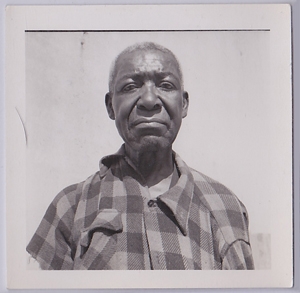
A VMware from Corbett v.Dempsey, via Allison Cuddy of WBEZ


 Plastic Alto with Mark Weiss