
 &
&

From public art mural triptych “untitled” Stanley Bishop corporation 2006
&
From public art mural triptych “untitled” Stanley Bishop corporation 2006
This gallery contains 9 photos.
1. Of these nine photos found on the Internet, from the same photographer, purportedly of bat mitzvahs, numbers three and seven seem traditional to me: one is a young woman at the Torah; the other is a … Continue reading
The first image is from an AP Wire Photo of Oakland High School athlete Zoe Ann Olsen, who won the AAU Diving Championships and went on to medal twice for the U.S. in Olympic competition. The photo is from Wikipedia commons:

The second image is a posed publicity shot from a series commissioned by Stanford athletics by local photographer Jeff Bartee of Saratoga, featuring junior Kyla Bryant of Lake Oconee, Georgia. Bartee’s website has a previous series using the dust special effect. I met Bryant briefly Monday when she dropped by The Old Pro bar trying to place a poster.
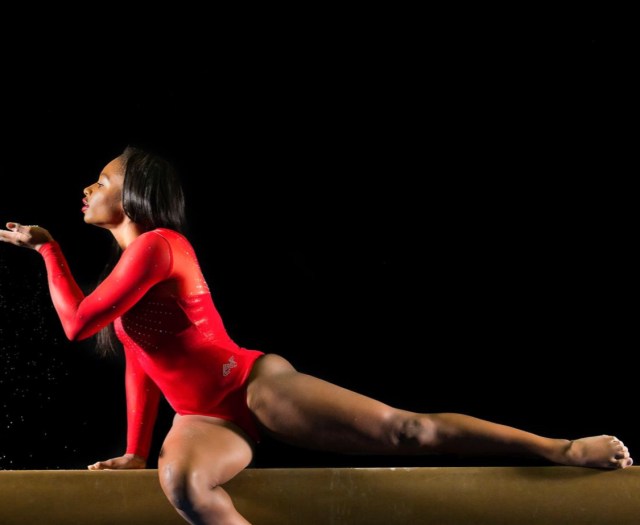
By Jeff Bartee fair use
Olsen incidentally later married Cal football star Jacke Jensen who is one of only two people to play in both the Rose Bowl and World Series, along with Stanford Chuck Essegian; I found my way to Olsen-Jensen today because of an article in the Chron about the 1919 Black Sox scandal; one of the eight banned players was from Oakland High, Chuck Gandil, who some consider the mastermind of the event.
edit to add: speaking of which, I edited out the dust stuff, from Bryant. Or, I can get the whole shot on my MacBook, but it has a cardinal red bar obscuring the balance beam. Not sure why only the smartphone version lets you separate the picture from the border. On Olsen Jensen, the Des Moines newspaper website has another photo plus this long article about her induction into both the state athletic hall of fame and another honor:
Zoe Ann Olsen was born in Council Bluffs in 1931, reared in LaPorte City and learned to swim at age 2 1/2. Why not? her father, Art, managed the municipal pool in Cedar Falls and her mother, Norma, taught swimming.
Mrs. Olsen also taught dancing and the couple was pleased that Zoe Ann became a toe-tapping terror, whose first medal, when not quite 4, came for dancing. Additionally, she was a blonde doll who could pout or cry on command.
“I entered her in a dance contest and she won a trip to Hollywood at 6,” recalls Norma. “The two of us went to California for the summer and she appeared in two plays in the Edda Edson Theater Workshop.”
Several other things happened. Zoe Ann tappy-toed around, including a guest appearance with the Hollywood Starlets, won third place in a junior diving meet and remained unconcerned when some projected her as a “new Shirley Temple.”
“I knew who Shirley Temple was, but never imagined I was going to be another,” Zoe Ann scoffed the other day by telephone from Crystal Bay, Nev., where she is now Mrs. Don Bramham.
Indeed, while the world did not gain a new first mate for the Good Ship Lollipop, it soon was to hail Zoe Ann Olsen as a springboard diver supreme, winner of 14 national titles, plus a silver medal in the 1948 Olympics and a bronze in 1952.
There’s more. The lovely 5-foot 4-inch, 119-pounder, by then a Californian, was three times nominated for the James E. Sullivan award as the nation’s outstanding amateur athlete, woman or man.
Is it any wonder that today she becomes the 86th member of The Des Moines Sunday Register’s Iowa Sports Hall of Fame.
IT’S A FABULOUS tale if you only go back as far as when the “unofficial queen of the 1948 Olympics” came home from London to Oakland to marry Jackie Jensen, the Golden Boy who was an all-american running back for California but opted to play outfield for the New York Yankees.
Reporters lurked behind convenient trees and photographers kept the glamour couple visible, flashing such news that her wedding gown and silver medal had been stolen from the car when she drove into New York City to join Jackie.
Fully intending for it to be permanent, Zoe Ann retired from competitive diving about year later and gave birth to the first of their three children, a son named Jan.
Jensen had two years as Yankee property before being traded to the Washington Senators. After nothing more strenuous than occasional exhibitions for several years, Zoe Ann started eyeing the ’52 Games.
“It just started eating on me,” she confesses. “I looked around and nobody was really that good. So we talked it over and I decided to make an effort.”
Would you believe that she made the U.S. team after only two weeks of serious work? Norma went back to baby-sitting, Art came east to do the coaching as he had almost always done, and the bronze medal followed.
IT WAS PREVIOUSLY stated that the story was fabulous from 1948 on. Before that, it was nigh on the unbelievable. It has not been mentioned, for instance, that LaPorte City did not have a pool, let alone a diving board.
“Zoe Ann was a good dancer but really outstanding in acrobatics,” says Norma. “The closest proper diving board was in Waterloo and those were the days of gas rationing. So we got a trampoline for the back yard.”
Little Miss Olsen went out and tossed, twisted and turned under the expert guidance of her father — an 11-letter winner at Northern Iowa and a coach and principal at the local high school.
“I remember. I remember,” says Zoe Ann. “I enjoyed the tramp when it wasn’t cold but I had to be pushed in the winter. It was like bouncing on rubber cement and the wind penetrated my little ol’ snow suit.”
On the rare trips to the YWCA pool in Waterloo, she had to stand in line for turns on the board. Yet, at 11, Zoe Ann won the state indoor and outdoor titles for women.
She claimed her first national title at 12, the 1943 Junior Amateur Athletic Union crown, and the Athens Athletic Club of Oakland invited the yound Iowan phenom to compete under its banner.
“I had thought of moving to California before that,” recalls Art, now retired in Oakland. “I was going into the service so we moved west to give Zoe Ann a chance to develop in good circumstances.”
THE 14 TITLES — one- and three- meter boards, indoors and out — were spread from 1943 through 1949, the last coming a month before her marriage to Jensen.
There was much more than diving and dancing (she also was into ballet) for Olsen. She played the piano, violin, clarinet, sang, was a high school majorette and honor student who also gave autographs.
“I don’t think I thought much about my athletic future. Diving was there. It was what I was doing,” recalls Olsen, who was deprived of one shot at Olympic Gold in ’44 because there were no Games from ’36 until ’48.
Vicki Manoles Draves, the wife of former Iowan Lyle Draves, Zoe Ann’s coach during the two years her father was in the service, won the three-meter title in London. Olsen was second.
“I was the youngest on the team. On the back dive, the girl in front of me hit the board and they stopped competition for 30 minutes,” says Olsen. “I guess it got to me because I hit my heels on the next dive.”
Helsinki in 1952 was weird. In what may be an eternal Olympic record, she took one dive three times. On the first try, judges ruled that “a technical fault in the fulcrum of the springboard” had aborted her effort.
“In my state of nerves, I did not realize there was a rule I had to wait for the whistle. I just went up, did the dive again and it didn’t count because all the judges weren’t watching,” she says with a sigh.
Once more, after the whistle, was good enough to get her into the finals by two-tenths of a point. She was so sure later she hadn’t placed that she was taking a shower when the news of the bronze arrived.
“That was it. I was so tired of the pressures that I came home and turned professional, so I wouldn’t be tempted again,” she says.
JENSEN WENT on to play for the Red Sox and was the American League’s Most Valuable Player in 1958. Zoe Ann liked the life of a baseball wife, particularly in Boston. The marriage broke up in 1963, they were remarried 14 months later, then were divorced again in 1970.
“He was broke. No money for the children, no alimony, so I went to work as a blackjack dealer at Cal-Neva Lodge,” she says. “I really enjoyed it, but I can’t deal now because of my accident.”
Zoe Ann, who has been wed to Bramhan for five years, was taking down snow tires from overhead storage last fall when one tire went on a rampage, cracking her ribs, breaking a cheek bone and damaging nerves in a hand.
“I got my front tooth for Christmas,” quips the lady who is now a three-time grandmother. She still weighs about 110, hasn’t been on a diving board for 13 years but scuba dives and water skis.
She has a room full of trophies (about 150) and mementoes, not the least being proof that she and Norma, a pioneer in synchronized swimming coaching and promotion, are mother-daughter inductees in the Helms Foundation Hall of Fame.
And looking back, what was the best part of it all?
“There are still a lot of people who remember,” she finally said, after a thoughtful pause. “The compliments. The compliments are the nicest part.”
(Note: Mrs. Olsen Jensen, who they describe as a 3-time grandmother, was born the same year as my mother, who died last year, or nearly six months ago. A lot of my recent posts are tributes to my mom or dad; by Maury White for The Register).
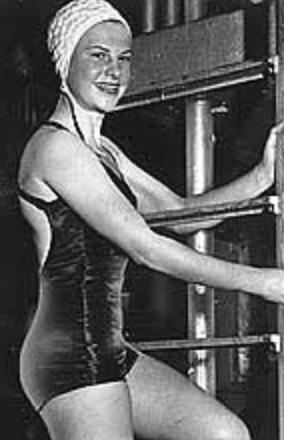
edit to add: oh, dear; it appears that Mrs. Bramham (Olsen Jensen) had deceased in 2017; she was actually born five weeks before my mom, Barbara Jane Hayms; here is the obituary:
Zoe Ann Bramham left us on September 23, 2017 to be with her mother Norma Olsen (Tu-tu) and ALL her cats. She was born in Council Bluff, Iowa on February 11, 1931. She was raised by her parents, Art and Norma Olsen in LaPorte City, Iowa until the age of 12 when they moved to Oakland, California.
She was an accomplished diver on the one and three meter springboard. She won her first national diving championship at the age of 14. She went to the Olympics in London in 1948 where she won a silver medal. She took a break from diving and married Jack Jensen and gave birth to the first of three children, Jan (Lepke) in 1950. She started training for the 1952 Helsinki Olympics a week before the tryouts and made the team, where she won a bronze medal. She retired from diving and second child Jon came along in 1953 and her third, Jay in 1959. They settled in Crystal Bay, Nevada.
She raised her children while supporting her husband Jack who played professional baseball. They eventually divorced in 1970 and she stayed active locally in Crystal Bay, Nevada. She drove the first school bus for the Incline/Crystal Bay area. She gave swim lessons and was the lifeguard for the community pool in Incline. She worked the 1960 Winter Olympics as a gate keeper for the slalom and giant slalom events. Zoe became a local blackjack dealer at the Cal/Neva casino. There is where she would meet her future husband Don Bramham.
Don and Zoe were married in 1973 and stayed in Crystal Bay until 1988, then they moved to Stuart, Florida for Don’s job in government. Zoe being very independent enjoyed this new lifestyle. During this time she was an avid bowler. She became so good she made it to the national finals in St. Louis, Missouri. She would also play card games one day a week with Don’s brother Bill. They lived in Saudi Arabia for several years while Don worked for the government. They spent the next several years traveling often all over the world and on cruises with Zoe’s mother Norma in tow. After settling back in the states she enjoyed her passion, her cats. Always one or two, but never without a furry critter in the house. She could be seen walking the grounds of her house with the cats on a leash or by her side. They were inseparable.
She was loved by all.
She is survived by her husband of 45 years, Don. She was preceded in death by her son Jon and her grandson Jason Knapp. She is also survived by her children Jan Jensen-Lepke and Jay (Barbette) Jensen; her grandchildren Jaena Knapp, Scott Knapp, Zachary Burd, Nicholas (Brittney) Burd, Jacob Burd, Tucker Jensen, Jackie Jensen; her great-grandchildren Tayler, Kiley, Dawn, Jason, Adam, Aydden, Abel, and Graysen; her great-great-granddaughter Laila.
She is also survived by Don’s children Becky Gillespie (granddaughter Lauren, great-granddaughter Avery), Lynn Bramham and Mark Bramham. Please send any donations to your local hospice.
So, Mrs. Jensen Olsen Bramham of Oakland High and Iowa lived to meet 19 of her descendents, over four generations, god bless.
The Bramhams in Florida:
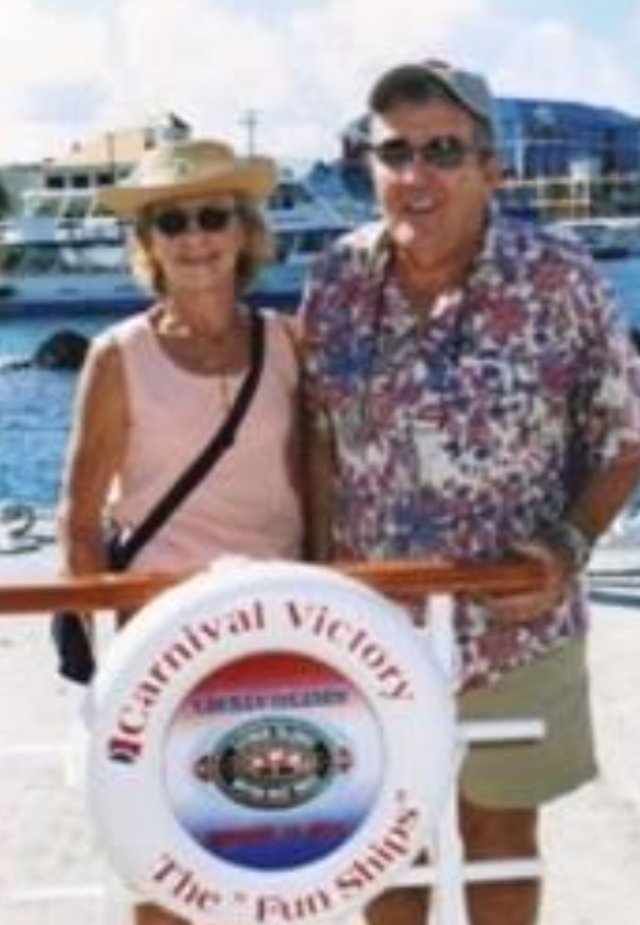
Married 45 years
This is (andand) a weird segue — I guess Jackie Jensen is posed — but here is Norman Rockwell cover art The Rookie which features the baby Mom of Mrs. Olsen Jensen Bramham — that’s him tieing his shoe (in front of Ted Williams, who it is said did not go sit for Rockwell the way that JJ and 2 others did):
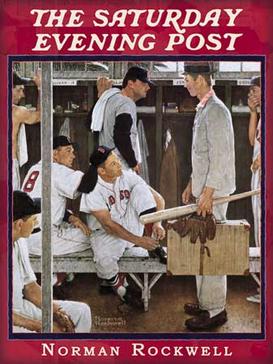 Tucker Jensen, one of Zoe Ann’s grandkids, played baseball for Embry Riddle of Daytona Beach, Florida, a D2 powerhouse.


William Gibson
Meredith Whitaker
Kevin McCarthy
Vint Cerf
b/w
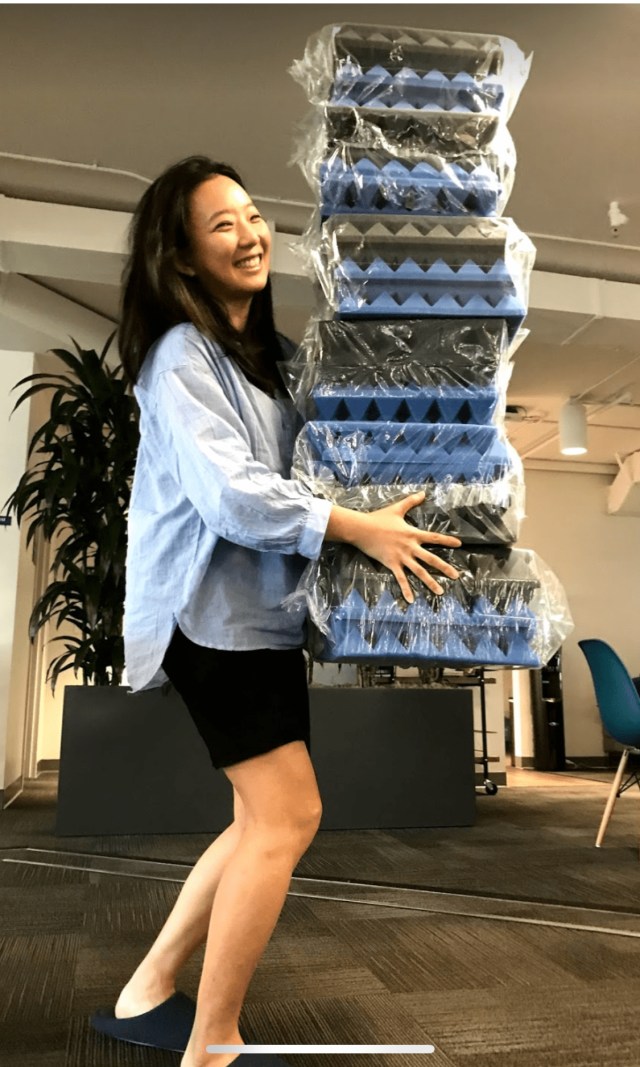
humu v hono — one is a type of turtle, the other monitors “nudge”TM at work environment like Sweetgreen which of course we have in Downtown Palo Alto the average Palo Altan is data point for tech dystopia fascism interests

 And1:
And1:
“Turtles all the way down “I don’t know what this means. I don’t know what any of this means I think I have free will but this stupid handheld device I believe sometimes promised me prompt
andand:
Steinbeck quoted by Maria Popova, 1941:
It is interesting to watch the German efficiency, which, from the logic of the machine is efficient but which (I suspect) from the mechanics of the human species is suicidal. Certainly man thrives best (or has at least) in a state of semi-anarchy. Then he has been strong, inventive, reliant, moving. But cage him with rules, feed him and make him healthy and I think he will die as surely as a caged wolf dies. I should not be surprised to see a cared for, thought for, planned for nation disintegrate, while a ragged, hungry, lustful nation survived. Surely no great all-encompassing plan has ever succeeded.
edit to add, the following weekend: 1, bigger story about humu, in the Chron; 2, pretty random segue, from Rachel Howard’s dance blog, about a piece by a British choreographer named McGregor, performed years ago at SF Ballet, called “Eden/Eden” that is about excesses of technology; this, from Atlanta ballet reprise of piece, which also features a Steve Reich score:
British choreographer Wayne McGregor CBE joined us in the studios this week to oversee the final rehearsals for EDEN|EDEN, his futuristic ballet that will join James Kudelka’s The Four Seasons in Atlanta Ballet’s season opener. His work focuses on genetic engineering and the posits questions about the ethics of cloning. Learn more about the ballet before you go; check out the program notes below. Tickets are still available. Click here to purchase.
Program Notes From San Francisco Ballet World Premiere; March 13, 2007; War Memorial Opera House, San Francisco, CA By Cheryl A. Ossola
If Eden/Eden sparks debate among audiences, that’s only fitting. In this bold, unconventional ballet, created for Stuttgart Ballet in 2005, choreographer Wayne McGregor places the role of technology at the heart of an evolutionary and cautionary tale about the ethics surrounding the human body. Though he raises questions about the future of humanity as we face potentially devastating misuses of technology, he makes no attempt to provide answers. What he wants is discourse. 
McGregor, a tall, lanky, philosophical young man, has been creating dances for nearly half his life. In 1992, armed with a degree in choreography from England’s University College, Bretton Hall, and training from some of the pinnacles of American modern dance, the intrepid 22-year-old started his own company, Random Dance (now Wayne McGregor | Random Dance). Though not trained in ballet, he has choreographed for such companies as Ballet Rambert, La Scala Ballet, Stuttgart Ballet, and The Royal Ballet, where he has been resident choreographer since 2006. He’s made dozens of dances for his company as well as for the Discovery Channel, BBC, Arte, TV commercials, theater productions, operas, youth dance companies, educational outreach programs, and feature films, including Harry Potter and the Goblet of Fire.
Technology was at the forefront of many of McGregor’s early works, but what intrigues the choreographer most of late is the human body and its potential. “The body is a phenomenal piece of equipment. I think we underestimate it,” he said in 2007, during rehearsals with San Francisco Ballet (only the second company to perform it). In talking about Eden/Eden, McGregor posed unanswerable questions, the kind he thinks should be investigated before ethical decisions are made: “What does it mean when you clone yourself? If I cloned myself, what are the differences in us? What is it that makes you a human being? Is it biology? Is it skin and bones, muscle? Or is it something much more spiritual, something that makes you different even if someone has the same gene pool as you?” His existential ponderings led him to set his ballet in the traditional concept of the origins of man, Eden. The repetition in the title, he said, came from the idea that “there could be two Edens, many Edens. This idea of multiplicity exists in all of the piece, so I thought it should exist in the title.” In effect, McGregor took the name “Eden” and cloned it to make the title for his ballet.  Eden/Eden is set to Steve Reich’s spoken libretto/musical score for the third act of a 2002 filmic opera, Three Tales, devised by Reich and his filmmaker wife, Beryl Korot. “Dolly” (named for the cloned sheep) pits scientists against one another in a thoughtful debate about the ethics of cloning. McGregor had been thinking about exploring the theme of evolution, and he was so struck by the opera’s powerful message that he begged Reich to let him use it. (Reich had not envisioned a life for his work outside of the opera, but McGregor’s plea was so passionate that the composer acquiesced.) “I was convinced that something could be added to that experience of music, in a different context, and it could be quite eloquent,” said the choreographer. “Perhaps dance would contribute something to the debate. It could be quite powerful, but in a completely different way, not in a literal way.” The arguments and opinions posed in the work’s voice-overs are complex and thought provoking, and it’s easy for audiences to miss some of their content while focusing on the visual images before them. That’s fine with McGregor. “There’s something about the liveness of the voice that bears fruit upon the liveness of the body. But as far as understanding [the spoken content] literally, absolutely not. I want the audience to do a bit of work in creating meaning while they’re watching,” he said. The ballet opens with a single woman onstage; in McGregor’s Eden—and in a twist on Genesis—woman preceded man. She dances alone before a bare-limbed tree. Soon a man joins her, emerging from the earth—an apparent reference to his humanity—then a couple, then another. All are bald and costumed as if nude, essentially stripping them of their individuality and minimizing their gender. For the women, especially, this shift in focus away from their femininity emphasizes the body itself. “Seeing a woman with no hair is a very unusual aesthetic, and you see the body in a different way,” McGregor said. “I think what you see is its power and strength rather than its femininity. Often people say they see the woman as peaceful and the man as strong—very stereotyped—and I wanted to find a way of expressing bodies, or the potential of bodies, in a different way.”
Later in the piece, when the dancers let their hair free and don some clothing, they become more individual, and thus more human. It’s a fascinating transition. Musical and textual themes give the ballet its structure and propel the woman along on a journey of discovery. What McGregor found interesting about the score was that “the text is supported by particular rhythmic or musical environments. What Steve tried to do, it seems to me, is marry a particular kind of world with a particular kind of text. So already there’s kind of a collaboration between text and music that informs how you address the body.” He extrapolated some of the key messages of the score and made movement that expressed or supported those ideas. “The text inspires the making of the vocabulary, and that vocabulary exists in its own terms,” he said. In creating the ballet’s vocabulary, McGregor said he wanted the body to be the most extraordinary technological thing in sight, and his steps do seem to test the limits of human ability. Yet former SF Ballet principal dancer Muriel Maffre, who danced the role of the journeying woman in the San Francisco premiere, perceived the movement’s quality as more primitive than high-tech. “We went so far into technology that it went back into being raw and primordial, with that edge to it,” she said. “It touches me as being very brave.” The choreographer, who has had considerably more experience creating work than setting it on other companies, found the process of working with the San Francisco Ballet dancers revealing. “They’re teaching me something about the work I didn’t know,” he said. “All of a sudden I’m seeing these things, because the interpretation is different, with fresh eyes.
Some of the dancers’ interpretations give me more emotional value than some of the dancers at Stuttgart. It’s a completely different thing.” The cerebral approach McGregor takes to his subject matter was equally evident in the way he worked with the SF Ballet dancers. He told them exactly what he’d be watching for with each run-through. One time it was interpersonal relationships; another time he said he was looking for the dysfunctional in the body. “The sense of dysfunction takes a while to figure out,” said Maffre. “It’s very disorienting—we work all our lives to achieve harmonious movement. It was hard for me to achieve that with a sense of freedom.” What came more easily, she said, was what McGregor described as “interpolation rather than end points,” which to Maffre translated to “the journey from one movement to the other. It’s like coming home for me—I’ve always been interested in focusing on that.” McGregor is as articulate in expressing his ideas through dance as he is in words. With Eden/Eden he has taken the concept of the cycle of life and placed it in a man-versus-machine context. “I hope that the audience will go on a journey with [the central woman], that at the end you remember where she started and [realize] the extremity of her journey. You’ve gone through quite an aggressive series of images that’s unrelenting,” he said. “Technology is unrelenting in that way.” Still, the choreographer seems to suggest that in a face-off between mortals and machines, the odds are on us fallible humans. As chilling as some of the ballet’s images are, and as sobering its ruminations on our world’s uncertain future, McGregor appears to hold out hope that ultimately we will make choices that will guarantee the survival of the human race. As Maffre said, “any time you enhance awareness, it’s always with hope.”
daisuke of the chron jes yest “using data for happier employees’???
The Mountain View startup, Humu, builds on some of the people-analytics programs pioneered by the internet giant, which has studied things like the traits that define great managers and how to foster better teamwork.
On the dance, another review, locally, older, mentioned “Philip K. Dick”.
andandand: maybe it’s me, but I have had a difficult time, several times, keeping the names straight: hulu, humu, huhu, hono, hana, haha, hilo, hi-ho. Homo?
 For BHW, (1931-2018)

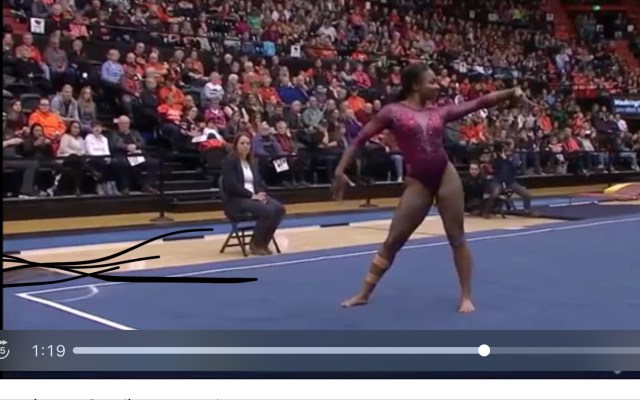
This lady walked into the bar with a poster of she and her teammates, prompting a serious amount of sussing and Mulling What it’s all about.
Hipster alert in the 650 as seen in the San Mateo daily journal : the “vinyl cutting “ event Thursday at the Belmont library is not about music, and the “book making” workshop tomorrow at the South San Francisco community center is not about sports
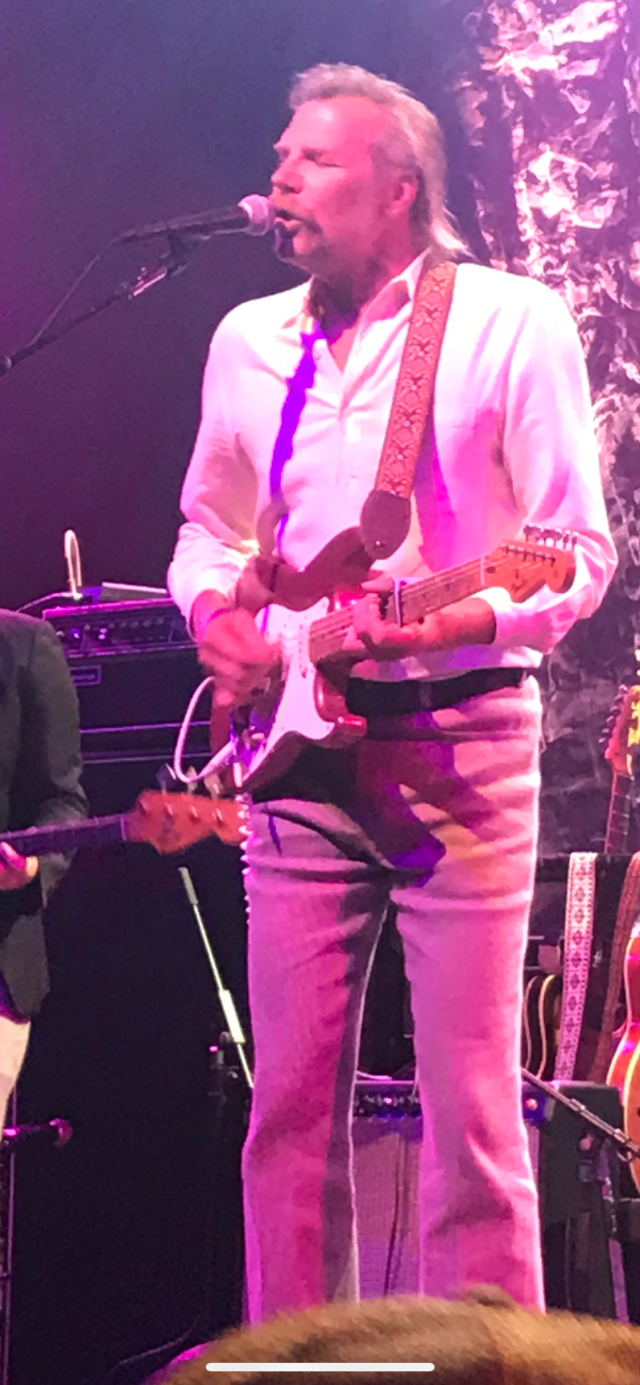
at Fillmore June, 2018
 Hb I am reading trout fishing in America a book by Richard brought again that was published in 1967. I actually was familiar with the folk music group Ezra using that name who I saw in Kerrville before I had read any Richard brought again. My wife says there was a cold or school in Fremont California in the 70s based on these books she claims the leader was the father of the jazz musician Donny McCaslin (Whom I met from Diego I mean Danielle at Perez of Panama but is more famous for having worked with David Bowie).
There’s a chapter about the FBI Federal Bureau of investigation and they use the term dodger to mean leaflet on page 42 there’s a chapter about the FBI Federal Bureau of investigation and they use the term dodger to mean leaflet on page 42
My handheld computer device suggests I noticed this concert leaflet at a baseball stadium featuring some of secure banned from back in the day I want to hold your mitt.
Which reminds me Terry Gross spoke with Tracy Thorn the founder of everything but the girl and they were discussing Joyce Johnson minor characters. Here
life this

Terry Gross, fresh air, Tracy thorn December 2018
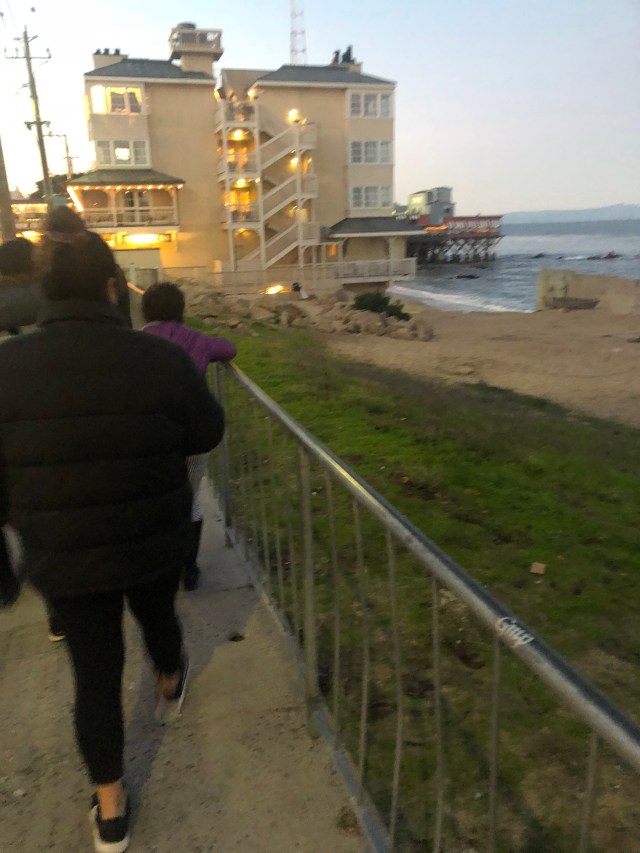
and1: I am in Monterey or we are including Terry TMW and our furry friend or hairy friend so I guess it’s cool to throw in a gratuitous and potential he fake John Steinbeck reference: I thought I saw that in dubious battle there was a reference to a slang expression “the Vag” With a hard Gee that is to say rhymes with bag or gag or drag. It is short for the word vagrant meaning the person “on the vag” Was running from the law or had no occupation or was it drifter’s or proletariat but I cannot find the reference on the Internet so will have to re-read the book carefully to find this was running from the law or had no occupation or was it drifter‘s or proletariat but I cannot find the reference on the Internet so will have to re-read the book carefully to find this.

| Douglas Tatelman on Zasu Pitts at the New Varsity,… | |
 | pbridge130 on Life as strange as fiction in… |
 | Rob Murphy on Anita Wheeler Raiderette Fan C… |
 | Timothy Girard on RedVette Band, 1981 |
 | petriverse on Don Cherry at Dartmouth |
 Plastic Alto with Mark Weiss