I met Laura when she and I were both students of the blues history class at Foothill College taught by Janis Stevenson and Mike Sult, in 2004. I’ve seen her perform in bands fronted by Lara Price and Candye Kane. I recommended her to Deborah Coleman using her performance on the Ruf Records sampler, also in 2004.
She never matriculated to Columbia University or Barnard College but maybe someday they’ll give her a doctor of bluesology, PhB.
People who know me or who have read this blog will doubt my ability to focus on one topic for the next 12 days: the marketing of, and preparation for, my country blues concerts with the MacArthur foundation laureate genius Corey Harris, starting January 28 in Palo Alto, California.
Off the top of my wool cap, I listed 24 topics and roughly 70 related items yesterday that I will move towards, and not merely let the river of life roll over me. I want to shift orientation so that I am moving downstream or with the flow of the things I think about or act on.
So I am using this vehicle, the WordPress app, to articulate this focus on Corey. In the same (literal or analog or real, paper) notebook, I have just struck through numbers 2 thru 24, and then listed on the next page 24 ways to market the Corey Harris event.
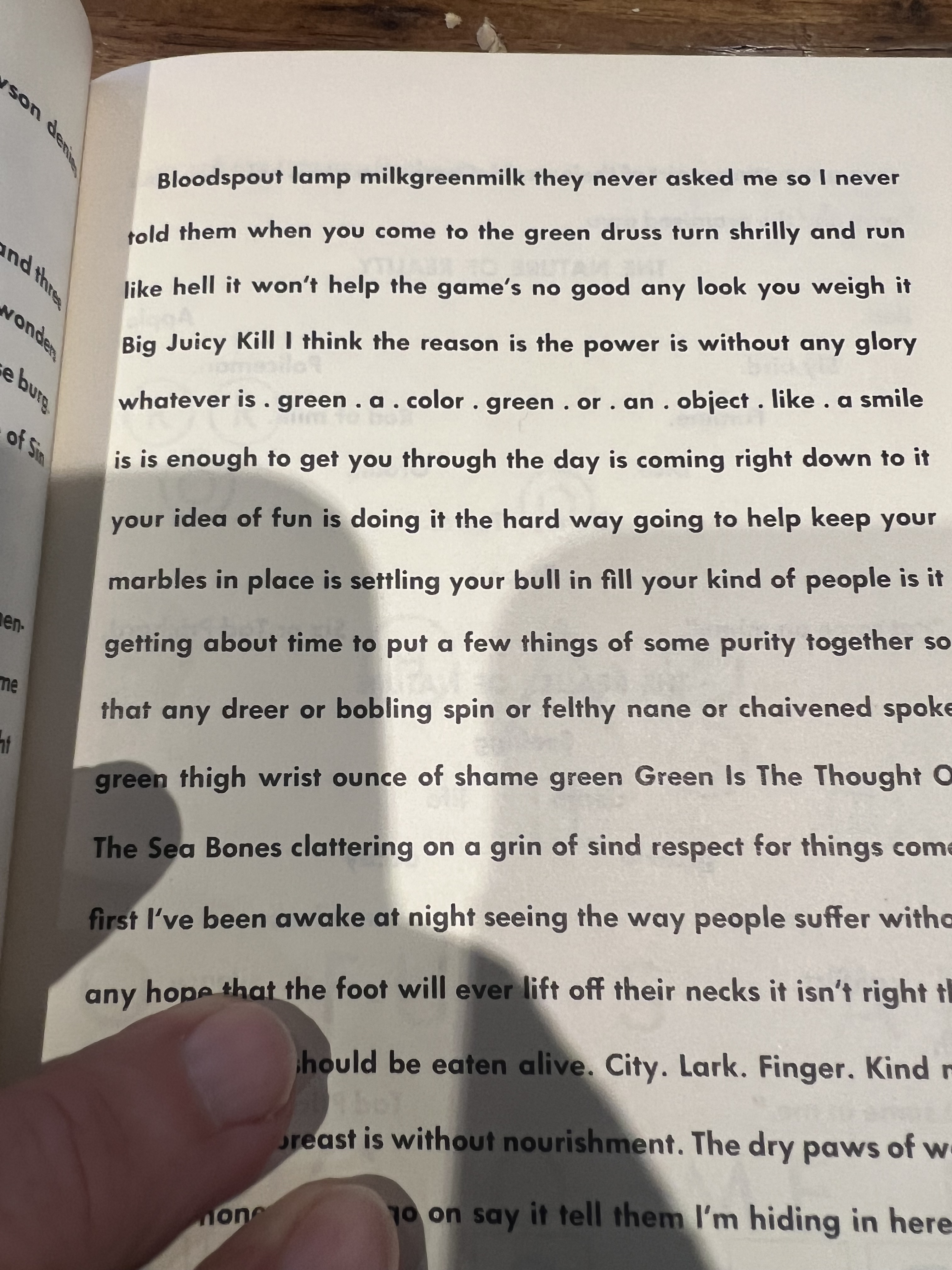
For instance, this page.
MarlonJames is an author who lives in the US, but was born in Jamaica. His best known book is a fictional account of the events surrounding the wounding of Bob Marley gangsters or assassins for people that had an unfortunate notion of gun control.
So I am contrasting or comparing the well-known song in the trope “Killing Floor” with the title of Marlon’s book.
The Internet includes Corey’s version of this famous song:
People know the versions by Howlin’ Wolf or Skip James. There’s also at least a commentary on the topic by Hubert Sumlin.
Corey won the genius grant in 2007 whereas Marlon won the Booker Prize in 2014 .
I love Tamarine, Ramen Nagi, Nobu and Good Thing new Korean cheesecake cafe. but all the others seem to blend into each other and my expectations are low. Hungry panda but discriminating.
The three on the north side of street thereabouts— odd numbers — are OK, for Banh mi, yayoi or ramen. The one at the former Starbucks will have a full bar.
I booked Rabiah Kabir and friends several times during her undergraduate days at Stanford, most notably she and two friends, Laurel and Nathan, opened for Levin LaBarbera Brothers’ combo in January, 2024.
From the soundcheck:
Her cd is called “Jezebel: Rewritten” and it is a postmodern companion to her academic thesis which discusses the role of women in jazz. (And is searchable online). Rabiah’s group plays The Black Cat later this month.
And1:
Rabiah’s academic thesis is archived on the internet. Her cd was recorded shortly thereafter and is considered a companion to the written document. As an addendum she offers this explication of the five tracks available as her performance:
I have composed five Jazz compositions. Together, these
compositions will be recorded as my debut EP, “Jezebel: Rewritten”. This music is an exploration
of my lived experiences as a woman, as a flute player, and a Black woman. The music that you
will hear is me, and it is a reflection of my experience and the collective experience of women in
Jazz I attempt to understand from my interviews. I will detail the meaning and inspirations behind
each tune below.
Fin.
I wrote “fin.” at the end of my senior year of high school. I composed this piece after
experiencing sexual harassment during my earlier years of high school. The anxiety caused by
these experiences resulted in me avoiding jam sessions and Jazz spaces. Hence, I spent more time
alone with music, especially composing at the piano.. For me, this piece was a return to
composing, to collaborating with others, and falling back in love with music.
Red Shapes and Green Shapes
“Red Shapes and Green Shapes” is a composition written with my lifelong friend and
collaborator, Laurel Fink. Laurel has been my closest friend in the music scene, and over the
years, we have supported each other as we navigate sexism in the Jazz world. Originally played at
a house event as an opening duo for Raffi Garabedian’s free Jazz group, the tune has now
evolved into a piece for a six-piece ensemble of drums, saxophone, violin, flute, piano and bass. It’s
inquisitive, strange, meditative and “girly.” The repeated lines offer a lilting but engaging
rhythmic bass line from which the horns build melody lines that both operate within and apart
from each other. Its playful nature makes me think of the joys of femininity, something that I hope
to embrace in this work, while leaving space to examine and critique it
The ReZident
Written after my time in Cape Town, South Africa, “The ReZident” draws inspiration
from modern South African Jazz groups like Shabaka and the Ancestors*. Cape Town was a
musical exploration for me, as well as a racial exploration. South African Jazz is an entirely
different style of Jazz and working with artists like Hilton Schilder provided me with new musical
vocabulary from which I built this tune. As for my experience as a Black woman, returning to the
continent my ancestors were taken from was a powerful experience for me, and this piece
captures that emotion.
I Crashed My Car: For Mo
A few months ago, I was in a car accident. Though nothing serious, it was the first car
accident I’d ever been in. I learned a lot from that experience, and this piece is an exploration into
those emotions and frustrations. More than anything, this piece is for my mother, nicknamed Mo.
I cannot write a paper about womanhood and femininity without celebrating the most influential
woman in my life. I would not be a musician without her. She drove me to my weekly piano
lessons every single week for 10 years. She didn’t let me quit when I wanted to. Without her, I
would not be able to produce this album. She also provided an incredible amount of help in the
fallout of my car accident, so, this piece is for her. Thanks, Mo.
*Shabaka Hutchings is a British musician whose parents are from Barbados who has performed and recorded in South Africa: see Will Coldwell, The Guardian, “Small Pockets of Cool” (23 September 2016)