
Tribute to Jacob Koopee by Barbara Weiss and Mark Weiss
Jacob Koopee was a great Hopi potter who died recently at a very young age.
I never met him but I have seen several of his masterful works.
My mom and I killed an hour one day not too long ago by making quick sketches of some museum-quality “Pueblo pottery”.
Here are are respective versions of one of Jacob Koopee’s last works.
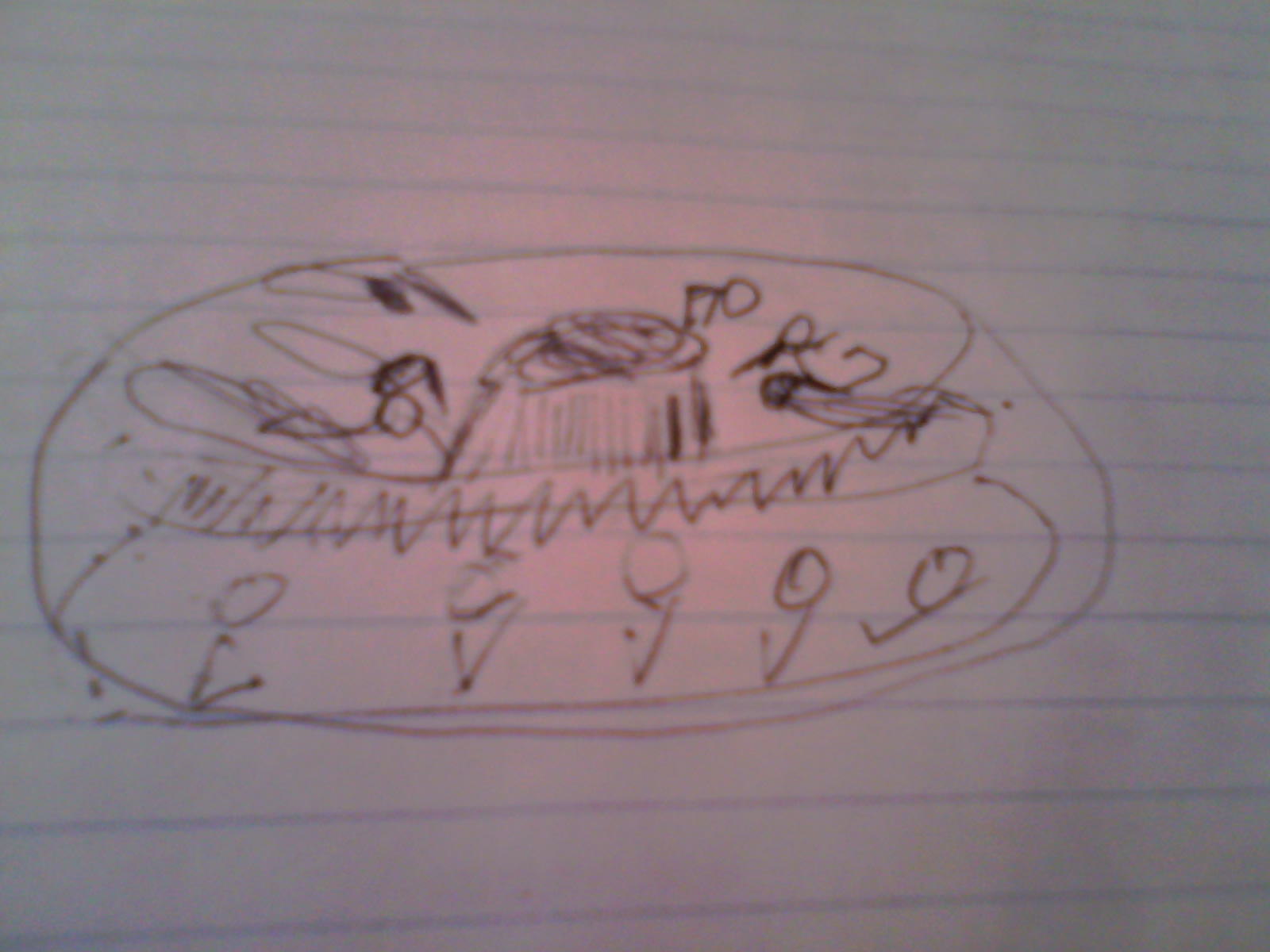
Sketch of a Jacob Koopee pot by Barbara Weiss
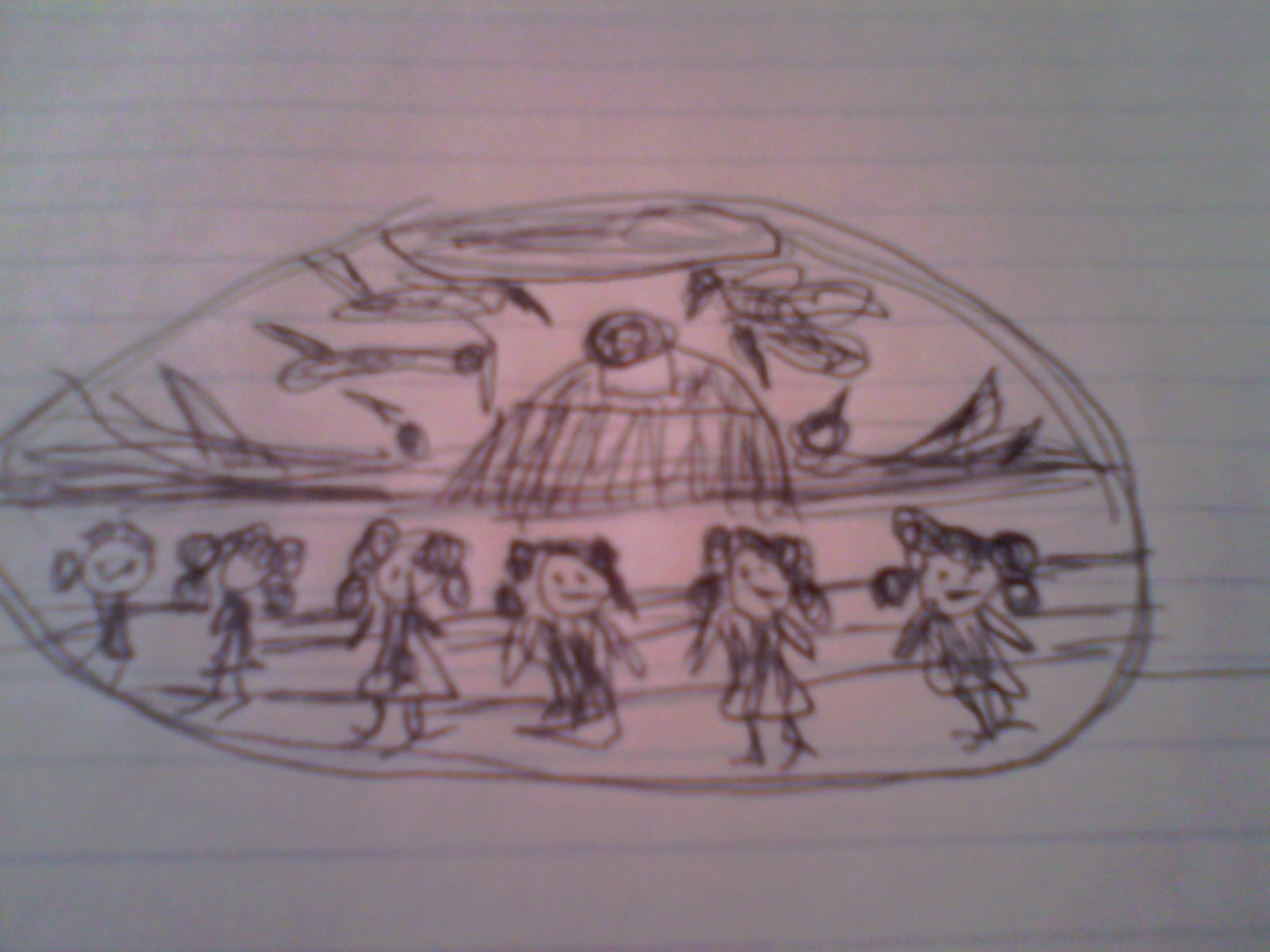
Sketch of a Jacob Koopee pot by Mark Weiss
I believe that the eminent dealer and historian, a tour guide, Martha Hopkins Struever, represented Mr. Koopee and once owned or handled this particular work, and featured it in her catalog. (For instance, I may have first seen the piece in her SWAII Indian Market showcase, at a fancy hotel near the plaza).
There’s a nice Jacob Koopee at the DeYoung Museum in San Francisco. Sarah Bailey Hegarty posted about it or him for the DeYoung blog (she’s describing a different piece than the one Moms and I were checking out):
Pueblo pottery is an important Native American art form that was first brought to the attention of the Euro-American art world at the turn of the 19th century. In the Arizona pueblo (or village) of Hano, a young Hopi woman named Nampeyo began making pottery inspired by ancient Sityatki pottery sherds that she discovered lying on the ground around her home. She sold her pottery to the hotels and restaurants lining the Santa Fe Railroad, the majority of which were owned by the Fred Harvey Company. Recognizing a marketable commodity in Nampeyo and her finely crafted pottery, the Fred Harvey Company encouraged and promoted the artist, featuring her in advertisements for Southwestern tourism and sponsoring pottery demonstrations for visiting tourists. In this way, Nampeyo of Hano put pueblo pottery on the map. Today she is widely recognized as the original matriarch of pueblo pottery and was the first Native American artist to be recognized by name.
Jacob Koopee is Nampeyo’s great-great-great-grandson, and his pottery exemplifies the evolution of style and originality for which his family is famous. Taught by his aunt, renowned potter Dextra Quotskuyva, Koopee demonstrates through his work the height of innovation in pueblo pottery today. Although he continues to use the traditional methods of coil construction and stone polishing, Koopee employs inventive shapes and patterns to create contemporary works of art.
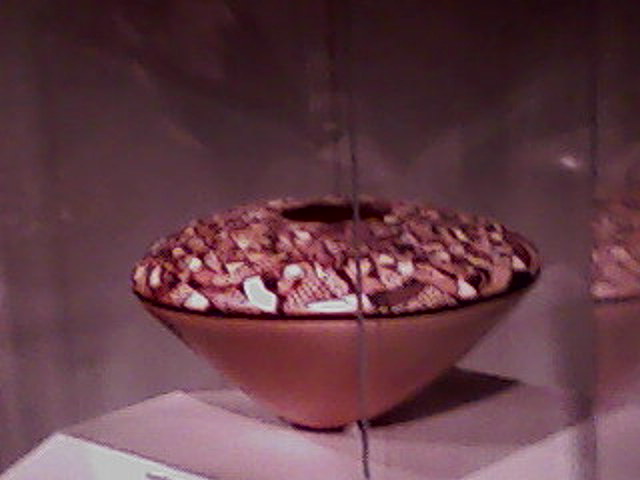
Jacob Koopee at DeYoung
The overall “shattered” format of this seed jar’s surface design references Nampeyo of Hano’s resourceful use of ancient pottery sherds for inspiration. Koopee has visually represented the rejoining of a variety of sherds to create this pot’s intricate facade. Throughout the abstract design, Koopee has scattered cartouches revealing the geometric faces of kachinas. Kachinas make up a vast pantheon of spiritual beings in Hopi religion. Each kachina is associated with a specific aspect of Hopi life, such as agriculture, hunting, or warfare.
The combined elements of community and family are integral to understanding this unique art form. Traditional techniques and designs are paramount to the continuation and preservation of pueblo culture and native art practices. Ancestral patterns and methods handed down through generations identify artists as members of a particular family, reinforcing both heritage and aesthetics. Contemporary pueblo pottery illustrates the fluid fusion of past and present used to create striking new forms.
On your next visit, learn more about Jacob Koopee and his family’s long history in art. Pottery by Koopee, his aunt, Dextra Quotskuyva, and their ancestor, Nampeyo is on display in the Art of the Americas Gallery at the de Young.


 Plastic Alto with Mark Weiss